Tesla launches 'Robotaxi' Service in Miami, expanding beyond Texas
The rollout marks Tesla's first robotaxi expansion beyond Texas as the company accelerates its autonomous ride-hailing ambitions in the United States
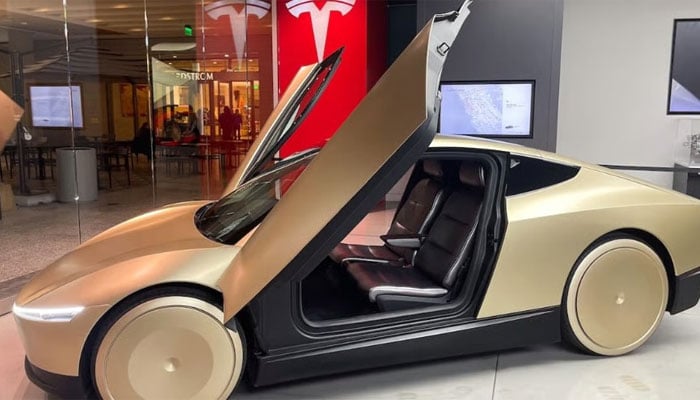
Tesla robotaxis hit the streets of Miami-Dade in first out-of-state expansion. Elon Musk's Tesla on Friday marked a major milestone for the company's autonomous ride-hailing ambitions.
Tesla's official robotaxi account said in a post on X, "Robotaxi now available in Miami."
The expansion highlights Tesla's efforts to increase adoption of its self-driving software, a version of which it uses in the robotaxis and a key part of CEO Elon Musk's shift from EVs to AI and robotics.
Tesla also launched its unsupervised robotaxi service in Austin, Texas, in June, after announcing in April plans to expand the offering to Dallas and Houston.
Musk said in May he expects fully self-driving cars without human safety monitors to become more widespread in the U.S. later this year.
On Thursday, Tesla posted record-setting second-quarter deliveries that beat Wall Street estimates, led by a rebound in Europe.
Tesla's move comes as the robotaxi sector gains momentum, with competitors such as Alphabet's Waymo and Amazon's Zoox accelerating their expansion efforts.
The rollout marks a milestone for the electric vehicle manufacturer, as Florida becomes the third U.S. state to host Tesla’s driverless operations following initial rollouts across Texas and supervised testing in California's San Francisco Bay Area.


-
 World Bank in crisis aid talks with dozens of nations amid global shocks
 -
 Deutsche Bank chief explains why German election results alarm foreign investors
 -
 China orders development of national blockchain network in economic blueprint: Here’s why
 -
 Tesla renames 'full self-driving' to 'assisted driving' in Europe: What to know
 -
 US sanctions ICC hours after former judge wins Nobel Prize: What to know
 -
 Trump holds millions in Meta stock: What to know
 -
 Amazon announces 1,000 corporate job cuts, primarily targeting retail division
 -
 Coupang files lawsuits to contest record $462 million South Korean data breach penalties