Venezuela's 'doublet' earthquake: Why two quakes in 39 seconds explained
Researchers cannot determine whether Venezuela experienced one earthquake or two separate earthquacks
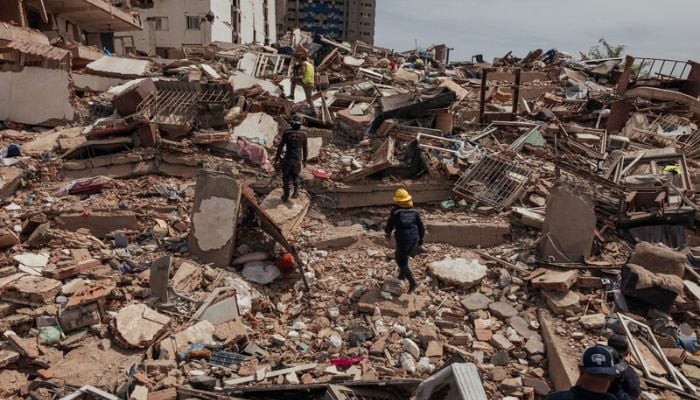
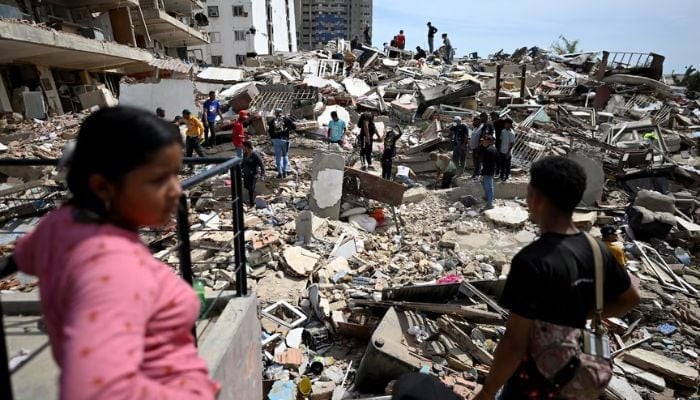
Venezuela on Wednesday experienced something seismologists rarely observe: two massive earthquakes separated by just 39 seconds. An earthquake of magnitude 7.2 took place in northern Venezuela, immediately followed by another earthquake of magnitude 7.5 in almost the same place.
This unique phenomenon, known as a “doublet earthquake", is puzzling to scientists’ knowledge about the way faults discharge their energy.
Earthquakes are known as a primary shock with subsequent aftershocks. However, a doublet earthquake defies this concept completely. Unlike an earthquake consisting of one strong earthquake with gradual discharging of energy via aftershocks, a doublet earthquake involves two equally strong earthquakes happening in quick succession.
"It's going to take probably some days or longer for the seismologists to really piece together the event," said Judith Hubbard, an earthquake scientist at Cornell University.
The scientific uncertainty isn't rhetorical; researchers genuinely cannot yet determine whether Venezuela experienced one earthquake with multiple rupture phases or two separate but intimately connected events.
The initial 7.2-magnitude earthquake that struck the fault transferred stress to the surrounding rocks. Instead of dissipating gradually, however, the stress built up on an adjacent part of the fault line and caused the second earthquake.
The difference is that in this kind of earthquake, there is very little energy released by the main fault; instead, it creates additional stress areas which eventually collapse.
In a double earthquake, the first earthquake actually causes the second one by speeding up the process of failure of the adjacent fault in near real time.
The country of Venezuela lies at the meeting point of the Caribbean Plate and South American Plates. This area is unstable since the two plates move against each other, accumulating energy for many years until it is finally released in a catastrophe.






-
 Trump says 'historic' U.S. military base in Poland could be announced soon
 -
 US SEC grants 5-Year exemption to launch tokenized stock trading on blockchain venues
 -
 Lindsay Clancy's ex-husband shares his grief after losing 3 children in one day
 -
 Australia bars international students from bringing dependants in sweeping visa crackdown
 -
 Sweden prime minister steps down after opposition wins parliamentary majority
 -
 Carney welcomes EU associate membership for Canada as Trump raises tariff threat
 -
 Anne Robinson reveals 'most shameful thing of her life'
 -
 Russia-Ukraine peace deal at risk? Kremlin responds to new US sanctions
-
 Two British nationals among three dead in Swiss Alps plane crash in Switzerland
 -
JD Vance propagates hate speech against Democrats before 2026 midterm elections
-
US, Chinese security experts propose nuclear-style safeguards for military AI
-
US House passes first bill addressing economic impact of data center boom amid surging electricity costs