NASA Artemis II success heats up lunar race as China targets 2030 Moon landing
Artemis II mission has set the stage for Artemis IV to land on the moon in 2028
The US has cleared its path to the moon with the record-breaking success of the Artemis II mission.
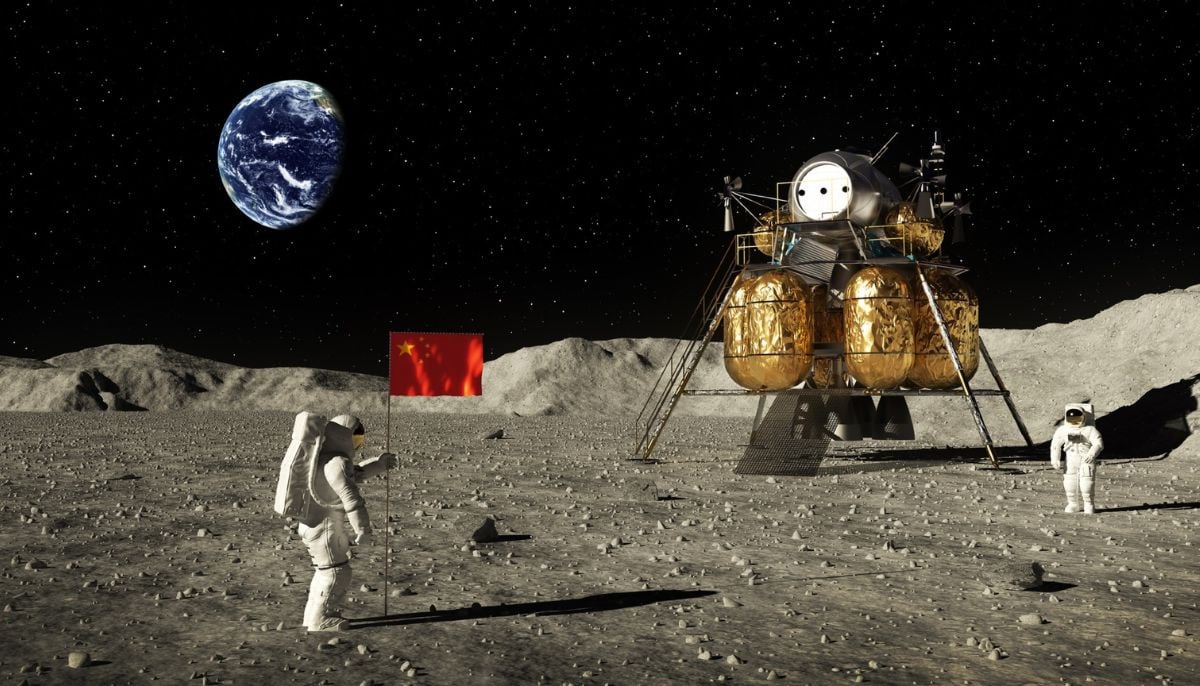
The recent Artemis II lunar flyby success has sharpened focus on China’s ambitions to land astronauts on the moon by 2030. Hence, the moon is becoming an entity of greater geopolitical significance.
Earlier this week, four US astronauts flew past the moon’s shadowed and underexplored far side, reaching the record-breaking distance from the Earth. According to NASA, the crew is on the journey towards the Earth and will land by Friday.
Artemis II mission holds a significant importance as this milestone has set the stage for Artemis IV to land on the moon in 2028.
China’s lunar ambitions
China is also making strides to achieve its lunar ambitions. For instance, the country is moving at a breakneck pace to deploy its own lunar architecture, including the Long March-10 rocket, the Lanyue lander, and the Mengzhou spacecraft.
China’s momentum is driven by a series of recent successes. Beijing recently made history as the first nation to retrieve samples from both the near and far sides of the moon.
Moreover, its crewed spaceflight programme has become experienced in managing permanent space stations and orbital emergencies.
In February 2024, China successfully completed a low-altitude escape test for the Long March-10 and Mengzhou capsule, proving the abort system can safely return crew members to sea in an emergency.
Successes with the Chang’e robotic probes (specifically Chang’e 6) have provided critical experience in lunar communications and automated docking.
According to Clayton Swope, deputy director of the Aerospace Security Project at the US-based Center for Strategic and International Studies (CSIS), “There is no bigger prize for China on the table today than landing people on the moon, this is the essential next step for China on the road to preeminence in space.”
Moon: A geopolitical arena
The US-China have deepened competition across various fields, including defense, technology and economy. Lunar exploration is emerging as a highly competitive geopolitical arena.
“China might avoid directly using language that suggests there is a lunar or space race, but their overall strategic goal is to be the hegemon in space,” said Kathleen Curlee, a research analyst at Georgetown University’s Center for Security and Emerging Technology.
Kang Guohua, an aerospace professor at the military-linked Nanjing University of Aeronautics and Astronautics, said “The question now is no longer simply who gets there first, but who can stay longer and do more.”


-
 Germany’s far-right AfD projected to win another state victory, as Merz’s CDU plunges
 -
 Russia could test NATO in coming months, European intelligence chiefs warn
 -
 Australia bans card payment surcharges from Oct 1: Here's What the RBA changes mean
 -
 Former Chile president Michelle Bachelet exits race to lead United Nations
 -
 Trump says massive DC triumphal arch will house ammunition and rooftop sniper facilities
 -
 Taiwan minister makes rare trip to China for APEC meeting in first under Lai
 -
 Italy plans school veil ban and limits on foreign students per class: Here’s why
 -
 Ukraine strikes Moscow with drones and Flamingo missiles during Russian election