Artemis II crew heads home after shattering 56-year lunar distance record
The crew has broken the previous record for the farthest distance humans have traveled into space
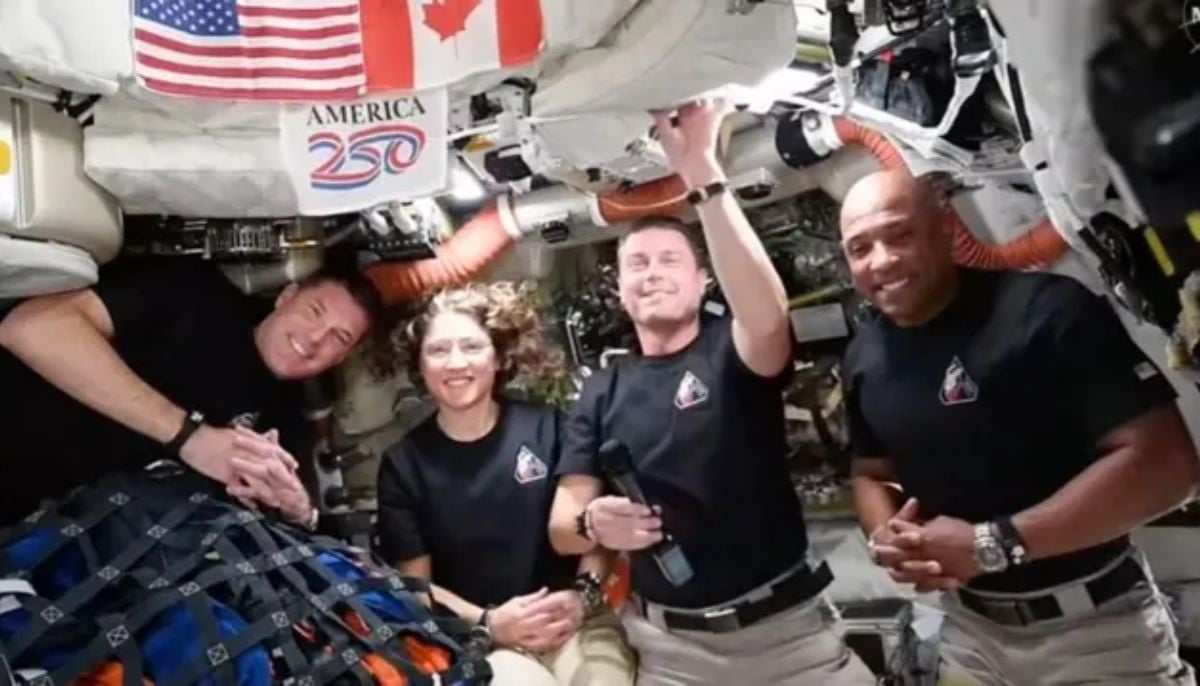
Intriguing glimpses surround Artemis II astronauts as they continue their journey back to Earth after conducting a historic lunar flyby and witnessing a total solar eclipse from their spacecraft. As the journey continued, the spacecraft reached its maximum distance from Earth: 252,756 miles (406,771km) during the lunar fly-by.
Meanwhile, the crew has already broken the previous record for the farthest distance humans have traveled into space. Following a precision launch from Kennedy Space Center, the Orion capsule and its four-member crew are currently pushing the boundaries of human deep-space exploration. This trajectory is expected to set a new distance record for human spaceflight.
This landmark mission serves as a significant testbed for NASA’s long-term goals; once the 10-day journey concludes with a Pacific Ocean splashdown, the data gathered will pave the way for a permanent human presence on the Moon and future crewed missions to Mars.
US President Donald Trump praised the astronauts, stating they have “made history and made all Americans really proud.”. He also invites them to the White House after the Artemis II crew broke the record for the farthest humans have ever travelled from Earth; the previous record of 248,655 miles (400,171 km) from Earth was set by the Apollo 13 crew in 1970.
Speaking from the capsule, Artemis II pilot Victor Glover told the crew on the ground that what the four astronauts are currently seeing is “truly hard to describe.”
“I know this observation won’t be of any scientific value but I’m really glad we launched on April 1st, because humans have probably not evolved to see what we are seeing.”
In line with the NASA mission, it was observed that they experienced a “forward link loss of signal”, This specifically means that for a brief and expected period, the ground team was unable to speak to the astronauts aboard the Orion spacecraft.
The Orion spacecraft carried its four-member-crew-Reid Wiseman, Victor Glover, Christina Koch, and Canadian astronaut Jeremy Hansen-into orbit, beginning a journey that would push human exploration deeper into space than ever before. Artemis Mission Control further confirmed that a tiny dot seen during a broadcast from NASA was Venus.
A Mission Control member noted, “You are currently seeing a lovely view of the solar array of the wing of the Orion spacecraft.” During the broadcast, it was noted that Venus-the second planet from the Sun, and the sixth largest planet in our solar system-was visible as a small dot. This landmark mission serves as a significant testbed for NASA’s long-term goals; once the 10-day journey concludes with a Pacific Ocean splashdown, the data gathered will pave the way for a permanent human presence on the Moon and future crewed missions to Mars.


-
 Biden calls out Trump’s ‘vanity projects’ at Maryland Democratic Gala—Here’s why
 -
 Pima County Sheriff responds to new claims in Nancy Guthrie case
 -
 Mayor Mamdani jumps into NYC pool to revive old tradition
 -
 Trump’s Gaza Board of Peace seeks to grant itself total immunity and free use of property: Here’s why
-
 Scientists found 'super-puff' planets 1,110 light-years away
 -
 Scientists find ancient microbial life in places it shouldn't exist
 -
 Why Marijuana is suddenly sending thousands of dogs to hospitals in US?
 -
 36 years on, Hubble shows how stars actually change over time
 -
 Hidden magma beneath Mars? Scientists' 'unexpected' discovery raises new questions about alien life
 -
 Rare 3,200-year-old coral blue hole discovered in South China Sea
 -
 What happens at black hole’s event horizon? Scientists find the first-ever clue
 -
 Scientists discover evidence of fires used by humans 1.8 million years ago
-
 Did NASA just uncover evidence of ancient life on Mars? Key discoveries explained
 -
Four powerful earthquakes strike three continents within hours: Scientific link or coincidence?
-
Mysterious interstellar comet passing our solar system may be 12 billion years old, scientists say
-
When do we really become adults? Science has an answer