Xiaomi reveals human-like bionic hand for ‘CyberOne’ robot: Here’s how it works
The Xiaomi team unveiled a redesigned bionic hand for its CyberOne robot, shrinking it by 60% to human-size while adding full-palm touch sensors and ‘sweat glands’
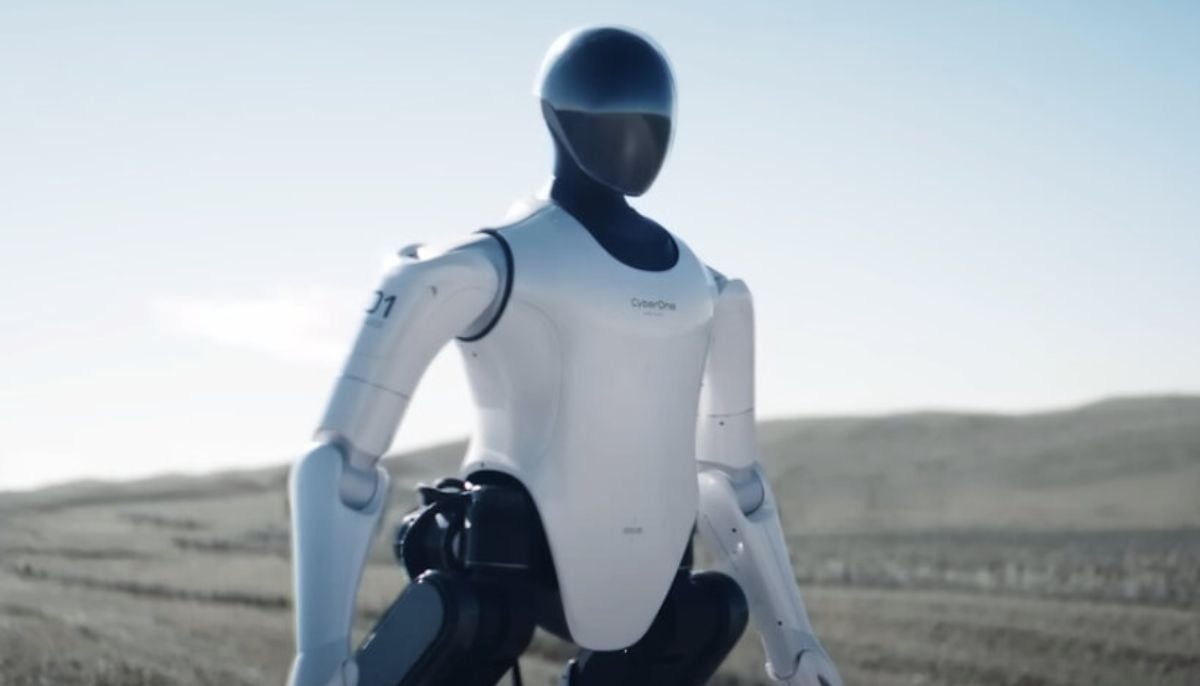
The transformation of Xiaomi's CyberOne from a shaky prototype into a high-performance industrial humanoid is centered on a unique biological inspiration. To prevent high-performance 100W motors from overheating in a compact space, Xiaomi developed a liquid cooling system.
Utilizing 3D-printed metal channels, the hand evaporates 0.5 ml of water per minute to provide 100W of active cooling. This “sweat” allows the robot to perform high-load, gruelling tasks for hours without thermal throttling or performance loss.
The hand assembly is 60% smaller, achieving a 1:1 scale with a human hand, which is crucial for training the AI. It now features an 83% increase in active Degrees of Freedom (DOF), closely mimicking the 22-27 DOFs of a biological human hand. While many prototypes fail at 10,000 cycles, CyberOne’s hardware has endured over 150,000 grasping cycles.
The robot is covered in 8,200 $mm 2$ of tactile sensors, allowing it to feel its environment and work effectively even when its line of sight is blocked. In automotive trials, it maintained a 90.2% success rate in fastening nuts over a three-hour period, proving it is ready for the factory floor. Xiaomi has open-sourced its TacRefineNet framework and released 61 hours of tactile data to help the global robotics community improve sim-to-real transitions.





-
 OpenAI autonomous agents probed Hugging Face for vulnerabilities weeks before major breach
 -
 Apple plans AI servers with M8 ultra chips and Nvidia technology: What to know
 -
 Altman says AI accidents are coming: Here's his plan
 -
 Can we really prevent an AI extinction event?
 -
 Google quietly adds selfie video sign-in for account recovery
 -
 Billionaire Mark Cuban says your feed may be bigger AI threat
 -
 iOS 27 lets you hide your location without alerting anyone
 -
 EU steps up AI safety push with frontier labs talks