Mouse brain revival experiment sparks cryonics debate: Can humans be brought back to life?
For years, Cryopreservation has long been met with skepticism and "ice crystal" damage, but now it is becoming 'scientific possibility'
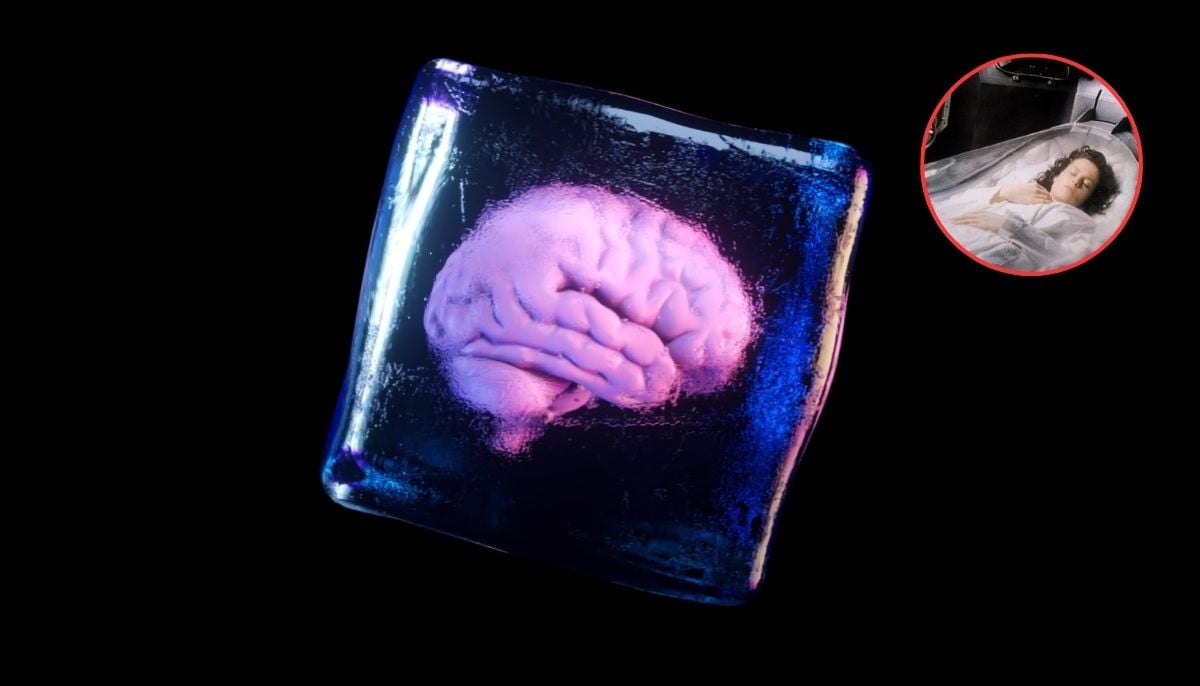
The concept of “cryosleep” has always been considered a far-fetched reality. To one’s surprise, the idea is shifting from the realm of science fiction into the laboratory dominated by the reawakening of “frozen brains” in a groundbreaking research.
While the idea of cryopreservation. freezing a body or organ to be revived later, has long been met with skepticism and "ice crystal" damage, researchers have recently achieved a significant milestone using mouse brain tissue.
In a recent breakthrough, researchers in Germany have successfully preserved and revived mouse brain tissue with functional biological processes intact.
Previously, the attempts to revive the cryopreserved brain were only successful at cellular level but failed to restart the functionality of the brain.
The study, which is published in Proceedings of the National Academy of Sciences, offers unique insights because of restoring the machinery of the brain.
For instance, the team observed the neuronal firing characterized by the ability of brain cells to respond to electrical stimuli. Active mitochondrial function without metabolic damage was also witnessed.
The brain is also found to strengthen synaptic pathways which is the biological basis for learning and memory during the experimentation.
When scaled up to the entire organ, the team successfully recorded functional hippocampal pathways after thawing.
Mrityunjay Kothari, who studies mechanical engineering at the University of New Hampshire in Durham, said, “This kind of progress is what gradually turns science fiction into scientific possibility.”
The researchers used the “vitrification” method to avoid the crystal ice damage which is responsible for puncturing or displacing the delicate nanostructure of the neurons.
Will humans be benefitted in the future?
The researchers are hoping to expand their research from mouse brain tissues to the human brain.
“We already have preliminary data showing viability in human cortical tissue,” said Alexander German, a neurologist at the University of Erlangen–Nuremberg in Germany and lead author of the study.
Moreover, the team is also planning to use vitrification for the cryopreservation of the heart, aiming to establish organ banks for transplants.
However, the study consists of several limitations. For instance, large organs can face thermomechanical stress and cracking due to heat-transfer constraints.
German hoped that “better vitrification solutions and cooling and rewarming technologies will be necessary before these principles can be applied to large human organs.”


-
 Iran restores 90% of missile facilities after strikes, US intel says
 -
 PCOS renamed PMOS: What new diagnosis means for millions of women’s health
 -
 EU cracks down on social media’s addictive design practices with new legislation
 -
 ‘Godzilla’ El Nino warning: Rare weather pattern could make 2027 hottest year ever
-
 SpaceX ‘Space Junk’ is on a collision course with the Moon, scientists say
 -
 Do you know what happened on May 10, 1967? NASA's M2-F2 disaster explained
 -
 Why the Southern Ocean is melting: Antarctica’s sea ice resilience reaches a breaking point
 -
 Giant black holes are cosmic ‘Frankensteins’ built by mergers, new study reveals
 -
 NASA’s Artemis 2 moon launch becomes the largest event in Space Coast history
 -
 Is success written in your DNA? New study reignites nature vs nurture debate
 -
 Researchers found 240-million-year-old giant mysterious 'sand creeper'
 -
 New solar-powered process turns plastic waste into clean hydrogen
-
 Giant squid detected off Western Australia coast as deep-sea study reveals hidden species
 -
Astronomers discover unexpected atmosphere beyond Pluto on tiny solar system object
-
‘Evolution is not always random’: Study finds same gene reused for 120 million years
-
Real-life Tatooine moment: Astronomers discover 27 ‘Star Wars’ like planets orbiting two suns