Formula 1 2026: Biggest shake-up in years? Here’s what’s coming
Lando Norris won the highly-coveted F1 title in 2025
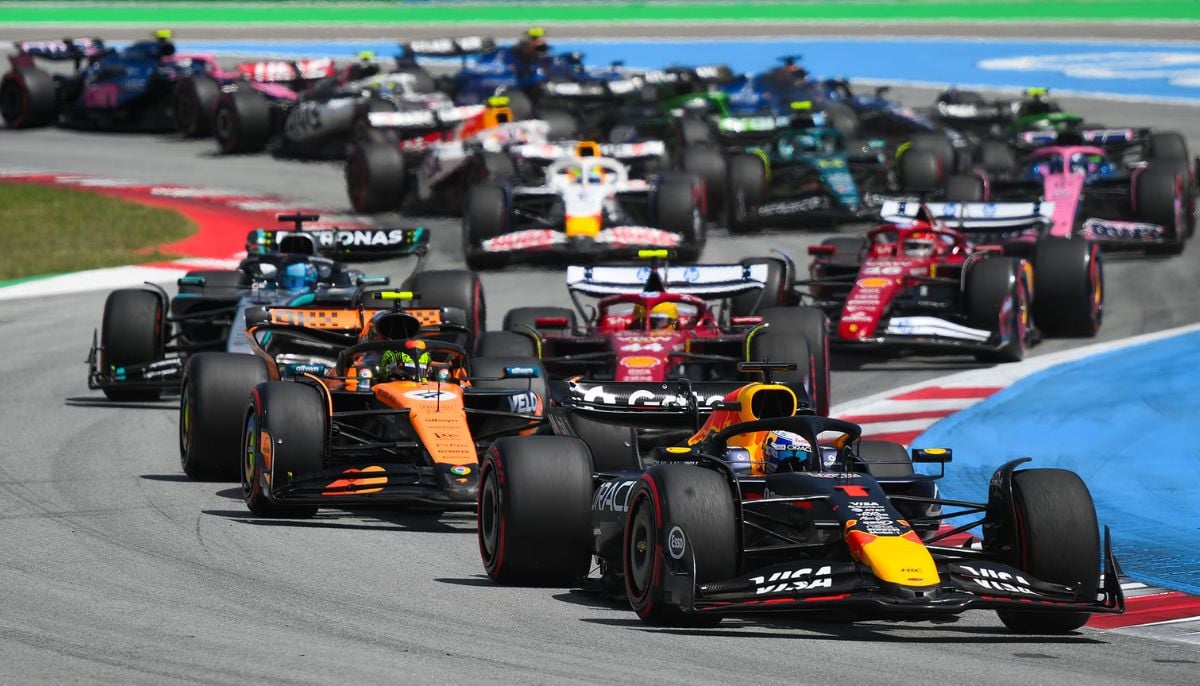
The 2025 Formula 1 dramatic season has come to an end as Lando Norris won the highly-coveted F1 title.
With the advent of 2026, the sport will witness the new era of technical regulations, grid changes, team transformations, and calendar changes.
According to the BBC Sports, here are the key changes that fans should expect in the coming 2026 season.
New era of technical regulations
According to technical regulations, the cars will be smaller, lighter, more agile and eco-friendly. Cars will be 30kg lighter than previous season, with the dimensions of 10cm narrower and a shorter wheelbase, which is reduced by 200mm to 3400 mm.
The season will also come with new aerodynamic rules. Movable front and rear wings are introduced to manage downforce and drag. The 2022-2025 ground-effect philosophy is abandoned.
The total downforce will be reduced by 30 percent and drag is reduced by 55 percent compared to the 2022-2025 generation of cars.
In terms of revolutionary power unit changes, the engine will remain 1.6-litre V6 turbo hybrids. The power split between hybrid part and internal combustion engine will be 50 percent each.
Changes in drivers
In the 2026 Formula 1 season, most of the drivers will remain the same. But, few changes are also expected. Frenchman Isack Hadjar will replace Yuki Tsunoda as Max Verstappen's team-mate at Red Bull.
At Red Bull, 18-year-old Arvid Lindbald is set to replace Isack Hadjar.
Grid changes: Paradigm shift in teams
The grid will expand from 10 to 11 teams with significant power unit partnerships.
Cadillac, supported by the US car giant, will join the season as the 11th team on the grid. For drivers, they opt for experience over youth with the selection of Valtteri Bottas (10 F1 wins) and Sergio Perez (6 F1 wins).
Initially, Cadillac will use the Ferrari power unit, later to be replaced by GM-developed engines in 2029.
Team transformation: Sauber taken by Audi
The Sauber team has fully been taken over by Audi. The maiden Audi line-up will be Nico Hulkenberg and Gabriel Bortoleto. Jonathan Wheatley will be the team boss working alongside Mattia Binotto, who is the head of the F1 project.
The return of Ford
The Red Bull will enter a partnership with US car giant Ford for power units, thereby ending its collaboration with Honda.
On the other hand, Renault engines will fall silent as it has ended its F1 power unit programme. The Alpine team will use Mercedes engines.
Calendar changes
- The 2026 F1 calendar will feature 24 races. The Spanish Grand Prix race will occur in Madrid on September 11-13, replacing the Emilia-Romagna Grand Prix in Imola.
- Barcelona remains on the calendar as the Barcelona-Catalunya Grand Prix (12-14 June).
- The Canadian Grand Prix will be changed, switching from June to May 22-24.
- The Monaco Grand Prix moves from May to June 5-7.
For sprint events, six tracks are chosen, including China, Canada, Miami, Silverstone, Zandvoort, and Singapore.




-
 NBA to introduce AI-powered automated systems to increase game efficiency
 -
 Golden Knights punch ticket to Stanley Cup Final with shocking sweep of Avalanche
 -
 Iva Jovic beats Alex Eala to advance at French Open 2026
 -
 Maple Leafs’ Max Domi out indefinitely after surgery complications
 -
 Messi leaves Inter Miami match injured, raising concerns for Argentina ahead of FIFA World Cup
 -
 Manchester United: Bruno Fernandes breaks all-time assist record in Premier league
 -
 Dani Carvajal bids emotional farewell in Madrid’s 4-2 win over Athletic Club
 -
 Kyle Busch's family reveals NASCAR racer's cause of death
-
 Zohran Mamdani launches $50 World Cup ticket lottery in NYC: How to enter and win
 -
Pep Guardiola leaves Manchester City after historic 10-year era, tributes pour in
-
‘A terrible look’: Charles Barkley calls out NBC’s Michael Jordan deal
-
Cristiano Ronaldo leads Al Nassr to first Saudi Pro League title in 4-1 win over Damac