China’s yuan reaches 13-month high amid fed cut bets, seasonal flows
China’s yuan has just hit a thirteen-month high against the US dollar
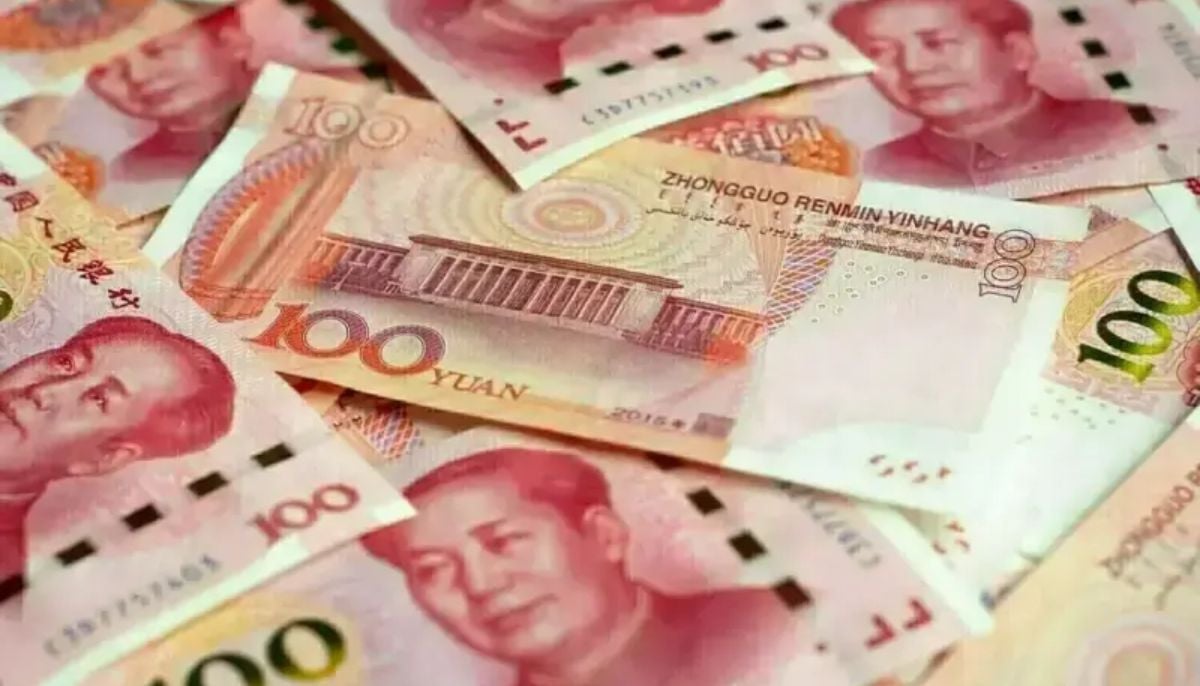
The Chinese currency, the onshore yuan, has recently surged to a new 13-month high against the dollar on Wednesday, after the central bank influenced the market higher alongside a weaker US currency as traders raised expectations of a Federal Reserve rate cut next month.
The yuan’s strength primarily reflects increased demand from companies as they commonly settle more of their dollar receipts to comply with distinctive administrative requirements.
It has been observed that the onshore yuan rose to 7.0815 per dollar, which marks the highest level since October 14, 2024.
The People’s Bank of China (PBOC) specifically set the midpoint rate at 7.0796 per dollar, which marks its strongest since October 14, 2024.
Furthermore, this rate was 29% basis points stronger than a Reuter’s estimate of 7.0825.
Concerning the current scenario, a combination of positive factors has been arising in the hope of mitigating Russia-Ukraine tensions- which could boost the yuan and support investor psychology.
They further analyzed that the one-month reversal of dollar and yuan measures currency market sentiment in the options market, which is maintaining the dollar’s decline, and markets are further expecting upside for the yuan.
Analysts said that they would rigorously monitor the upcoming Politburo meeting and the Central Economic Work Conference (CEWC) in December to revise the public agenda for the next year.
Nonetheless, the recent surge in yuan can be understood as a statistical arbitrage amplified by seasonal flows, rather than a deep vote of confidence in China’s economic outlook.


-
 Euro plunges to 17-month low as France debt and Spain election fuel uncertainty
-
 OPEC+ agrees to keep November oil targets steady amid market uncertainty
-
 Meta’s AI data centers: What to know about its major tax strategy
-
 Tesla’s Cybercab faces a tough test after rocky Austin debut: Here's why
-
 Trump pushes South Korea on Alaska LNG deal: Why Seoul is hesitant
-
 AI boom could trigger severe market shocks, Bank of England warns
-
 US inflation rises less than expected: What to know
-
 OpenAI’s revenue run rate nears $70 billion: What to know