Petrol price goes up by Rs2.43 per litre to Rs265.45 for next fortnight
High-speed diesel has also become costlier, climbing by Rs3.02 to Rs278.44 per litre

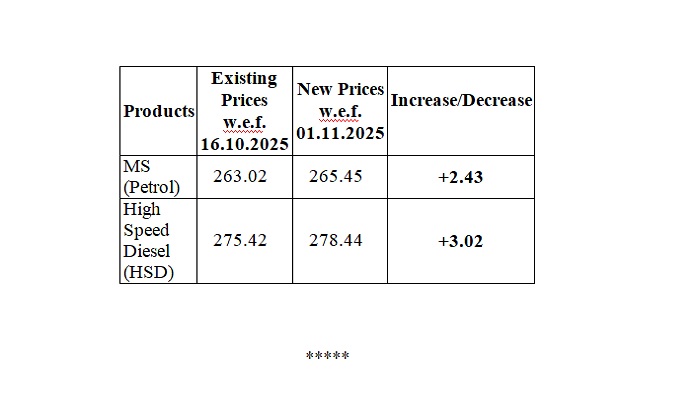
The petrol price has been raised by Rs2.43 per litre for the next fortnight, effective from November 1, following recommendations from the Oil and Gas Regulatory Authority (OGRA) and the relevant ministries.
Petrol has been set at Rs265.45 per litre for the next fifteen days, the Finance Division said in a notification based on the authority’s latest review.
High-speed diesel (HSD) has also become costlier, climbing by Rs3.02 to Rs278.44 per litre, a change officials say reflects adjustments recommended by the relevant ministries.
Meanwhile, sources said kerosene edged up by Rs3.34 to Rs185.05 per litre, and light diesel oil ticked higher by Rs1.22, reaching Rs163.98.
The News on Wednesday reported that petroleum prices were expected to rise by up to Rs2.34 per litre from the next fortnight, driven by swings in global oil markets and the impact of recent US sanctions on major Russian producers.
Preliminary calculations for the first 12 days of the pricing cycle had suggested that petrol may increase by Rs1.48 per litre and high-speed diesel (HSD) by Rs1.38. Kerosene could see a larger jump of Rs2.34 per litre, while light diesel oil (LDO) may edge up by Re0.49.
In line with fluctuations in the international fuel market, the federal government earlier this month reduced the price of petrol by Rs5.66 per litre for the fortnight.
According to a notification issued by the Finance Division, petrol was priced at Rs263.02 per litre. The price of high-speed diesel (HSD) was also reduced by Rs1.39 to Rs275.41 per litre.
Similarly, the price of kerosene oil was cut by Rs3.26 to Rs181.71 per litre. The government had set the price of light diesel oil at Rs162.76 per litre for the fortnight.
Petrol is mainly used in private transportation, small vehicles, rickshaws, and two-wheelers. Higher fuel prices significantly impact the budgets of the members of the middle and lower-middle classes, who primarily consume petrol for commuting.
On the other hand, a significant portion of the transport sector relies on high-speed diesel.
Its price is considered inflationary since it is predominantly used in heavy goods transport vehicles, trucks, buses, trains, and agricultural machinery such as tractors, tube wells, and threshers. The consumption of high-speed diesel particularly contributes to the increased prices of vegetables and other food items.


-
 Netflix faces scrutiny over user engagement ahead of Q3 report
 -
 Meta and Tesla are set to report earnings next week: What to know
 -
 SpaceX sets Q3 2026 earnings release date: What to know
 -
 Hyundai to recall nearly 100,000 US vehicles over fire risk from overheating
 -
 Will Tesla and SpaceX merge? Barclays expects announcement ahead of December meeting
 -
 GSK eyes over 1,200 Belgian job cuts in cost-saving drive
 -
 Netflix slashes 1,000 jobs: What’s behind the cuts?
 -
 Anthropic to reveal new revenue figures as AI financial race heats up
-
 HSBC to phase out fixed-pay allowances by 2028 in major compensation overhaul
 -
TotalEnergies expands US renewable venture with KKR in $1.2B solar portfolio deal
-
Australian telecom shares tumble as SpaceX moves closer to direct-to-cell market
-
World Bank in crisis aid talks with dozens of nations amid global shocks