Debt plan spurs early rally, but bears return to PSX
KSE-100 Index settled at 120,002.59, down 463.34 points, or -0.38%
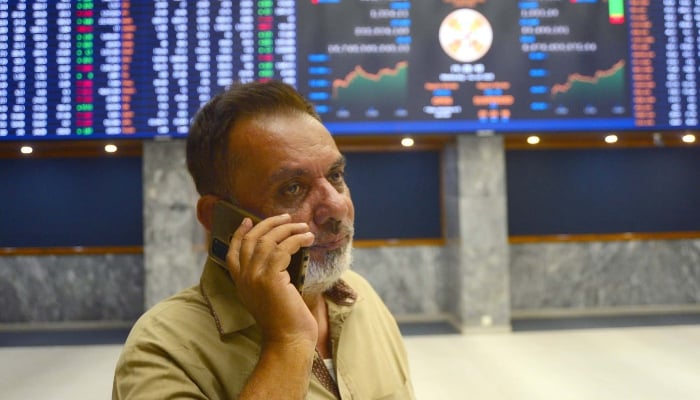
Investor optimism sparked by sweeping energy sector reforms and fresh external financing faded by the close on Thursday, as profit-taking erased early gains and pulled the equity market into negative territory.
“Stocks showed recovery led by blue chip scrips as investors weigh federal cabinet approval of Rs1.275 trillion bank loan under circular debt management plan," said Ahsan Mehanti, Managing Director and CEO of Arif Habib Commodities.
"Surging global crude oil prices, and expectations over rationalisation in industrial power tariff played catalyst role in bullish activity at PSX,” he added.
Initial enthusiasm over the federal cabinet’s endorsement of a historic Rs1.275 trillion circular debt overhaul and a $1 billion foreign financing deal drove a morning rally, but momentum proved short-lived amid renewed selling pressure.
The Pakistan Stock Exchange’s (PSX) benchmark KSE-100 Index settled at 120,002.59, down 463.34 points, or -0.38%, from the previous close of 120,465.93.
During the session, the index climbed to an intraday high of 121,745.30, gaining 1,279.37 points, or 1.06%, and touched a low of 119,770.03, reflecting a fall of 695.90 points, or 0.58%.
The federal cabinet on Wednesday approved Pakistan’s largest-ever financial scheme aimed at restoring stability in the power sector by addressing Rs1,275 billion in circular debt. The plan, designed to stabilise the energy industry without adding pressure on the national budget, targets the resolution of the entire amount over a six-year period.
Chaired by Prime Minister Shehbaz Sharif, the cabinet meeting also approved the refinancing of Rs683 billion owed by the Power Holding Company and the clearance of long-standing dues of Independent Power Producers (IPPs).
Separately, the Ministry of Finance finalised a $1 billion syndicated term finance facility backed in part by a policy-based guarantee from the Asian Development Bank under its “Improved Resource Mobilisation & Utilisation Reform” programme.
Dubai Islamic Bank served as the Sole Islamic Global Coordinator, while Standard Chartered Bank acted as the Mandated Lead Arranger and Bookrunner. Additional arrangers include Abu Dhabi Islamic Bank, Sharjah Islamic Bank, Ajman Bank, and HBL.
The multi-tranche, five-year facility includes both Islamic and conventional financing and is structured to comply fully with AAOIFI standards. The Islamic tranche accounts for 89% of the funding, with the remainder from conventional sources.
The recovery follows a sharp drop on Wednesday, when the KSE-100 Index lost 1,505.11 points, or -1.23%, to close at 120,465.93. The index had recorded a high of 121,905.50 and a low of 120,418 during that volatile session, driven by geopolitical tensions.


-
 Meta and Tesla are set to report earnings next week: What to know
-
 SpaceX sets Q3 2026 earnings release date: What to know
-
 Hyundai to recall nearly 100,000 US vehicles over fire risk from overheating
-
 Will Tesla and SpaceX merge? Barclays expects announcement ahead of December meeting
-
 GSK eyes over 1,200 Belgian job cuts in cost-saving drive
-
 Netflix slashes 1,000 jobs: What’s behind the cuts?
-
 Anthropic to reveal new revenue figures as AI financial race heats up
-
 HSBC to phase out fixed-pay allowances by 2028 in major compensation overhaul
-
 TotalEnergies expands US renewable venture with KKR in $1.2B solar portfolio deal
-
Australian telecom shares tumble as SpaceX moves closer to direct-to-cell market
-
World Bank in crisis aid talks with dozens of nations amid global shocks
-
Deutsche Bank chief explains why German election results alarm foreign investors