Pakistan quietly becomes world's biggest solar importer: Here's how
Country witnesses one of most unexpected clean energy success stories of decade
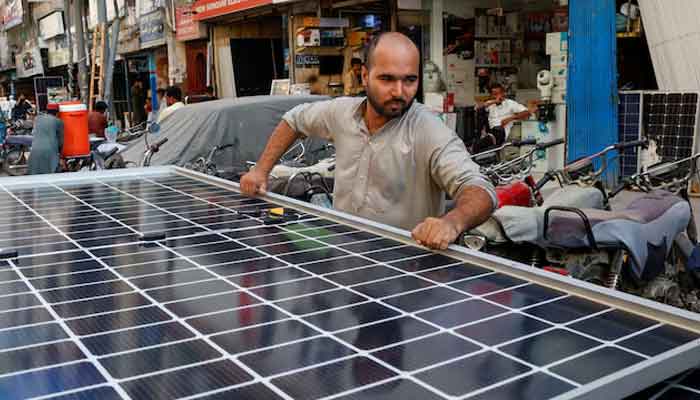
Pakistan imported more solar panels than almost any other nation in the world by the end of 2024 despite no sweeping law, no global investment blitz, no prime minister announcing a green revolution.
While facing economic challenges and high energy poverty, the country is witnessing one of the most unexpected clean energy success stories of the decade, reported The Independent.
According to the Global Electricity Review 2025 by Ember, an energy think tank in the UK, Pakistan has joined the ranks of the world's leading solar markets, importing 17 gigawatts of solar panels last year alone.
A doubling of the previous year’s imports is being represented by this surge. It makes Pakistan one of the top global buyers of solar panels.
Because it is not driven by a national programme or utility-scale rollout, the scale of Pakistan's imports is particularly striking.
Majority of the demand instead appears to come from rooftop solar installations by households, small businesses and commercial users looking to secure cheaper and more reliable electricity in the face of frequent power outages and rising energy costs.
Rooftop solar installations in homes and businesses in the country has soared as a “means of accessing lower-cost power”, according to Ember's report. Pakistan’s experts echo this analysis.
Programme director at Renewables First, Muhammad Mustafa Amjad told The Independent that the solar boom is best understood as a “survival response” by people and businesses that were “increasingly being priced out of the grid due to inefficient planning and unreliable supply”
“It marks a structural shift,” he added, “in how energy is perceived in Pakistan.”
Pakistan’s solar panel imports in fiscal year 2024 alone amount to roughly half of the national peak power demand, said Amjad.
“Rooftop solar is fast becoming the preferred energy provider,” he added. “And the role of the grid has to massively adapt in order to remain relevant in a fast-transitioning energy economy.”


-
 Former Goldman Sachs chief Sherwood leaves Britain as tax hike fears mount
 -
 China issues new guidelines for government agencies to mitigate AI job displacement
 -
 US tech stocks tumble as AI spending jitters spark market sell-off
 -
 Anthropic partners with Hg to launch European AI consultancy
 -
 OpenAI partners with Google Cloud to sell flagship AI models to enterprises
 -
 Tesla drops as spending cuts raise questions about AI and robotics plans
 -
 Barclays to cut 5,000 jobs as AI reshapes banking
 -
 China's brain-computer interface market could reach $920m by 2028
-
 Bombardier shares rise as Trump drops threat to block aircraft sales in US
 -
OpenAI seek to raise $30 billion at $1.4 trillion valuation ahead of Anthropic IPO
-
Supreme Court rejects Google challenge to patent office review policy: Here's why
-
Netflix faces scrutiny over user engagement ahead of Q3 report