Pak, China ink agreement paving way for first Pakistani astronauts to travel to space
Two Pakistani astronauts will undergo training at the Astronaut Center of China, says statement
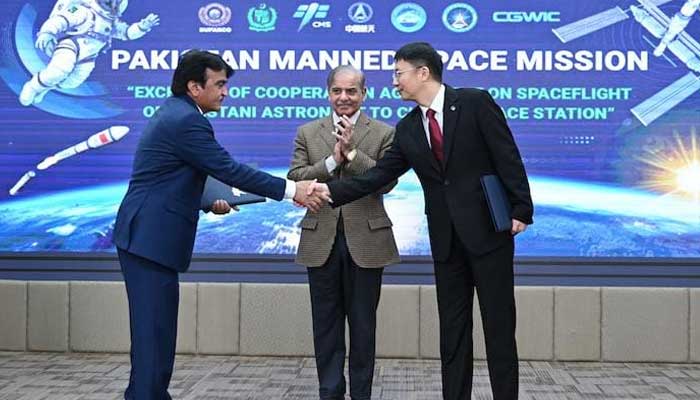
In a landmark development, Pakistan Space & Upper Atmosphere Research Commission (Suparco) and China Manned Space Agency (CMSA) signed a cooperation agreement for first Pakistani astronauts to set off on a mission to Tiangong – the Chinese Space Station (CSS).
Under the landmark agreement, two Pakistani astronauts will undergo training at the Astronaut Center of China, according to an official statement issued on Friday.
One selected astronaut shall be trained as a scientific payload specialist, preparing for specialided research aboard the China Space Station (CSS).
It said the astronaut selection process will be completed by 2026, with the aim of flying in an upcoming mission as per CSS planning.
The first national astronaut’s mission at CSS will involve conducting cutting-edge scientific experiments in various fields, including biological and medical sciences, aerospace, applied physics, fluid mechanics, space radiation, ecology, material sciences, microgravity studies, and astronomy.
The statement further said that the China Space Station is equipped with state-of-the-art experimental racks and external adaptors, facilitating multi-domain research in these fields.
The findings from these experiments are expected to drive significant advancements in medical research, environmental monitoring, and space technology, with potential applications benefiting life on Earth.
Addressing the signing ceremony, Prime Minister Shehbaz Sharif, hailed the occasion as a defining moment in the nation’s space journey, emphasising that it will be remembered as a cornerstone of Pakistan's aspiration in human spaceflight.
He highlighted the country’s steady progress in space science and technology, noting past achievements in satellite launches, indigenous expertise development, and contributions to global scientific advancement.
The Director General of China Manned Space Agency (CMSA), Dr Lin Xiqiang, expressed enthusiasm for this partnership, reaffirming China’s dedication to strengthening international cooperation in space exploration.
He highlighted that Pakistan's participation in the China Space Station programme reflects the deep-rooted ties between the two countries and will contribute to mutual knowledge-sharing and the broader vision of peaceful space exploration for the benefit of humanity.
Suparco chairman, Mohammad Yousuf Khan, regarded the agreement as a landmark in Pakistan's space journey, emphasising perseverance, adaptability, and technological progress.
He invited youth, professionals, and academia to actively participate in Pakistan’s astronaut program, encouraging them to contribute to the nation’s space exploration efforts through research, innovation, and skill development.
This mission is set to enhance Pakistan's standing in the global space community, driving advancements in scientific research and technological innovation.
The research conducted aboard the CSS will provide valuable insights into space sciences, contribute to the development of innovative solutions, and reinforce Pakistan's role in international space exploration efforts.


-
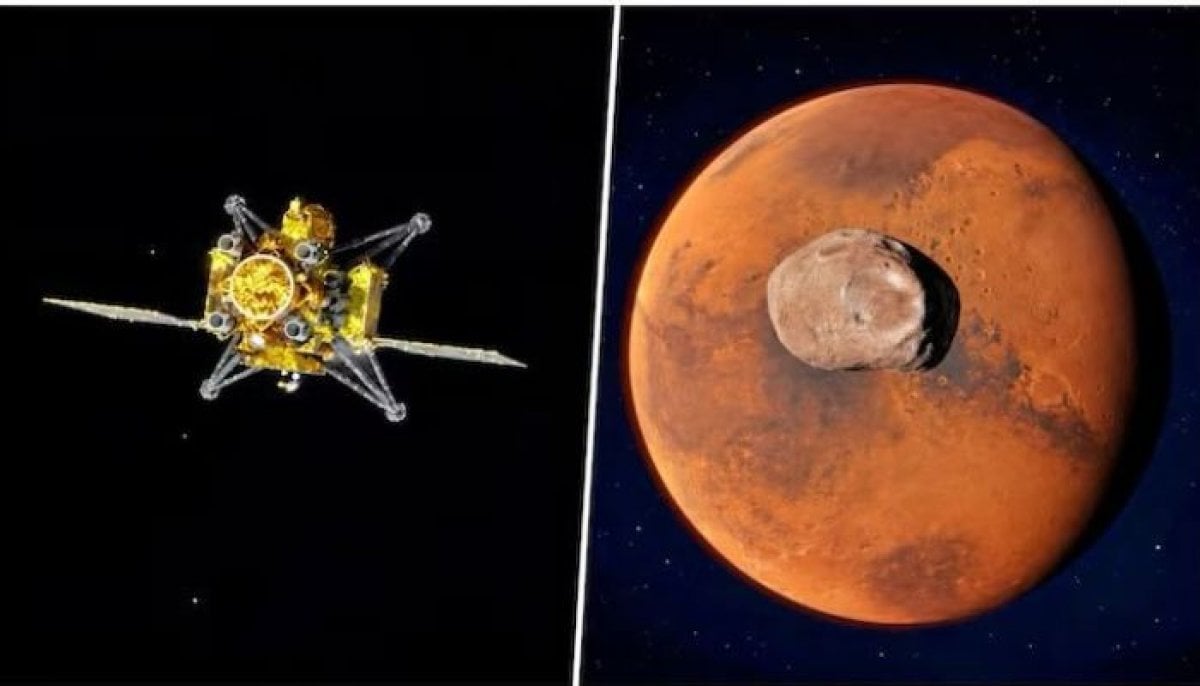 Japan launches world’s first mission to bring sample back from phobos
 -
 Orionid meteor shower 2026: Peak date, viewing tips and what to expect
 -
 Why Mars looks blue in NASA’s unedited curiosity panorama?
 -
 Blue Origin upgrades new Glenn rocket launch infrastructure to take on SpaceX
 -
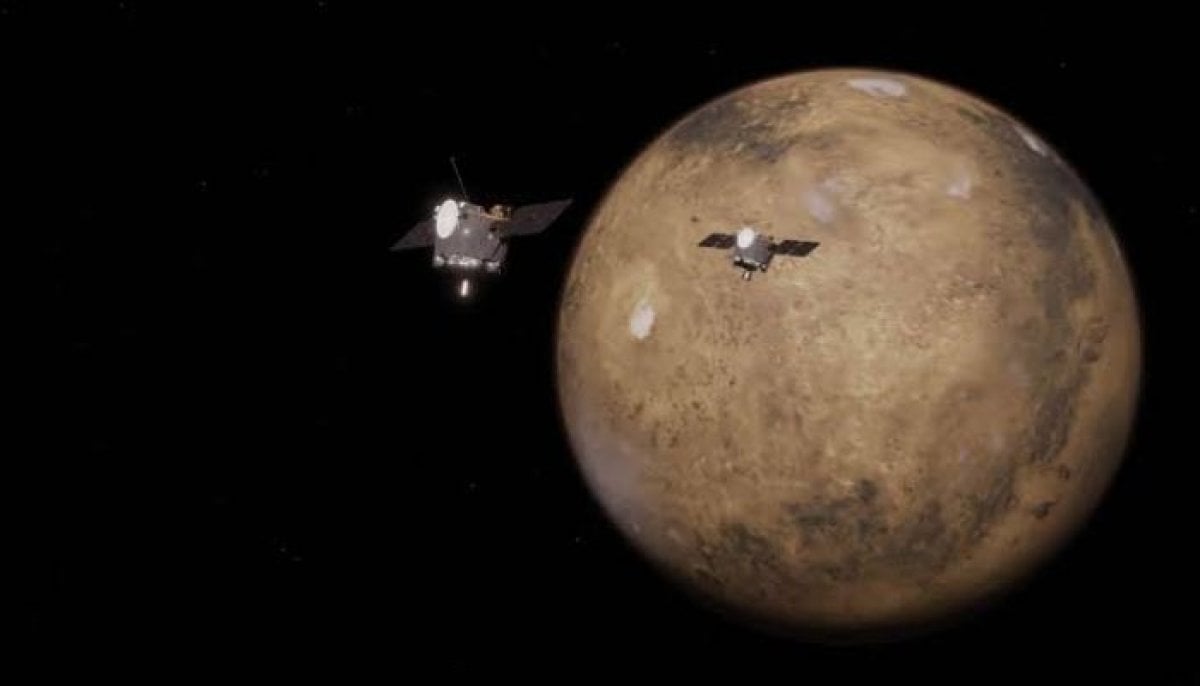 NASA’s next Mars mission targets Phobos and Deimos, not Red Planet
 -
 Is AI ready to rewrite our understanding of physics?
 -
 Astronomers identify possible first green star in 27 years of research
 -
 New study sounds alarm as Doomsday Glacier melts more aggressively than thought