'City killer' asteroid now has 3.1% chance of hitting Earth, warns NASA
"I'm not panicking," Bruce Betts, chief scientist for nonprofit Planetary Society told AFP
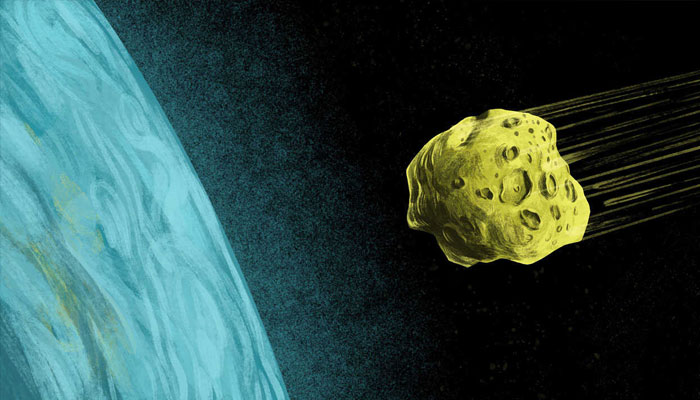
NASA has reported that an asteroid, named 2024 YR4, now has a 3.1% chance of striking Earth on December 22, 2032, a threat it calls the most significant ever recorded by modern forecasting, AFP reported.
While these odds might sound alarming, experts assure the public that there's no need to panic. According to Bruce Betts, the chief scientist for the Planetary Society, though the probability is rising, it is likely to fluctuate before eventually dropping to zero as more data is gathered. The asteroid was first detected on December 27, 2024, by the El Sauce Observatory in Chile.
Measuring between 130 and 300 feet in diameter, 2024 YR4 is considered a "city killer" due to its size and velocity, which could reach nearly 40,000 miles per hour if it impacts Earth.
Although an event of this scale is unlikely to cause a global catastrophe like the asteroid that wiped out the dinosaurs, it could result in severe destruction.
If it enters Earth's atmosphere, the asteroid could trigger an airburst with a force of about eight megatons of TNT—far greater than the Hiroshima bomb.
A potential impact site could include regions over the eastern Pacific Ocean, South America, Africa, or South Asia, among others.
The International Asteroid Warning Network (IAWN) first raised the alarm about the asteroid's increasing probability of impact in January. NASA’s latest calculations reflect a 3.1% chance, with odds of one in 32—comparable to correctly guessing the outcome of five coin tosses in a row.
Notably, the asteroid's trajectory is taking it towards Jupiter, meaning its next close approach to Earth won't occur until 2028. Additionally, the James Webb Space Telescope is set to begin observations next month to refine calculations on its orbit.
While the risk is significant, experts emphasise that there is ample time to prepare. Spacecraft technology, like NASA’s successful 2022 DART mission, could be deployed to deflect the asteroid if necessary.


-
 Russia sounds alarm over Iran tension as US forces surge in region
 -
 18 terrorists killed as forces foil suicide attack on camp in Mir Ali, conduct IBOs
 -
 World’s eyes on Cairo as ‘indirect’ Israel-Hamas talks begin today : Eight Muslim states FMs see Gaza moves as ‘real chance’ for lasting ceasefire
 -
![[Analysis] Agreement brings nuclear stakes to Gulf security](https://www.thenews.com.pk/assets/uploads/updates/2025-09-20/s_1344970_061402_updates.jpg) [Analysis] Agreement brings nuclear stakes to Gulf security
[Analysis] Agreement brings nuclear stakes to Gulf security
-
 SpaceX ‘Space Junk’ is on a collision course with the Moon, scientists say
 -
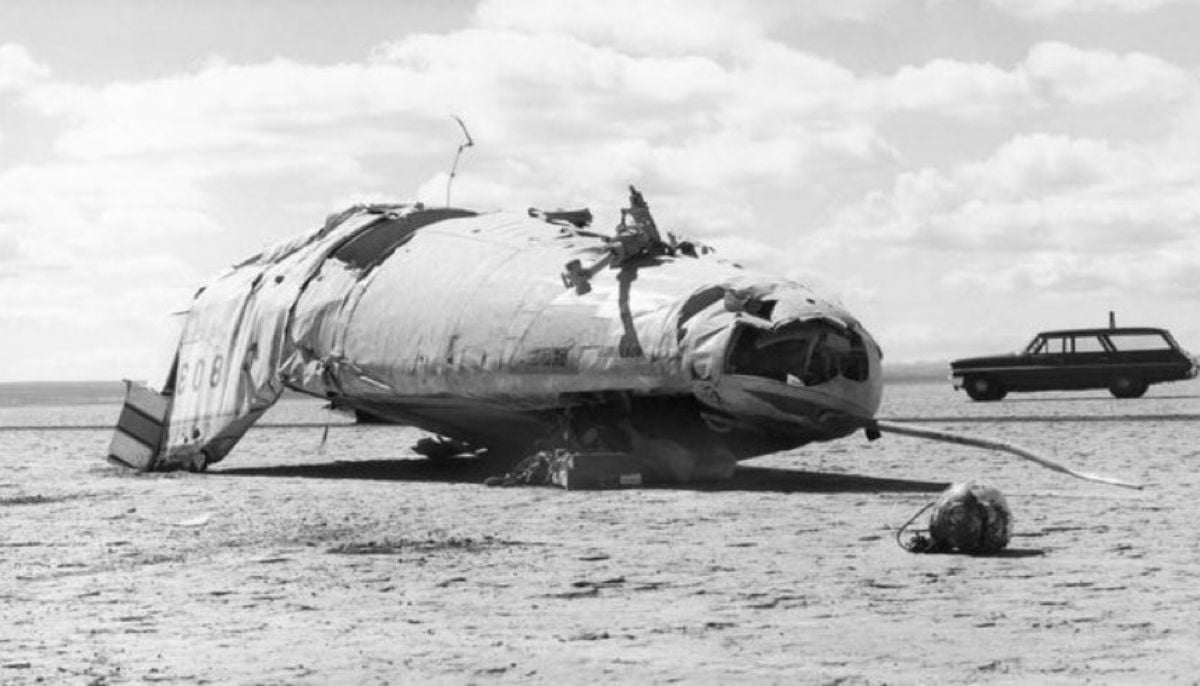 Do you know what happened on May 10, 1967? NASA's M2-F2 disaster explained
 -
 Why the Southern Ocean is melting: Antarctica’s sea ice resilience reaches a breaking point
 -
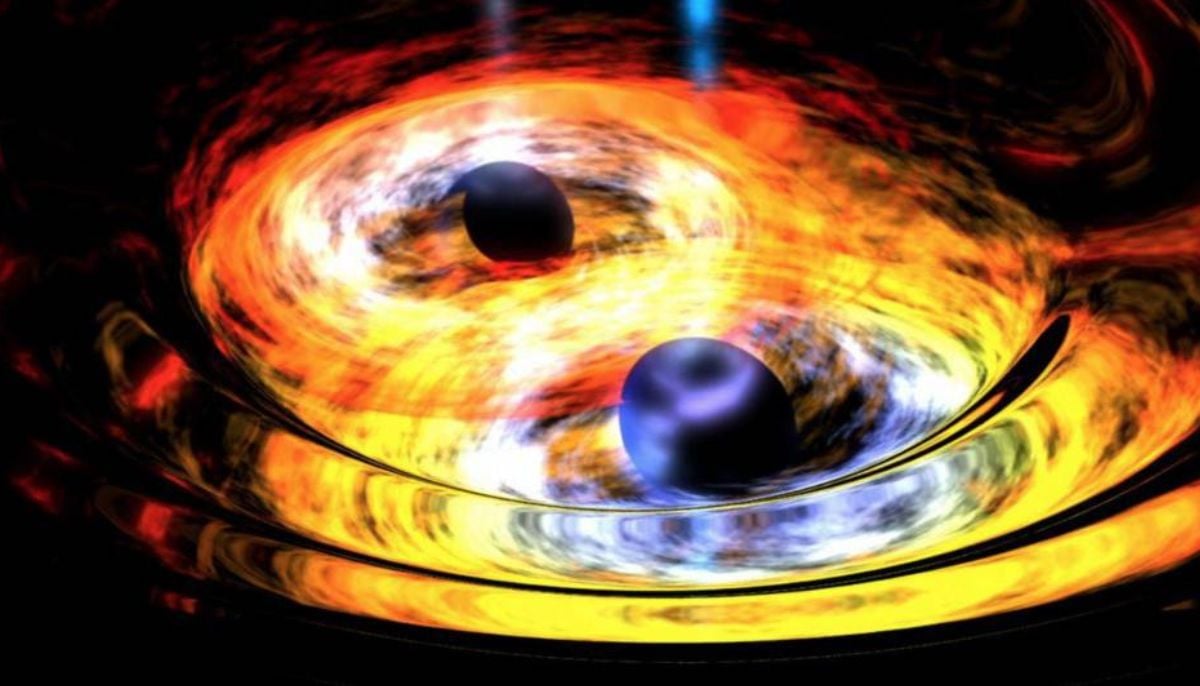 Giant black holes are cosmic ‘Frankensteins’ built by mergers, new study reveals
 -
 NASA’s Artemis 2 moon launch becomes the largest event in Space Coast history
 -
 Is success written in your DNA? New study reignites nature vs nurture debate
 -
 Researchers found 240-million-year-old giant mysterious 'sand creeper'
 -
 New solar-powered process turns plastic waste into clean hydrogen
-
 Giant squid detected off Western Australia coast as deep-sea study reveals hidden species
 -
Astronomers discover unexpected atmosphere beyond Pluto on tiny solar system object
-
‘Evolution is not always random’: Study finds same gene reused for 120 million years
-
Real-life Tatooine moment: Astronomers discover 27 ‘Star Wars’ like planets orbiting two suns