Pakistan committed to meeting IMF targets: finance minister
Fin Min Aurangzeb assures that govt will provide policy support to enhance private enterprise

ISLAMABAD: Finance Minister Mohammad Aurangzeb reaffirmed the government's commitment to meeting the targets of the International Monetary Fund (IMF) programme while advancing structural reforms aimed at stabilising Pakistan's economy.
Addressing an event in Islamabad, Aurangzeb outlined significant progress in economic recovery, noting a reduction in the current account deficit, a 70-month low in inflation, and positive indicators of economic improvement.
He emphasised the importance of sustaining this momentum, stressing the need to build on these achievements to strengthen the foundation of long-term economic stability.
The finance minister said that the government would provide policy support to enhance private enterprise, particularly in the housing sector, which he identified as a key economic driver.
The Ministry of Finance has reported that inflation in Pakistan had reached its lowest level in six-and-a-half years. The ministry also projected improved financial stability in the months ahead, citing the effects of ongoing reforms.
Despite these gains, challenges persist. Earlier this week, the finance ministry acknowledged its failure to meet three targets under the $7 billion Extended Fund Facility (EFF).
These included the Federal Board of Revenue's (FBR) first-quarter revenue collection targets and allocations for health and education. Provincial governments also missed the October 2024 deadline to align their agriculture income tax legislation with federal requirements.
The federal finance secretary, during a briefing to the National Assembly Standing Committee on Finance, outlined these shortfalls.
He noted that while Punjab has enacted the necessary tax reforms, Khyber Pakhtunkhwa’s legislation is awaiting assembly approval. Taxation of agricultural income is expected to commence on January 1, 2025.
To address fiscal gaps, the government plans to introduce a 5% Federal Excise Duty (FED) on pesticides and fertilisers in the next fiscal budget.
Additionally, the federal and provincial governments have agreed to redistribute spending responsibilities as per the 18th Constitutional Amendment.
These include contributions to higher education, health, and social protection, alongside efforts to enhance tax collection on services, property, and agricultural income.
While progress on some IMF benchmarks has been slow, the government is optimistic about regaining momentum in reforming the economy and meeting long-term fiscal goals.


-
 Gold’s price drop explained: Drivers, risks and 2026 outlook
 -
 NSF fee changes in place across Canada as government limits charges on personal accounts
 -
 Adobe stocks drop after strong revenue but weak guidance for next quarter
 -
 Canada interest rates: what to expect amid rising oil prices and global uncertainty
 -
 Senate prioritizes Housing as Crypto bill hits new impasse, stalling Trump’s ‘Clarity Act’ agenda
 -
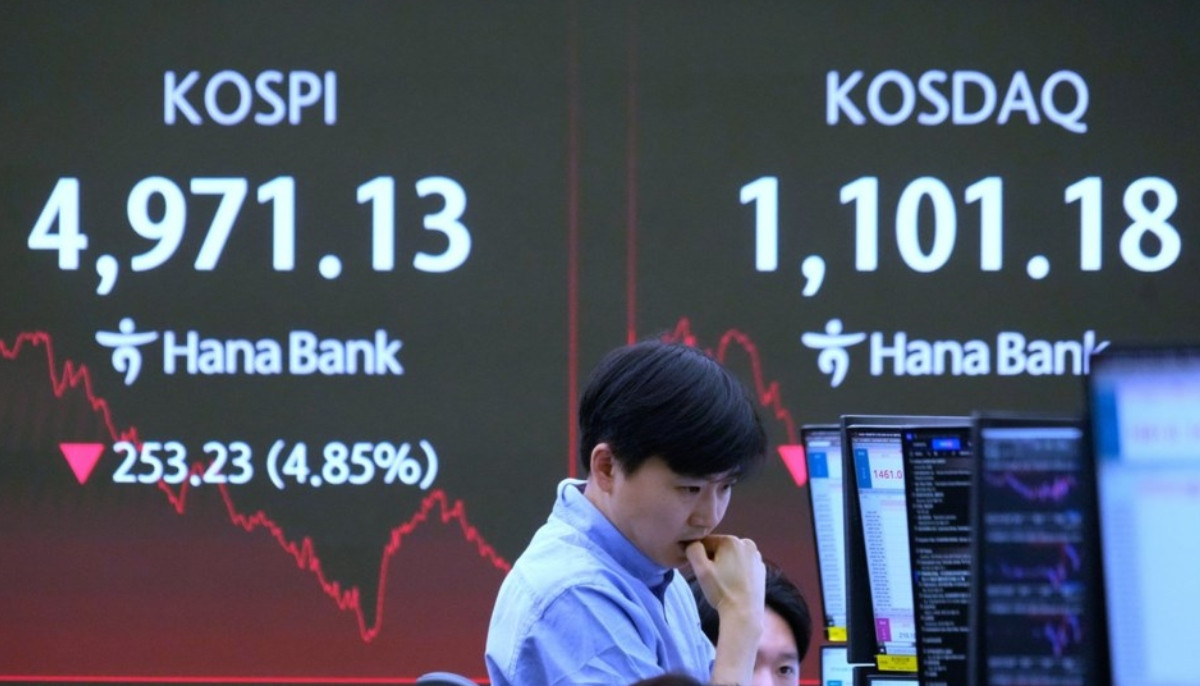 South Korea markets sink as Kospi records worst day in decades amid Iran conflict
 -
 Silver, gold prices surge amid geopolitical uncertainty after US-Israel attack on Iran
 -
 Netflix, Paramount shares surge following resolution of Warner Bros bidding war
-
 Paramount wins Warner Bros. bidding war as Netflix abandons deal: Here’s why
 -
Singapore's Grab plans AI-driven expansion and new services to boost profit by 2028
-
Bitcoin bounces from $62,000 as on-chain metrics signal prolonged weakness: Here is everything to know
-
BTC price today: Bitcoin sinks below $65K on trade uncertainty