Scientists discover hidden pattern in birds feather that makes them fly
"It was only recently that scientists realised that birds are not the only flying dinosaurs," says O'Connor
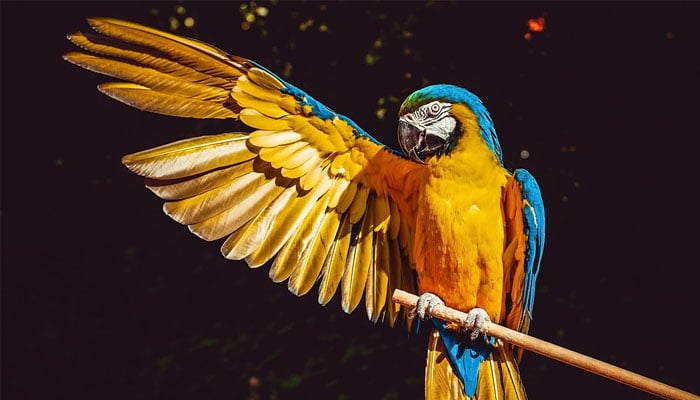
A thorough examination of hundreds of preserved bird specimens from collections in museums worldwide has found that the bird's ability to fly is made possible by a certain set of feather rules, Science Alert reported.
These newly discovered rules allow scientists to better predict which dinosaurs could fly too.
"One of the most successful vertebrate lineages on our planet is theropod dinosaurs, which includes birds," says palaeontologist Jingmai O'Connor of the Field Museum of Natural History.
He added, "One of the reasons that they're so successful is their flight. One of the other reasons is probably their feathers because there's such a versatile structure."
These new findings may put an end to several long-standing paleontological arguments on whether dinosaurs ever learned to fly.
Examining the wing feathers of 346 different species of birds from museums around the world, Field Museum of Natural History ornithologist Yosef Kiat, discovered an interesting trend. All flying birds, from the smallest hummingbird to the largest eagle, had 9 to 11 asymmetrical flight feathers called primaries.
However, the number of primary feathers in flightless birds varied immensely.
"It's really surprising that with so many styles of flight, we can find in modern birds, they all share this trait of having between nine and eleven primary feathers," Kiat adds. "And I was surprised that no one seems to have found this before."
Looking at fossils up to 160 million years old, the researchers identified which bird ancestors shared these traits and were therefore likely to have been able to fly.
Out of 35 different species of extinct birds, Kiat and O'Conner identified some that had the right feathers for flight and others that did not.
Among the most plausible fliers is the archeopteryx, which is thought to be among the first animals to resemble birds.
"It was only recently that scientists realised that birds are not the only flying dinosaurs," says O'Connor.


-
 Mysterious ‘phoenix planet’ found around the remains of a dying star
 -
 First possible evidence of Planet Nine found in infrared data
 -
 Elon Musk announces SpaceXAI rebrand to SpaceXSI following presidential order on 'Super Intelligence'
 -
 ISS Command changes hands in emotional ceremony
 -
 Moon water acts nothing like it does on Earth, study finds
 -
 Hawaii’s Hōlei sea arch collapses after centuries on Big Island: What happened
 -
 Solar system may have a much shorter lifespan than we thought
 -
 Singapore builds world’s ultra-precise clock outperforming US, China