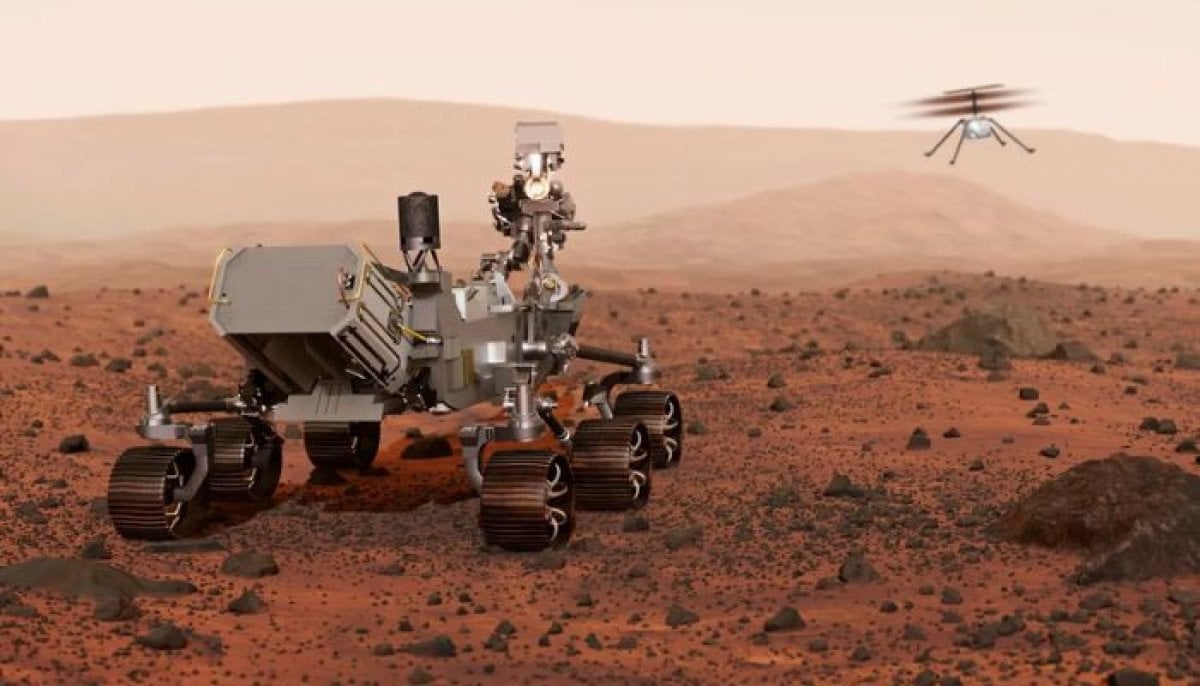
Nasa's OSIRIS-APEx spacecraft set to study 'God of Chaos' asteroid
"God of Chaos" asteroid is predicted to pass Earth at distance of only 20,000 miles in 2029
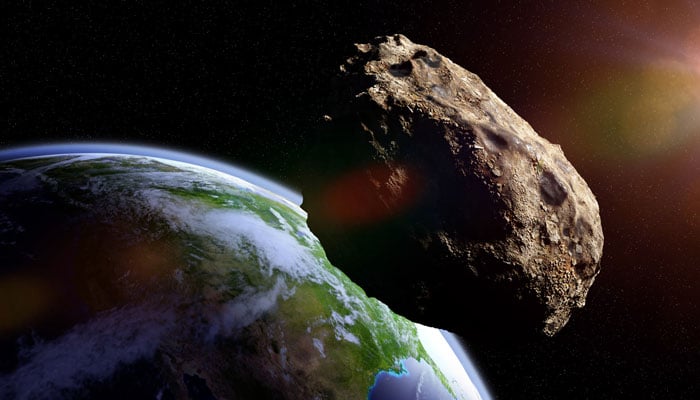
OSIRIS-APEx, a Nasa spacecraft that recently returned from outer space, has been restarted with the goal of studying the "God of Chaos" asteroid approaching the Earth's orbit.
Nasa stated that the spacecraft OSIRIS-REx, which is now called OSIRIS-APEx, has been launched to analyse the asteroid Apophis's unprecedented close flyby of Earth in 2029. This type of event "hasn't happened since the dawn of recorded history."
After seven years of gathering samples from the space asteroid Bennu, the spacecraft returned to Earth in September.
On April 13, 2029, Apophis, popularly known as the "God of Chaos," is predicted to pass Earth at a distance of only 20,000 miles, which is closer than some artificial satellites. It is possible that Apophis will even be visible from the Eastern Hemisphere.
Only every 7,500 years does the roughly 370-yard-wide rock come this near to Earth.
The space rock will be impacted by the Earth's gravity as it approaches orbit, and OSIRIS-APEX will observe the resulting changes to observe "how its surface changes," as stated by project scientist Amy Simon.
It is anticipated that the asteroid's day, which is currently around 30.6 hours long, will change due to Earth's influence. It might also result in earthquakes and landslides for the "God of Chaos."
“We know that tidal forces and the accumulation of rubble pile material are foundational processes that could play a role in planet formation,” Dani Mendoza DellaGiustina, principal investigator for OSIRIS-APEX at the University of Arizona in Tucson, said in a statement.


-
 Can NASA save Swift Observatory telescope? Inside space agency's bold rescue mission
 -
 Scientists found 'super-puff' planets 1,110 light-years away
 -
 Scientists find ancient microbial life in places it shouldn't exist
 -
 Why Marijuana is suddenly sending thousands of dogs to hospitals in US?
 -
 36 years on, Hubble shows how stars actually change over time
 -
 Hidden magma beneath Mars? Scientists' 'unexpected' discovery raises new questions about alien life
 -
 Rare 3,200-year-old coral blue hole discovered in South China Sea
 -
 What happens at black hole’s event horizon? Scientists find the first-ever clue
-
 Scientists discover evidence of fires used by humans 1.8 million years ago
 -
Did NASA just uncover evidence of ancient life on Mars? Key discoveries explained
-
Four powerful earthquakes strike three continents within hours: Scientific link or coincidence?
-
Mysterious interstellar comet passing our solar system may be 12 billion years old, scientists say