Pilgrims hurl pebbles at ‘devil’ as largest Hajj since pandemic winds down
Wednesday's devil-stoning marks the start of the three-day Eid ul Adha holiday
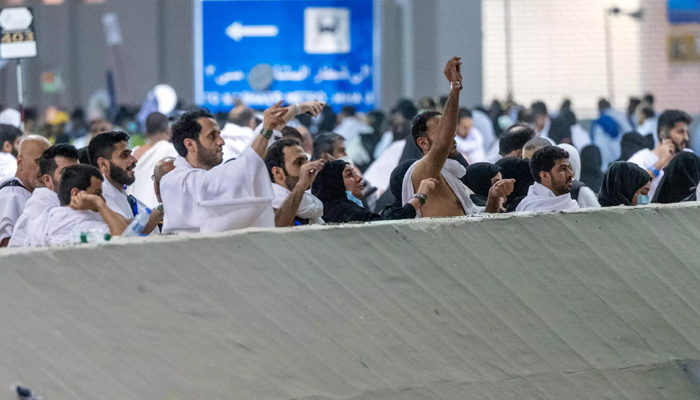
More than 1.8 million pilgrims pelted pebbles as part of the ritual — "stoning of the devil" — on Wednesday as largest Hajj pilgrimage in years winds down in Saudi Arabia.
From dawn in Mina, vast crowds of Muslim pilgrims began pelting three concrete monoliths representing Satan, and heading to Makkah for a final "tawaf" — walking in circles around the holy Kaaba.
More than 1.8 million people are taking part in the first unrestricted Hajj since COVID struck in 2020. About 2.5 million, the most on record, joined the pilgrimage in pre-pandemic 2019.
As well as crowds at every turn, the visitors have had to contend with ferocious temperatures at the Hajj, which currently coincides with the Saudi summer.
Temperatures peaked at 48 degrees Celsius on Tuesday, when the pilgrims prayed for hours at Mount Arafat, and were expected to hit 47 degrees on Wednesday in Mina.
As helicopters buzzed overhead, pilgrims flooded the streets around Mina. In Makkah, the Grand Mosque was packed from the early morning with pilgrims, who loudly congratulated each other on completing the rituals.
This year's attendance figure, announced by Saudi officials on Tuesday, falls well short of their predictions of beating the 2019 record, possibly because of the heat or the cost, at around $5,000 per person just to attend.
The overwhelming majority of the 1.8 million pilgrims — more than 1.6 million — are foreigners, coming from about 160 countries.
Saudi Arabia's King Salman issued a message wishing "wellbeing and prosperity on our country, on Muslims and the world" and announced he would pay for sacrificial animals for nearly 5,000 of the poorest pilgrims.
Wednesday's devil-stoning marks the start of the three-day Eid ul Adha holiday, celebrated by Muslims by buying and slaughtering livestock to commemorate Prophet Ibrahim (AS) willingness to sacrifice his son.
In recent years the Hajj, which follows the lunar calendar, has fallen in the Saudi summer, at a time when global warming is making the desert climate even hotter.
Experts have warned that temperatures of 50 degrees Celsius could become an annual occurrence in Saudi Arabia by the end of the century.


-
 Trump hails progress in US-Iran talks: ‘Getting along very well’
 -
 Two killed in light aircraft crash in Essex, England
 -
 Trump’s Hormuz operation sparks the biggest rift in US-Saudi relations in years: Here’s why
 -
 Netanyahu seeks to end US financial aid to Israel within decade: What’s behind the plan?
 -
 Who is Melat Kiros? Democratic Socialist defeats 15-term incumbent in Colorado primary
 -
 How Trump earned more than $1 billion from crypto after returning to the White House: Report
 -
 Why foreign investors are buying Canadian government bonds in record numbers
 -
 Police lay charges against 11 teens following Nooran Rezayi shooting investigation