With the completion of the 10th review of the Pakistani economy by the International Monitory Fund (IMF),
With the completion of the 10th review of the Pakistani economy by the International Monitory Fund (IMF), the government is in an upbeat mood. It claims every now and then that the major macroeconomic indicators have substantially improved, particularly those relating to growth, fiscal deficit, debt, and revenue. The government criticised its political opponents and critics who it believes are misleading the nation about the state of the economy.
Finance Minister Ishaq Dar told the media last week that independent economists were only in the opposition for the sake of it to paint a dismal picture of the economy. He repeatedly questioned the “highly exaggerated debt numbers” being given by his critics and urged them to stop playing with the destiny of the country.
 He kept referring to the international financial institutions (IFIs), international credit rating agencies and the bilateral creditors, who according to him, have appreciated the improvement in the economy due to which the confidence of investors was getting better about Pakistan as being the best place for investment.
Though almost every credible economist is warning about the country’s burgeoning external debt, Dr Hafiz Pasha, Dr Ashfaque Hasan Khan, Shahid Kardar, Sakib Sherani and Dr Shahid Siddiqui, are more vocal about the debt and its sustainability. They maintain that the foreign debt of over $70 billion would reach $85 billion by 2017-2018 and would threaten the very sovereignty of the State.
Governor State Bank of Pakistan Ashraf Mahmood Wathra, who received huge appreciation for bringing out a very balanced annual report, however, did not agree with the government’s critics, especially those who were talking about the increasing foreign debt and its sustainability.
“Everybody is bringing out his own debt numbers and thinks he is right but unfortunately they are unprepared to look into the details by being unbiased,” he said.
He said that all the carefully made calculations showed that the country’s total external debt stood at $65.1 billion in financial year 2015. He said that total external debt and liabilities (EDL) went down by $262 million to reach $65.1 billion by end June 2015. “Despite significant amount of loan disbursement by IFIs and mobilisation of $1 billion loan through Sukuk in 2014-15, the stock of external debt and liabilities declined on the back of big $4.2 billion revaluation gains.” At the same time, he said decline in external debt repayments and improvement in the current account balance, reduced the fresh borrowing requirements of the government during the last financial year.
“Therefore, it is totally absurd on part of the government’s critics to claim that the foreign debt is rapidly increasing. They must know that part of the acquired loan was used to build foreign exchange reserves, which led to an improvement in our debt servicing capacity,” Wathra said.
Debt, he said, is acquired to finance fiscal and current account deficits by simple arithmetic, the addition to the debt stock and the combined amount of funds required to finance the twin deficits should match. However, there are a number of factors which prevent this simple equation to hold , like accounting on accrual basis or cash basis, draw down of deposits of reserves to finance the deficits, and currency revaluation in case of external debt. All in all, financial year 2014/15 witnessed a substantial amount of $4.2 billion on account of current revaluation which contributed to the reduction of external debt stock.
People, he said, should not forget that after heavy repayments in financial year 2013/14, the external debt servicing posted 28.9 percent decline during 2014/15. The negative growth in the debt servicing was brought about by lower repayments to the IMF that peaked out in financial year 2013/14. In addition to the IMF, repayments to Asian Development Bank (ADB) also declined during 2014/15.
However, he said debt servicing pressure is expected to re-emerge, as euro bonds issued in financial year 2006 ($500 million) and financial year 2007 ($750 million), will mature in financial year 2016/17. The repayment of rescheduled Paris club debt under official development assistance (ODA) will start from financial year 2017. The repayment of the ongoing Extended Fund Facility (EFF) programme with IMF will begin in financial year 2018 and five year euro bond issued in April 2014 ($1 billion) will mature in financial year 2019, whereas Sukuk bond issued in November 2014 will mature in financial year 2020. “The impact of the recent fall in Pakistan’s external debt is visible in almost all the external debt sustainability indicators during 2014/15.” Generally there are two types of indicators to access the country’s ability to make repayments of external debt, solvency indicators and liquidity indicators.
Solvency indicators include external debt to GDP which shows the debt bearing capacity of the country and external debt servicing to forex earnings ratio which shows debt servicing capacity. Therefore, external debt to GDP witnessed a significant decline during the last financial year. The improvement in this indicator was due to the drop in the external debt caused by hefty revaluations gain during 2014/15.
On the other hand, he said decline in external debt repayments coupled with strong growth and remittance, improved the debt servicing capacity of the country. Specifically the external debt servicing (EDS) – foreign exchange earnings (FEE) ratio dropped to 8.5 percent in financial year 2015 from 12.9 percent last year. Other measures of debt servicing capacity that is EDS – XE ration also declined during the period.
Public debt to GDP ratio declined to 64.8 percent in financial year 2015 from 65.1 percent last year, primarily on the back of revaluation gains of $4.2 billion along with some improvement in fiscal and current account balances. The revaluation gains were the result of global currency movements due to the ongoing changes in the world economies. While the pace of debt accumulation declined with an addition of Rs1.4 trillion to the debt stock in financial year 2015, compared with Rs1.7 trillion in financial year 2014, the debt to GDP ratio is still very high, Wathra admitted.
“Despite these improvements I don’t say that there are no challenges which of course need to be carefully tackled, but undue criticism should be avoided by everyone,” he said.
However, renowned economist Dr Hafeez Pasha is very critical of what he described the “growing accumulation of external debt” and said there must be some limit to the madness so as to avoid serious difficulties in future. “The year 2018 will be a crisis year when Pakistan will start making repayments including that of the Chinese commercial loan”, he said, adding that external debt would reach to over $90 billion in 2018 and cross $100 billion in 2019-20 because of the extensive government borrowing.
The current external financing of $6 billion, he pointed out, would be more than doubled, like $13 billion in 2018-19 and to “me it is frightening because the government’s net borrowing in three months remained $1.6 billion which also included $750 million short term borrowing and I am sorry this unprecedented borrowing for consumption will ultimately collapse our repayment capacity,” he warned.
He regretted that while the government has continued borrowing to manage its current account deficit, it had no time to think why trade balance increased despite the decline in the international oil prices. There is a 14 percent decline in exports, and there will be hard times ahead in the future due to the colossal loss in cotton production. This year cotton crop is the lowest in 12 years and the country will have four million cotton bales less than the previous year. “Trade deficit has increased, imports have doubled, exports have fallen to the level of home remittances and under these circumstances, things would further aggravate because the debt relief given by the international agencies will be ending this year,” he warned.
He said debt repayment to be started in 2018, will bring the situation to an alarming end and “I am really worried as to how the government will cope with this horrifying phenomenon.”
Another noted economist Dr Ashfaque Hasan Khan said he has no doubt that the country was fast heading towards the debt trap as the reckless borrowing continues unabated, with rulers unprepared to give any heed to any saner voice.
Everybody today, he said, was questioning the debt sustainability as Pakistan’s external debt and liabilities are expected to reach $105 billion or 387 percent of export earnings by 2019-20 from $65.2 billion or 271 percent of export earnings in 2014-2015.
“If the current trends in borrowing continue, Pakistan’s debt profile will most likely worsen in the next five years. Who does not know that the present regime has contracted over $30 billion in loans in just two and a half years as against almost $25 billion contracted by the previous Pakistan Peoples Party regime in five years,” Dr Khan said.
There had been a huge difference of opinion between the government’s economic team led by Finance Minister Ishaq Dar and the independent economists and experts who also include former finance ministers, economic advisors, central bank governors and former secretaries of the finance ministry.
Dar believes certain turnaround in the economy has been achieved, proof of which was the support of the IFIs and bilateral creditors. He also is of the opinion that those who are creating despondency should keep in mind the national interest before commenting negatively about the state of the economy.
How and when the government and its critics start thinking alike over the state of the economy is a million dollar question. People generally allege that the Fund officials deploy double speak when it comes to honestly verifying facts and assessing the correct state of the Pakistani economy.
Reports emanating from Dubai are that all was not well in terms of assessing the correct state of the economy, for which the IMF adopted a reconciliatory approach. Allegedly, if the IMF officials demand strict performance criteria, it may destabilise Pakistan, which is not acceptable to either the US or its allies.
The fund officials are believed to have leaked a story to a western wire service that suggested that IMF was constrained to oblige Pakistan at the behest of the US and EU senior authorities.
For Pakistan, the way to come out of a mounting debt trap is to generate new resources and enhance the declining exports. Exports and exporters are suffering for want of genuine government support. There is a consensus that there exists a potential to increase exports, and the only hindrance are the missing policies to benefit the exporters.
The good thing is that home remittances continue to increase while the IFIs are there to also support the country. The only thing is to listen to those who have plans to contain the rising debt and enhance reserves, not through more and more borrowing, but by diversifying exports and ensuring value-addition which is a decades old requirement.
The writer is a senior journalist based in Islamabad
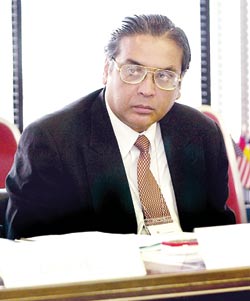
Dr Hafeez Pasha
Economist
“The year 2018 will be a crisis year when Pakistan will start making repayments including that of the Chinese commercial loan...Trade deficit has increased, imports have doubled, exports have fallen to the level of home remittances and under these circumstances, things would further aggravate because the debt relief given by the international agencies will be ending this year.”
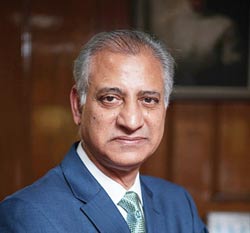
Ashraf Mahmood
Wathra, Governor State Bank of Pakistan
“Everybody is bringing out his own debt numbers and thinks he is right but unfortunately they are unprepared to look into the details by being unbiased. Despite significant amount of loan disbursement by IFIs and mobilisation of $1 billion loan through Sukuk in 2014-15, the stock of external debt and liabilities declined on the back of big $4.2 billion revaluation gains.”
Dr Ashfaque Hasan Khan
former advisor of the finance ministry
 “If the current trends in borrowing continue, Pakistan’s debt profile will most likely worsen in the next five years. Who does not know that the present regime has contracted over $30 billion in loans in just two and a half years as against almost $25 billion contracted by the previous Pakistan Peoples Party regime in five years.”