
Ruling coalition under pressure
Imran Khan was all set to announce the second round of protest plan today (Saturday)
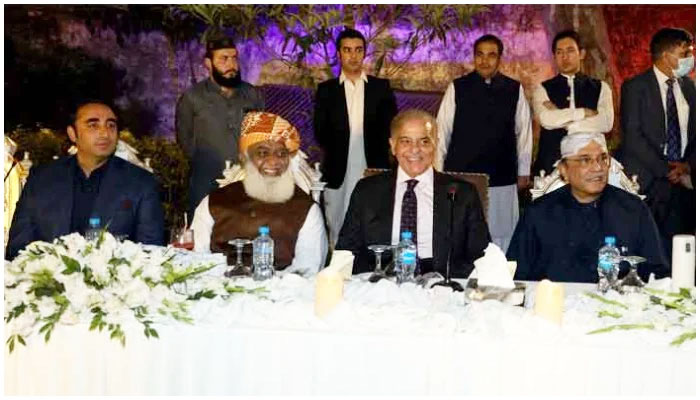
All is not well within the ruling coalition of 11 parties after the recent increase in petroleum prices, the second time in a month, beside rise in fuel tariff and reports of more “tough measures” in coming days. Can the PMLN-led government sustain the mounting public pressure as former Prime Minister Imran Khan has come out with a new protest strategy to force the government to call for fresh elections?
While Pakistan Tehreek-e-Insaf (PTI) and Jamaat-e-Islami (JI) organised demonstrations against the increase in petroleum prices on Friday, Imran Khan was all set to announce the second round of protest plan today (Saturday).
But, the more disturbing news is coming from Karachi where differences have started surfacing between PPP-led Sindh government and MQM-Pakistan. Prime Minister Shehbaz Sharif knows that if any of the coalition partners parts ways, it will be “curtains” for him and the fall of his government. All is also not well within the Balochistan Awami Party (BAP).
The PPP and MQM held two rounds of talks over key demand of MQM – amendment to the Sindh Local Government Act – and the statement of MQM convener Khalid Maqbool Siddiqui could be the breaking point.
Well-informed sources revealed amid mounting pressure after some unpopular decisions and reports of cracks within the coalition, the heads of the ruling parties will meet next week to take some decisive decisions on the economic and political challenges.
With Rs30 per litre rise in the petroleum prices, petrol would now be sold at Rs209.86 and diesel at Rs204.15 and hike in power tariff, the coalition government is finding it hard to meet the challenges and pressure. Besides, the news that the international credit rating agency Moody’s has downgraded Pakistan outlook from positive last year to negative would also have adverse effects on the market.
While Prime Minister Shehbaz Sharif, Finance Minister Miftah Ismail and their team are trying their best to defend these unpopular decisions, the basic question being raised is what was the logic behind move of vote of no-confidence which has put the ruling coalition in trouble and increased the popularity of Imran Khan which was going down prior to March 7.
The finance minister will present the national budget next week which many believe would be tough in the backdrop of deteriorating economic conditions. The ruling coalition is finding it hard to counter the opposition’s narrative that economic condition was far better before March.
The ruling parties have not been able to ease the political tension, but on the contrary are taking steps which would aggravate the existing tension. The way the government tackled the May 25 long march by force using state machinery did not go well beside some bad optics like the presence of some members of Sharifs family during the Prime Minister’s tour of Saudi Arabia and Turkiye.
Now in this backdrop, can the ruling parties perform well during the by-elections on 20 MPA seats in Punjab on July 17? These seats had fallen vacant after PTI MPAs were de-seated. These polls will be followed by local government elections in the province and in interior of Sindh later this month, and in Karachi and Hyderabad next month.
These elections will be the real test for ruling parties as well as PTI and could set the tone for the next general elections whenever they are held before or after August, 2023.As situation stands today, Imran Khan’s party has a clear edge over the ruling coalition if elections are held in the next few months. But he is still showing a lack of confidence as he seeks political support of the Establishment whom he believed could play a role in overthrowing the government and in the next polls. He also wants a “pro-active role of the judiciary”, both in ensuring his future long march and speedy disposal of cases against Sharifs and Zardari, his two key opponents.
Therefore, some sort of a middle-ground is being considered like an interim set-up for at least six months before going for fresh elections in the first quarter of 2023 in March or April. Much now depends on how the present ruling coalition parties cope with the situation as the March 9 decision of vote of no-confidence is hurting them badly.
The writer is a columnist and analyst with Geo, Jang and The News
Twitter:@MazharAbbasGEO


