
Long wait for information about Musharraf’s trial
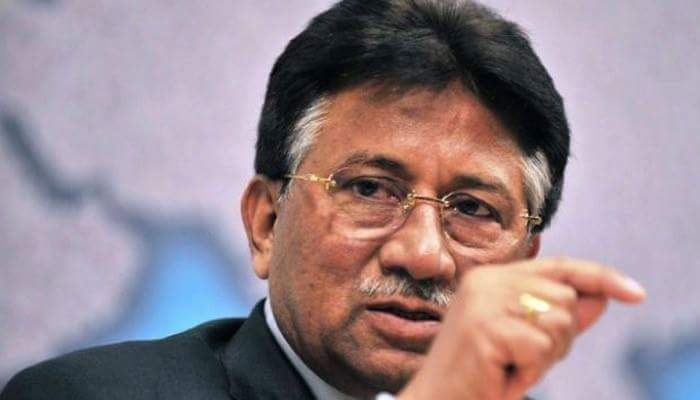
ISLAMABAD: Almost a year ago, a citizen had sought information about the expenses incurred on former military dictator Gen (R) Pervez Musharraf’s trial. Ministry of Law and Justice dilly-dallied as usual. The ministry declared itself a classified division which couldn’t be called into question.
But when Pakistan Information Commission (PIC), the appellant body against public bodies’ denying information, corrected the ministry that it was answerable under Right of Access to Information Act 2017, it came up with a new excuse.
The ministry said the record being demanded was dealt by the Ministry of Interior. In the order handed by PIC, where the Ministry of Law and Justice was reminded of its responsibilities towards citizens, a supplementary directive was also issued for the Ministry of Interior on March 11 this year.
The complainant, Mukhtar Ahmed Ali, then filed a fresh application to the Ministry of Interior notwithstanding the fact it was the duty of the Ministry of Law and Justice to forward the application to the Ministry of Interior.
Five months on, the response is still awaited. This month, PIC again took up the complaint and this time against the Ministry of Interior ordering it to provide the requisite information. Response is still awaited. Mukhtar is a former information commissioner of Punjab and Right to Information activist. What information has been sought? An application was filed under Right of Access to Information Act 2017, commonly known as RTI law, by a taxpayer who wanted to know how judiciously the money contributed by the public through their taxes is being used by the Ministry of Law and Justice. To the amazement of Mukhtar Ahmed Ali, the applicant, the ministry declared him ineligible to post such inquiries. Referring to a Cabinet Division notification dated 1993 but without explaining and sharing the contents of that notification, the ministry claimed exemption saying it has been declared “classified, therefore, your request is hereby declined on this aspect.”
In October last year, Mukhtar had demanded the answers of four questions. He asked for the list of the members of the prosecution team and relevant law firms engaged for Musharraf’s trial under article 6 of the Constitution and the fee paid to them. In addition, he sought details of out of pocket expenses (e.g. travel, lodging, meal etc.) reimbursed to them. He also asked for the fee break-up paid to each member of the legal team.
After refusal from the ministry, Mukhtar has moved to Pakistan Information Commission, an appellant body set up under the RTI law for dealing with the complaints lodged by the applicants against the government. In a rejoinder sent to the ministry, Mukhtar said his application has been rejected without being given due consideration as the ministry “has not even bothered to consider Article 19A and the (Right of Access to Information) Act in the course of deciding my application.”
The ministry’s response is vague, his rejoinder continues, as it refers to a Cabinet Division’s notification but doesn’t explain what exactly the notification says and how is that applicable in relation to an application filed under the Right of Access to Information Act 2017. The Act has overriding effect vide its section 25 and, therefore, inconsistent provisions in other laws cannot be used to deny information requests under this Act, he further argues. “Yet the Ministry has tried to hide behind a mere administrative notification, which has no legal effect in the presence of explicit provisions of the Right of Access to Information Act 2017,” Mukhtar explains.
The requested information is about the use of tax-payers money in relation to a matter of public importance and, therefore, its disclosure is not likely to cause any harm to public interest, he argues.
“In fact, by disclosing the requested information, the Ministry of Law and Justice will demonstrate its commitment to transparency and good governance and, hence, will contribute to building public trust in the government,” he noted.
Mukhtar further pointed out that the Cabinet Division notification which was referred to in order to decline the information request was issued a long before the insertion of Article 19A in the Constitution in 2010 whereby right to information was declared a fundamental right of every citizen. Therefore, he concludes, reliance on the notification to deny access to information amounts to deliberate violation of citizens’ fundamental rights. The said notification, therefore needs to be declared as contradictory to the Article 19A of the Constitution and provisions of the Right of Access to Information Act 2017, he demanded.







-
 Winter Olympics 2026: Lindsey Vonn’s Olympic Comeback Ends In Devastating Downhill Crash
 -
 Adrien Brody Opens Up About His Football Fandom Amid '2026 Super Bowl'
 -
 Barbra Streisand's Obsession With Cloning Revealed
 -
 What Did Olivia Colman Tell Her Husband About Her Gender?
 -
 'We Were Deceived': Noam Chomsky's Wife Regrets Epstein Association
 -
 Patriots' WAGs Slam Cardi B Amid Plans For Super Bowl Party: She Is 'attention-seeker'
 -
 Martha Stewart On Surviving Rigorous Times Amid Upcoming Memoir Release
 -
 Prince Harry Seen As Crucial To Monarchy’s Future Amid Andrew, Fergie Scandal
 -
 Chris Robinson Spills The Beans On His, Kate Hudson's Son's Career Ambitions
 -
 18-month Old On Life-saving Medication Returned To ICE Detention
 -
 Major Hollywood Stars Descend On 2026 Super Bowl's Exclusive Party
 -
 Cardi B Says THIS About Bad Bunny's Grammy Statement
 -
 Sarah Ferguson's Silence A 'weakness Or Strategy'
 -
 Garrett Morris Raves About His '2 Broke Girls' Co-star Jennifer Coolidge
 -
 Winter Olympics 2026: When & Where To Watch The Iconic Ice Dance ?
 -
 Melissa Joan Hart Reflects On Social Challenges As A Child Actor