
Mystery behind Gen Kayani’s extension unravelled
Gen Kayani was reportedly upset by rumours that his extension was being granted at request of US government
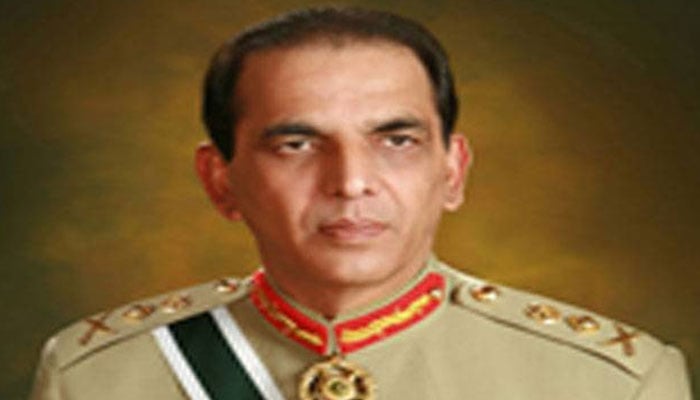
ISLAMABAD: Although President Asif Ali Zardari was not a puppet of the establishment, he went to great lengths to keep the generals satisfied—from matters related to their service extensions to political engineering in Parliament and actions against the PMLN, reveals his former spokesman in a book documenting Zardari’s tenure in the presidency.
Gen Ashfaq Parvez Kayani, then army chief, granted extensions to a few lieutenant generals without seeking government approval. The prime minister, Yusuf Raza Gilani was unaware of these extensions. Zardari dismissed suggestions to confront Kayani over the matter, Farhatullah Babar wrote in The Zardari Presidency (2008–13) published by the Lightstone publishers. Even the circumstances surrounding Kayani’s own extension remained unclear, particularly regarding whose direction it was carried out on.
Since the extension coincided with a visit to Pakistan by Hillary Clinton, then US Secretary of State, many assumed the two developments were interconnected. During interactions with Zardari, Babar writes, whenever he asked about this, the President remained silent. This was not unusual, as Zardari often made decisions without consultation. At times, even Bilawal was surprised. Each time, Zardari would urge skeptics within the party to trust him.
Gen Kayani was reportedly upset by rumours that his extension was being granted at the request of the US government. Late Arif Nizami told Babar that Kayani personally called him to request that such reports should not be published. Nevertheless, the issue remained widely discussed. As expected, shortly after Clinton’s visit concluded, Kayani’s extension was officially notified. Zardari, in conversation with Babar, called it a bold decision, whereas Chaudhry Ahmed Mukhtar, then defence minister, told Babar he was opposed to it.
Years later, after leaving office, Zardari told a party meeting that Kayani had initially sought an extension of only 12 to 18 months. Zardari said he told Kayani that the position of army chief was not like that of a police chief to be given a piecemeal extension. He, therefore, decided to grant him a full three-year term, Zardari told Kayani.
Recalling how Sadiq Sanjrani became Senate Chairman, Babar writes that a possibility was discussed involving ‘independent senators’ joining the PPP in exchange for support in the election of the chairman and deputy chairman. The independent senators initially agreed. When Bilawal asked what guarantee there was that they would join, the ‘interlocutors’ stunned everyone with their response that there was no guarantee at all. Someone proposed asking the ‘independents’ to swear on the Holy Quran that they would keep their promise. Zardari rejected this idea and announced the support of the ‘independents’ without any guarantee.
On another occasion, Zardari was determined to counter legislation seen as benefiting Nawaz Sharif, who had first been disqualified in the Panama Papers case and then barred from holding party office. The PMLN reversed this by passing the Election Act 2017 to pave the way for his re-election as party head. A few days after its passage, a mysterious resolution surfaced in the Senate. It was unsigned by any party but had the support of several senators. A senator from the erstwhile Fata told Babar that the resolution’s copy was handed to him and other Fata senators by an intelligence officer.
A few days later, Zardari convened an emergency party meeting at Zardari House where he criticised the PMLN’s amendment. “Without any discussion, Zardari said it must be reversed.” Senator Raza Rabbani pointed out that since the amendment had not yet received presidential assent, it could not be repealed merely by passing a resolution. Zardari questioned why a resolution couldn’t be moved against a law passed by Parliament, to which Rabbani replied that such a move would be ineffective and appear odd.
Babar recalled that a senator from Fata showed him a copy of the resolution. Zardari was not surprised. Instead, he stated that a copy was also in the possession of a PPP senator, a trusted confidant. When that senator shared it, it turned out to be the same copy Babar had seen — allegedly handed over by an intelligence officer.
A few PPP senators from Karachi had already signed the resolution, which was eventually moved by the PPP and passed by the Senate. With support from other political parties, it declared that anyone ineligible to be elected as a lawmaker should also be ineligible to serve as an office-bearer of a political party. “One could not but marvel at the mystery behind the Senate resolution,” Babar writes.
Referring to another episode from April 2018, Babar writes that some controversial statements attributed to Zardari, targeting Nawaz Sharif, were aired by the media — including a claim that Zardari’s 2015 anti-army statement (against Gen Raheel Sharif) had been made at Nawaz Sharif’s suggestion.
Some PPP leaders denied that Zardari had made such claims, stating that only the party spokesman issued Zardari’s official statements. As Babar, then Zardari’s spokesperson, prepared to hold a press conference disowning the interview as false, Zardari called and instructed him to cancel it. “This turn of events left me puzzled,” Babar writes.


