
Charsadda APC rejects minerals bill
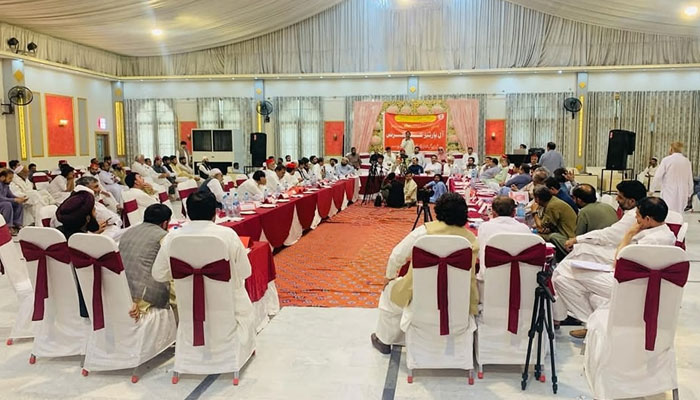
CHARSADDA: All Parties Conference (APC) convened by the Awami National Party (ANP) on Monday, unanimously rejected the Mines and Minerals Bill 2025.
ANP’s district president, Shakeel Bashir Umarzai, chaired the conference, which was attended by local leaders of political parties. However, the Pakistan Tehreek-e-Insaf (PTI) and the Pashtun Tahaffuz Movement (PTM) local leaders did not turn up there.
Representatives and leaders of traders’ associations, teachers’ associations, lawyers, private school organisations and journalist unions were also present.During the conference, discussions were held on the bill presented in the provincial assembly related to mines and minerals.
A joint declaration was issued afterward, which was read out by ANP district president Shakeel Bashir Khan.The declaration said that the proposed bill was against the 18th Constitutional Amendment, provincial autonomy, and the authority of the provincial assembly.
It asserted that control over the province’s resources belonged to the people and their elected representatives, and that bureaucratic control over these resources was unacceptable.The APC rejected the control of the Special Investment Facilitation Council (SIFC) and the federal minerals wing over the province’s resources. It categorically rejected the establishment of unconstitutional councils such as the SIFC.
The APC demanded that all federal institutions should remain within their constitutional limits and called on the Khyber Pakhtunkhwa Assembly to fully reject the bill and initiate a legal and constitutional struggle against it.
The declaration also read that all political parties participating in the APC would launch a strong protest movement against the bill.It appealed to youth, social organisations and trade unions to join the struggle.







-
 ‘Terms Aren't Good Enough’: Trump Resists Iran Deal Despite Global Turmoil
 -
 Shopify CEO Uses Claude AI To Build MRI Viewer
 -
 Warning Issued: Savannah Guthrie Mom Nancy's Kidnapper Could Strike Again
 -
 ByteDance Seedance 2.0 Global Rollout Pause Over Copyright Claims
 -
 Royal Expert Breaks Silence On Meghan Markle, Prince Harry's Reaction
 -
 Cameron Diaz Spotted Filming New Project In New York As Acting Comeback Resumes
 -
 Inside King Charles’ ‘delicate Position’ Over Andrew: Will He Be Stripped More?
 -
 Jennifer Aniston’s Ground-breaking Skincare Secret Revealed
 -
 ‘Savior’ Of The Firm Kate Middleton Gets Her Time In The Sun: ‘Such A Blend Of Tradition & Modernity’
 -
 Tim Meadows Nominates Actor He Knows To Be The Funniest Person
 -
 Inside ‘deranged’ Claims Against Prince Harry, Meghan Markle: ‘Its Gone From Criticism To Fixation’
 -
 Queen Elizabeth, Prince William Tea Time Essential Spilt By Expert
 -
 Prince Harry Trip To Australia ‘is Not About Money’
 -
 Kris Jenner Lets Out ‘troublesome’ Opinions About College Education
 -
 James Cameron Fawns His Friendship With Sigourney Weaver
 -
 King Charles, Camilla To Snub Prince Harry’s America Meet-up Attempt