
Russian CG voices concern over tension between India, Pakistan, calls for talks
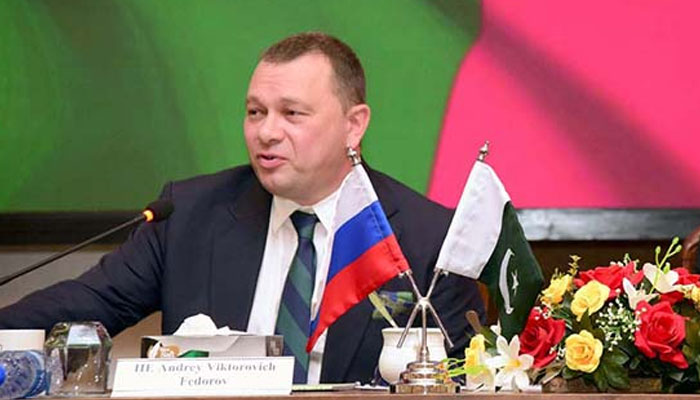
Russian Consul General Andrey Viktorovich Fedorov has expressed concern over the tension between Pakistan and India, and advised the two South Asian neighbours to hold talks to resolve their issues.
“I am not a diplomat from a Western country. I believe that both countries should sit [at the negotiation table],” he said while delivering his keynote address on Wednesday at a thought-provoking session on the theme “End of World War II and the Post-War World Order”.
The session was organised by the Karachi Council on Foreign Relations (KCFR). The event took place at a hotel and was attended by a large and diverse audience comprising diplomats, scholars, students, media personnel, and members of the business and strategic community.
Consul General Fedorov offered deep insights into the historical significance of World War II’s conclusion and the far-reaching changes it triggered in the global power structure. He emphasised the critical role the Soviet Union played in defeating fascism and highlighted how the post-war order shaped modern-day international relations, institutions, and alliances.
He underlined the importance of diplomacy, mutual respect, and multilateralism in preserving global peace and security in today’s multipolar world. The session was followed by a vibrant Q&A, during which audience members engaged the consul general on issues ranging from Russia’s current foreign policy to regional peace efforts in South Asia.
Nadira Panjwani, chairperson of the KCFR, in her welcome remarks, appreciated the Russian Federation’s consistent diplomatic engagement with Pakistan and underscored the importance of platforms like KCFR in fostering dialogue and deeper understanding between nations. She also touched upon current global challenges and drew comparisons between past and present geopolitical dynamics.







-
 Why Attorney Says Justin Baldoni 'not Off The Hook' Despite Court Ruling? Report
 -
 'Abuses' Shouted At Andrew Mountbatten-Windsor As Protesters Breach Security
 -
 Jenna Dewan Reveals Mindset She Follows When Life Gets 'nuts'
 -
 Erika Kirk Dating Claims Surface As She Reclaims Charlie Kirk's Legacy
 -
 Karoline Leavitt Joins Erika Kirk At Washington Event
 -
 Lizzo Reveals Major Update About Her Sobriety Journey
 -
 Princess Beatrice’s Husband Edo ‘questioning Marriage’: ‘His Standing & Status Is Impacted’
 -
 Petition To Strip Blake Lively Of 'It Ends With Us' PGA Credit Gains Massive Support
 -
 New Development In Blake Lively Lawsuit After Judge Dismisses Major Claims
 -
 Blake Lively, Taylor Swift Texts Resurface After Court Ruling
 -
 Prince Harry’s Behavior Towards Queen Elizabeth Gets Exposed: ‘He Drove Her To Paranoia’
 -
 Blake Lively, Justin Baldoni's Legal Case Receives Latest Update
 -
 Kylie Jenner Says Goodbye To Her Halloween Era: 'I've Retired It'
 -
 Mel B Reveals Why Spice Girls Documentary May Never Happen
 -
 Maggie Gyllenhaal Recalls Emotional Impact Of Seeing Husband With Other Woman
 -
 Scarlett Johansson Shares Wild First Concert Story