
Elite capture of space
Gagarin’s view from orbit revealed a magnified version of a pale blue dot with no boundaries
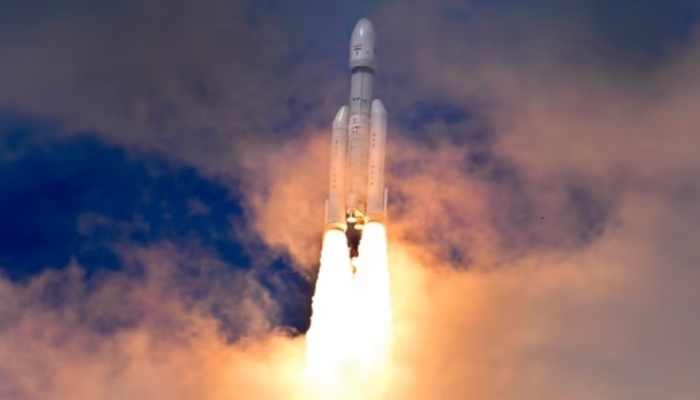
On April 12, 1961, Yuri Gagarin’s first human spaceflight not only carried the hopes of the Soviet Union but also bore the aspirations of humanity as a whole.
Gagarin’s view from orbit revealed a magnified version of a pale blue dot with no boundaries. The first human spaceflight sparked a dream that mankind’s next frontier would be a realm of boundless possibilities, which could be realised through altruistic unity. However, 64 years later, that dream has begun to fade as it is caught between idealistic notions of space exploration and realist competition over space commercialisation.
As Apollo 11 astronauts planted their flag on the Moon, the US declared victory in the space race. In the decades that followed, space-faring nations shifted focus toward more grounded ambitions in space exploration. More recently though, private space firms have been reaching for the stars. They claim to have reignited the dwindling flame of space exploration by achieving breakthroughs in developing reusable rockets and advanced spacecraft, driving a rapid decline in launch costs.
Although often described as a ‘New Space’ revolution, some counter argue it as a regression in space exploration, advancing the privatisation of space more than its democratisation. While private space firms espouse noble ideals, their ventures have largely served the elite. SpaceX, in particular, pioneered billionaire joyrides to space in 2021. Last year in September, SpaceX’s Polaris Dawn mission made headlines with the world’s first private spacewalk undertaken by a billionaire. Months later, on March 31, 2025, this milestone was overshadowed by a SpaceX polar-orbital mission funded by yet another billionaire.
Optimists argue that even billionaire-funded spaceflights have contributed to scientific research, conducting experiments that benefit humanity both in space and on Earth. On the other hand, cynics would argue that the focus should be on the welfare of billions who are suffering on Earth rather than the pastime amusement of the rich in space.
Thus, humanity’s future in space appears to be grounded not in astro-egalitarianism, but in astrocapitalism projecting Earth’s existing inequalities into the cosmos. This can be attributed to the projected growth of the global space tourism market, which is expected to reach $3.69 billion by 2028. Consequently, while the cold war space race had two players, the new space race includes hundreds of corporations with competing agendas that have evolved from ‘one small step for man’ to ‘one giant leap for shareholder value’.
For instance, the International Space Station (ISS), which has long become a symbol of astropolitical cooperation, is planned to be replaced by several private space stations backed by multibillion-dollar corporations, which would also serve as tourist outposts in space. China also reportedly plans to welcome tourists on-board the Tiangong space station. In the US, leading space firms are eyeing the suborbital tourism market. This year, on February 25, Blue Origin completed its tenth crewed suborbital flight, in which the passengers experienced a few minutes of weightlessness while seeing Earth against the darkness of space.
Meanwhile, a sub-orbital spaceflight by Virgin Galactic can reportedly cost upwards of $450,000 per seat. Such exorbitant flight tickets make space tourism a very costly endeavour even for millionaires. However, to the relief of wealthy space tourists, companies like Space Perspective are offering a ‘cheaper’ way to reach the edge of the atmosphere in a luxurious space balloon for just $125,000.
Regardless of the cost, projections suggest that many wealthy individuals remain eager to purchase seats on human spaceflights - an opportunity that has drawn interest from private space firms worldwide. In China, for instance, the commercial space sector has recently accelerated efforts to develop suborbital spacecraft to capitalise on the growing space tourism market.
While the expansion of suborbital flights signals growth in this emerging industry, it also reflects a deeper shift: the privatisation of the once collective and aspirational dream of human space exploration. Relatedly and somewhat ironically, Sierra Space is developing the ‘Dream Chaser’, the only commercial spaceplane designed to land on conventional runways.
However, space tourism represents just one facet of the broader commercialisation of space. Over the past year, there has been notable progress in developing in-space manufacturing and mining missions.
With International Day of Human Space Flight having just passed on April 12, we should reflect on how we reached for the stars but grasped a mirror instead. What spaceflight has revealed about corporate greed is as telling as what it’s shown us about the cosmos. Moving forward, tough questions will need to be confronted about the future of human spaceflight. Will it be reduced to joyrides for the ultra-rich elite? Will it be underpinned by collective prosperity or corporate profits? Can it be a future where space inspires all of humanity and unites rather than divides?
The way forward requires advancing an international consensus that considers space not as a resource to be exploited, but as the shared heritage of all humanity, as enshrined in the Outer Space Treaty. It is also imperative to advance discussions on reaching a consensus on regulatory frameworks that prevent the consolidation of monopolies in orbit. We have overcome gravity; now we need to overcome something even more stubborn: capitalistic greed.
The writer is a research assistant at the Centre for Aerospace & Security Studies (CASS), Islamabad. He can be reached at: cass.thinkers@casstt.com







-
 From Coup To Presidency: Myanmar Junta Leader Tightens Grip On Power
 -
 What Is Sarah Ferguson’s Memoir & Tell-all About? Mole Finally Speaks Out
 -
 Global Energy Crisis: US Gas Price Hit $4 While Hong Kong Prices Soar To $15
 -
 Everything To Know About Chris Rock's New Lover Simone Henault
 -
 Zendaya Unveils Who Tops Her Collaborator List
 -
 Goldman Sachs Under Police Surveillance In Paris Amid Investigation
 -
 Lindsey Buckingham Attacker Makes Bold Family Claim
 -
 Meghan Markle Wanted Spotlight Over Kate Middleton At Queen’s Deathbed
 -
 Is All Chocolate Healthy? Here’s What The Science Really Says
 -
 Kelly Osbourne Finds New Love After Sid Wilson Split
 -
 GTA 6 Trailer 3 May Drop Soon As Fans Count Down
 -
 Why NASA Artemis II Won’t Take Straight Path To Moon: ‘Figure-8’ Route Explained
 -
 Manon Bannerman Makes Major Change Regarding KATSEYE Return
 -
 Prince Harry ‘emotionally Blackmailing’ Cancer-stricken King Charles With UK Visit Demands?
 -
 Even In Space: NASA Artemis II Astronauts Hit Outlook Glitch Mid-mission
 -
 Artemis II Hurtles Ever Closer To The Lunar Far Side