
An abandoned study on water resources can ease Sindh-Punjab tension
A study was commissioned, bringing together a joint team of Pakistani and American water resource experts
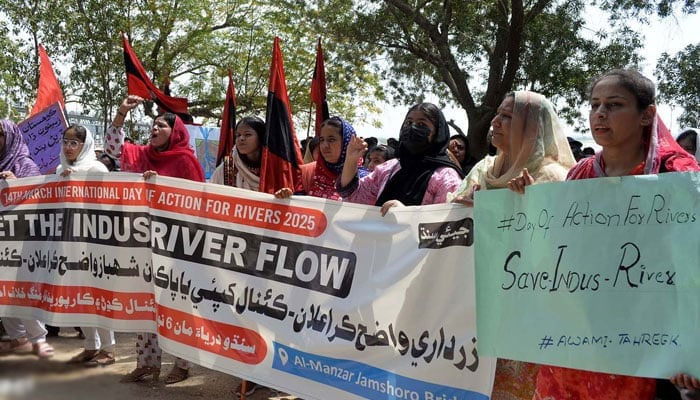
ISLAMABAD: When the Green Pakistan Initiative was launched, some experts raised concerns about the feasibility of irrigating millions of acres of barren land using water already allocated to the provinces, especially through the construction of new canals.
To address these concerns, a study was commissioned, bringing together a joint team of Pakistani and American water resource experts.
This collaborative effort put forward a transformative solution: a sustainable, cost-effective, and time-efficient method of irrigation that upheld the water rights of all federating units, without the need for constructing new canals. Far from threatening their share, the approach could actually help address their water needs. Unfortunately, like many bold initiatives before it, the study met an all-too-familiar fate.
Once the study was completed, the experts were paid a substantial sum of Rs100 million, as agreed. However, the report was subsequently shelved. No presentation was arranged, nor were the authors invited to explain how their findings could be implemented. Despite repeated offers and follow-ups by the team, the government showed little interest in engaging with the results.
The study was led by Dr Hassan Abbas, a PhD in Hydrology and Water Resources from Michigan State University, in partnership with ZiZAK Private Limited (Pakistan) and Hydrosimulatics Inc. (USA). It was formally submitted in April last year to the officials overseeing Green Pakistan’s water management component, but it has yet to be publicly shared, largely because its presentation would require the involvement of the original authors.
It is possible, according to Dr Hassan, to irrigate barren land without utilising water currently allocated to the provinces or constructing expensive new canals such as the controversial Cholistan Canal. The proposed solution includes a pilot water system capable of delivering 150 cubic feet per second (cfs)—sufficient to irrigate 100,000 acres—using high-efficiency irrigation systems that can operate 24/7, unlike conventional methods.
Rather than drawing from over-stressed existing resources, the study proposed the use of riverine aquifers—underground water reserves discovered beneath the Sutlej (34 million acre-feet) and Indus (110 million acre-feet) rivers. Scientific testing confirmed the water’s safety and the aquifers’ capacity for sustainable extraction: 300–400 cfs from Sutlej, and 1,000+ cfs from Indus. Enhancing riverine environments could further boost these yields. The next hurdle, water delivery, was addressed through a novel, locally-adapted solution: Horizontal Collector Wells (HCWs). These specially designed, Pakistani-style wells would be installed near riverbanks to draw and filter water, which could then be pumped over long distances, powered by solar energy. This approach minimises environmental impact and eliminates the need for large-scale canal infrastructure.
The study also made a compelling financial case. The pilot project’s estimated cost of $3.47 million per cfs is significantly lower than the $6.2 million per cfs required for canal construction. More importantly, unlike canal-based systems, it avoids reallocating existing water, an issue that remains deeply contentious among the provinces.
Despite its promising potential, this study remains unutilised, a visionary plan gathering dust. If revived, it could reshape Pakistan’s agricultural future while preserving vital ecological and interprovincial harmony.







-
 Prince William, Kate Middleton Push Drastic Changes
 -
 Prince William Has ‘little Forgiveness’ In Heart For Prince Harry
 -
 Netflix Eyes Shock Revival Of 'The Crown' After Andrew Mountbatten Windsor Controversy
 -
 Jennifer Aniston's Beau Jim Curtis Becomes Her Guiding Light
 -
 Prince Harry, Meghan Markle Swimming Dangerous Waters With Australia Trip
 -
 Lewis Hamilton Warned Against Kim Kardashian Romance To Save Brand Name
 -
 'American Pie' Star Shannon Elizabeth Makes Rare Admission About Legacy Role
 -
 Prince William Spectates Team Wales During Rugby Match In Cardiff
 -
 Teyana Taylor Drops Cryptic Hint About What Could Happen At The Oscars
 -
 Andrew Mountbatten Windsor, Sarah Ferguson 'flagged By Intelligence Services'
 -
 Kim Kardashian Headed For Another Love Crash With Lewis Hamilton
 -
 Kris Jenner Recalls Trying To Save Kylie Jenner From 'biggest Failure' Of Life
 -
 Britney Spears Leaning On The Kardashians Post DUI Arrest
 -
 Meghan Markle And Prince Harry Attending Oscars 2026?
 -
 Yalda Hakim Gets Roasted Over Comments On Scott Bessent Interview Interruption
 -
 Inside Elizabeth Chambers 'very Private' Breakup From 2025