
Explainer: Why such a massive, sudden rise in remittances
Remittance inflows are critical source of foreign exchange for Pakistan
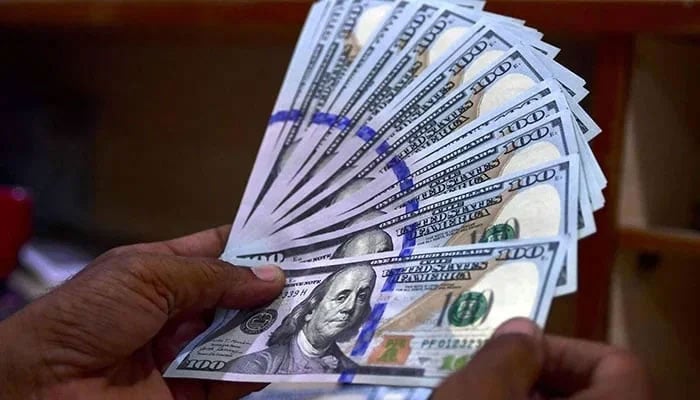
KARACHI: Pakistan’s record monthly worker remittances in March is a result of both the government’s efforts to control flow of money through legal channels and a stable rupee, say experts.
The State Bank of Pakistan (SBP) on Monday released data on the country’s monthly inflows for the month of March, which reached $4.1 billion, up 30 per cent from February and 37 per cent higher year-on-year.
In his comments to The News, former adviser to the Ministry of Finance Khaqan Najeeb said that the surge could be attributed to four factors: Eid festivities and Ramazan, a rise in the number of Pakistanis seeking jobs abroad, macro stability here, and a crackdown against dubious money exchange offices.
He said that besides the Eid factor -- a season during which remittances typically rise -- a rise in remittances also point to people’s growing confidence in the formal banking channels. This, he said, is a result of a relatively stable exchange rate, which has rerouted the flow of money through legal channels instead of the previously popular informal methods of hawala and hundi.
Remittance inflows are a critical source of foreign exchange for Pakistan, helping bridge its current account gap and support the balance of payments amid ongoing IMF-backed reforms.
Remittances from Saudi Arabia led the pack at $987 million, followed by the UAE ($842 million), the UK ($684 million), and the US ($419 million). Year-on-year, inflows from the UAE soared 54 per cent, while those from the UK jumped 48 per cent.
Macroeconomist Ammar Habib Khan largely agreed with Najeeb. He said that an increase in remittances is largely seasonal in nature -- Ramazan and Eid during which time there is often a bump in remittances. Moreover, as the rupee remains fairly valued, remittances continue to come through formal channels.”
Khan added that “any divergence between real value and interbank value can potentially lead to remittances diverting away to informal channels.”
For the first nine months of the fiscal year (July to March), total remittances rose 33 per cent to $28.03 billion from $21.04 billion in the same period last year, according to note released by AKD Securities.
Strong growth was also noted from other key regions: the EU (up 38 per cent YoY in March), Canada (up 39 per cent), and Australia (up 29 per cent). Notably, Malaysia saw a 14 per cent YoY rise, while remittances from GCC countries other than Saudi Arabia and the UAE increased 19 per cent.
Head of Sustainable Development Policy Institute (SDPI) Dr Abid Suleri explained that steps taken by Pakistan to meet its Financial Action Task Force’s (FATF) commitment has made it difficult for people abroad to use informal channels. The rise in remittances can be seen as an official declaration of the money that used to enter the country through hawala and hundi, he said.
He added that a stable rupee has played a big role in increasing people’s confidence. “Those who send remittances are always mindful currency rates and try not to get their amounts stuck in foreign currency accounts because of fluctuations. Rupee stability observed during the last one and a half year has played a big role in a surge in remittances.”
Suleri also pointed to change in investment habits of overseas Pakistanis. He said that people who used to invest in real estate here are now moving away from this sector because of high taxation and other regulations. This money is now being parked in dollar accounts, leading to a rise in remittances.
He said that economic improvement in Gulf countries also improved overseas Pakistanis’ ability to send more money back home. Suleri predicted that the year would end with record remittances.
Per Khaqan Najeeb, this surge also reflects the dent created in the purchasing power of Pakistanis. He said that uncontrollable inflation over the last three years has had destructive effects on people’s buying capacity. This necessitated earners’ abroad to send higher amounts back home for their families to meet their expenses.
Najeeb said that the real test will come in the months ahead. “It is important to analyse the coming months and look at the remittance trend without the Eid factor. Any increase then would help stabilise Pakistan’s external account”, he said.


