
Port congestion deepens as cargo tracking shifts to manual
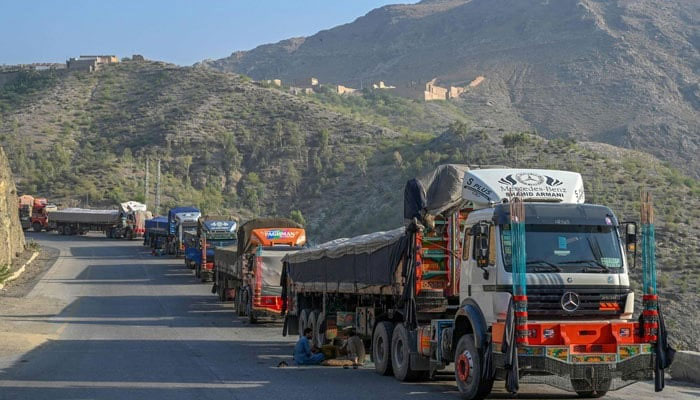
KARACHI: The replacement of the satellite tracking system with human surveillance for customs-bonded cargo, particularly Afghan transit trade, has led to severe port congestion and traffic jams in surrounding areas of the metropolis.
The clearance process for customs-bonded cargo has become significantly slower, with delays affecting the movement of goods through the port and adjacent areas. Importers and customs-bonded carriers revealed to The News that forming convoys under the new system has proven to be a time-consuming exercise, further exacerbating the situation.
According to stakeholders, vehicles now take three to four days to enter the port and load customs-bonded cargo. Convoys are formed with the deployment of customs personnel to oversee transportation to dry ports in the country’s northern and central regions.
Previously, a private company had been tracking container movements using GSM and satellite technology since 2013. However, its licence was terminated, and customs introduced a human-driven model, assigning the task to four companies to track vehicle movement, unlike the earlier cargo-tracking system.
Shams Burni, chairperson of the Customs Bonded Carrier Association, acknowledged the congestion caused by the new system but described it as a transition-phase issue. He emphasised that such challenges are typical during system overhauls and assured that the government is working to resolve the situation. Burni stated that a new cargo tracking device is expected to be implemented within a month, which should address the congestion.
He also noted that the Licensing Committee of Customs has directed the National Logistic Cell (NLC) to monitor customs-bonded cargo to expedite its clearance and ensure smooth movement through the port and surrounding areas. Efforts are underway to form convoys outside the port to prevent vehicles from idling within the port area.
Mohsin Rafiq, director-general of transit trade, said that while congestion issues initially arose during the transition, significant progress has been made in resolving them. He expressed optimism that operations would be further streamlined in the coming days.
Malik Sher Khan, chief executive of Shaheen Freight Services, proposed the development of parking areas near Karachi port, similar to those at Port Qasim, to facilitate documentation before vehicles enter terminals for container loading. He also suggested restricting shipping companies from charging detention and demurrage fees, arguing that importers and the logistics sector are not responsible for delays caused by the new system.







-
 How Steven Spielberg Subtly Shuts Down Timothee Chalamet's Opera Remark?
 -
 Romeo Beckham's Girlfriend Makes Major Remark On Victoria's Dresses
 -
 Nick Viall Explains Why Age Gap With Natalie Joy Made Him 'nervous'
 -
 Dolly Parton Reveals Why She Stepped Back From Touring: 'I Ain't Near Done'
 -
 Maya Hawke, Lewis Pullman Share How Famous Parents Shaped Their Careers
 -
 Gwyneth Paltrow Dishes On 'love-hate' Relationship With Met Gala
 -
 Dolly Parton 'saved' Miley Cyrus From Near Death Tragedy
 -
 Inside Andrew Mountbatten Windsor's 'huffy Teenager-style' Life At Wood Farm
 -
 Why Prince Harry Has Been Silent On Andrew Mountbatten-Windsor And Jeffrey Epstein?
 -
 Harry, Meghan Markle Gearing Up To Fight Tooth & Nail: ‘Can’t Let William, Kate Take Over Headlines’
 -
 King Charles Backs Sophie, Duchess Of Edinburgh's Latest Global Move
 -
 Inside Meghan Markle’s Allegations Against Royal Family: There Was Too Much Control
 -
 Tragic: Third Horse Dies At Cheltenham Festival After Gold Cup Race
 -
 China, North Korea Reopen Passenger Train Service After 6 Years
 -
 Mexico’s Heartthrob 'minister' Or 'miniature Doll'? Truth Behind Viral Photo Revealed
 -
 Billy Ray Cyrus' Ex Wife Firerose Continues To Stir Up Some New Drama Post Split