
Mega crackdown launched to make Multan district plastic-free
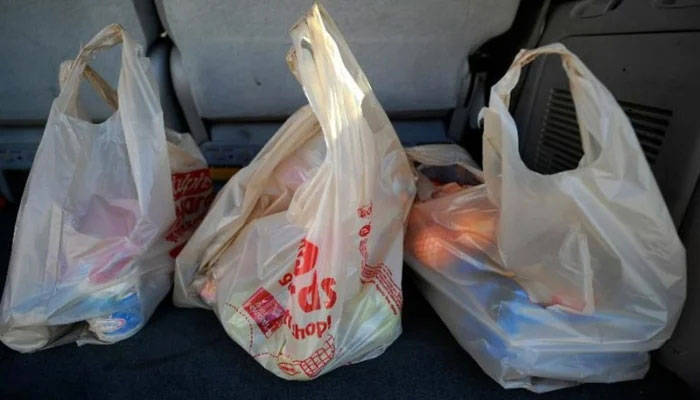
MULTAN: The district administration has launched a mega crackdown to make Multan district plastic-free and started operations against plastic bag factories on Tuesday, on the instructions of the Deputy Commissioner.
The task force searched factories and a warehouse in Shah Rukne Alam Colony, which was involved in manufacturing defective and less than 75 microns shoppers. The task force sealed the manufacturing factories and seized 1,079 kg of shoppers, then sealed the factory. The Price Control Task Force seized shoppers and initiated legal action. “Action will continue against environmentally hazardous elements manufacturing defective shoppers,” Deputy Commissioner Ali Bukhari said. “Traders and the public should discourage the use of plastic bags to protect the environment,” he added.
Meanwhile, The News consulted experts to expose the hazardous impacts of plastic bags on livestock, marine life, and human health. They were of the view that the substance was highly dangerous for all segments. The Bahauddin Zakariya University Veterinary Department’s veterinarian, Prof Dr Abdul Rauf, observed that plastic bags have deep impacts on marine life as well as animals. Many marine animals consume plastic as food, leading to blockages in their stomachs and intestines, ultimately resulting in death. Studies have found that at least 86% of all species of sea turtles contain plastic. Among seabird species, 44% have consumed plastic. The systems of 43% of all marine animal species contain plastic. Prof Dr Abdul Rauf further said that animals can mistake plastic bags for food, which can lead to starvation, malnutrition, and death. Animals can get tangled in plastic bags, leading to drowning, lacerations, and infections. Plastic bags can disrupt habitats, making it difficult for animals to live and breed. Plastic bags can release chemicals that make animals sick. The particles in plastic can accumulate toxins over time, which can harm animals. Animals that are entangled in plastic may have reduced reproductive success, he added.
Scientists from the BZU Department of Chemistry warn that plastic bag waste poses a significant threat to human and animal health. Improper disposal leads to littering and blockages in stormwater drains. Made from petrochemicals, plastic bags contribute to climate change by emitting greenhouse gases during production, and they take centuries to decompose in landfills. This slow decomposition process also releases methane, which is more potent than carbon dioxide. Furthermore, plastic bags contain harmful substances like phthalates and bisphenols that may disrupt hormones and affect reproductive health. They contribute to clogged drainage systems, creating breeding grounds for disease-carrying mosquitoes.







-
 Why Prince Harry Has Been Silent On Andrew Mountbatten-Windsor And Jeffrey Epstein?
 -
 Harry, Meghan Markle Gearing Up To Fight Tooth & Nail: ‘Can’t Let William, Kate Take Over Headlines’
 -
 King Charles Backs Sophie, Duchess Of Edinburgh's Latest Global Move
 -
 Inside Meghan Markle’s Allegations Against Royal Family: There Was Too Much Control
 -
 Tragic: Third Horse Dies At Cheltenham Festival After Gold Cup Race
 -
 China, North Korea Reopen Passenger Train Service After 6 Years
 -
 Mexico’s Heartthrob 'minister' Or 'miniature Doll'? Truth Behind Viral Photo Revealed
 -
 Billy Ray Cyrus' Ex Wife Firerose Continues To Stir Up Some New Drama Post Split
 -
 Kate Middleton Shares Moving Message For Cancer Patients
 -
 Gigi Hadid Battles Heartache After Zayn Malik's Brutal Love Confession
 -
 Ernie Anastos Dies Of Pneumonia After Urging People To Stand Up For Truth In Last Message
 -
 Gigi Hadid Cannot Help But Wish The Best For Ex Zayn Malik
 -
 Kate Middleton To Attend St Patrick's Day Parade
 -
 Uber Partners With Motional To Launch Commercial 'robotaxis' In Las Vegas In Latest Technology Push
 -
 No Respite For Andrew Mountbatten-Windsor As New Photo With Epstein Emerges
 -
 Royal Expert Reveals Meghan Markle, Prince Harry 'new Strategy' With Australia Tour