
IHC sets aside decision not to promote officer to Grade-21
Court directs Central Selection Board to consider Hassan’s promotion under Civil Servants Promotion Rules in its next meeting
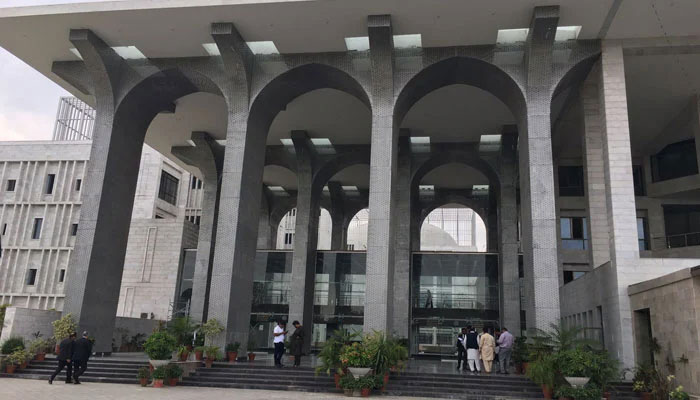
ISLAMABAD: The Islamabad High Court (IHC) has set aside the decision of the Central Selection Board not to promote a grade 20 officer to grade 21 on the basis of intelligence reports.
The court said that it is surprising how a prime minister can allow this to happen carelessly, and how he can leave his bureaucracy at the mercy of such intelligence reports without evidence. The court asked how the PM can expect his bureaucracy to serve the government in these circumstances. IHC Justice Sardar Ejaz Ishaq Khan issued a written decision allowing the petition of Mohammad Tahir Hassan against his non-promotion to grade 21, declaring the Central Selection Board’s decision of August 1, 2023, to supersede the petitioner and promote an officer with low marks null and void.
The court directed the Central Selection Board to consider Hassan’s promotion under the Civil Servants Promotion Rules in its next meeting, observing that the board should not care about an intelligence report in which the officer has not had an opportunity to defend himself at departmental level.
The court said that according to the petitioner, he had a brilliant career from 1994 to 2022, and his secretary recommended his promotion. The petitioner’s credibility was questioned in the intelligence reports, on whose basis someone with lower marks was given preference over the petitioner for promotion.
The court said that it was admitted that the intelligence reports about the petitioner were brought before the Central Selection Board for the first time.
The ISI report described the petitioner as corrupt and unfit to work under pressure. The IB in its report mentioned the petitioner’s financial irregularities and a departmental inquiry. The court said that instead of providing evidence and confirming it in the intelligence reports, the word “reportedly” was written.
The court said no one knows how the intelligence reports were collected, and how such evidence was found which was contradictory to the excellent service record and reputation of the petitioner.
An intelligence officer sitting in the office and making random phone calls or through diligent intelligence work collected this evidence. The court said that not giving an opportunity to defend against an allegation is a serious violation of fundamental rights.







-
 Sofia Richie Grainge's Newborn Son's Nursery Is An Inspiration: Watch
 -
 Billy Ray, Noah Cyrus Take Fans 'on Our Way' In Heartwarming New Song
 -
 Robert Pattinson 'number One Thing' He Judges In Movies Amid 'The Drama' Release
 -
 'The Young And The Restless' Star Dee Freeman Passes Away At 66
 -
 Tragedy At Peru Football Derby: One Dead, 47 Injured In Rally At Alejandro Villanueva Stadium
 -
 Where Vanessa Trump Stands With Tiger Woods Amid DUI Drama
 -
 NASA Artemis II Moon Mission Captures Stunning Earth Images During Historic Lunar Journey
 -
 Kanye West And Lauryn Hill Send SoFi Stadium Into Total Meltdown: 'GOAT Is Back'
 -
 Canadian Citizenship New Eligibility Rules Explained: Who Qualifies And What Has Changed
 -
 Naomi Scott Reveals ‘encouraging’ Aspect Of Making Debut In Music
 -
 Polar Vortex Enters Final ‘seasonal’ Phase: Rare Shift Signals Winter Weather Risks Into April
 -
 Meta Pauses Mercor Work After Major Data Breach
 -
 A10 Warthog Hit As US Jet Downed In Iran, One Crew Rescued And Search Underway For Second
 -
 Zach Bryan Reveals Why He Cancelled Oklahoma Concert At Last Minute
 -
 Meningococcal Disease, Dangerous Bacterial Infection, Hits Decade High In Canada
 -
 Blake Lively's Latest Statement Shakes Up Legal Battle With Justin Baldoni