
Surprise solar boom in Pakistan helps millions, but harms grid
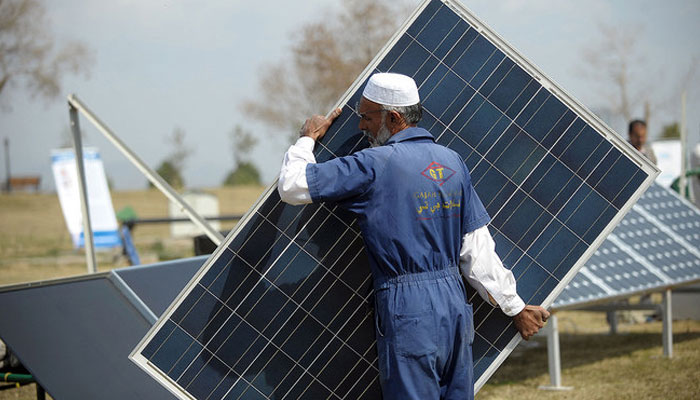
There’s a shiny new addition to Pakistan’s dusty agricultural heartland: rows upon rows of solar panels. Imports of solar equipment from China in the first nine months are well ahead of those for the whole of 2023, according to data compiled by BloombergNEF.
According to a Bloomberg report, the $1.7 billion of purchases would equate to 17 gigawatts of generation, more than a third of Pakistan’s total power capacity, if it’s all deployed on rooftops and farms across the country, according to industry estimates.
For corn grower, Mohammad Murtaza, installing panels has enabled him to slash his power bill by switching irrigation pumps from diesel or pricey electricity from the grid. Farmers like him are the latest to join the solar craze, following households and factories, in a country where power prices for some have tripled since 2021 as the government cut subsidies to meet International Monetary Fund loan requirements.
This breakneck solarisation has several benefits. It’s brought financial relief to consumers and businesses who can afford the panels, it’s saving the government money on fuel imports, and it will help Pakistan move towards its goal of doubling renewables to make up 60 per cent of the energy mix by the end of the decade.
But the rapid and unregulated boom also threatens to weaken the country’s utilities and destabilize the fragile economy.
“There’s a great solar rush happening in Pakistan: the numbers are staggering,” said Muhammad Mujahid, executive director at Lahore-based panel distributor Innovo Corporation. But it’s also creating the “risk of a utility death spiral,” he said.
As many customers curb their consumption from the grid or even abandon it completely, Pakistan’s power companies are permanently losing a major chunk of demand and revenue. State-owned utilities have accumulated losses of Rs2.4 trillion ($8.6 billion) between 2014 and 2023, according to government data. The IMF has said retaining demand should be a key objective of reforms.
“Pakistan’s distribution companies are losing every day as solar becomes attractive,” said Salahuddin Riffai, who was chairman at Islamabad Electric Supply Co until 2022. “The burden is ever increasing on the customers who are left.”
The country was already struggling financially after borrowing heavily from China under the Belt and Road Initiative over the last decade to build up power generation capacity. Pakistan is now in negotiations to try and lengthen the maturities of that debt. The government is also in talks with local power producers to revise or end purchase contracts and is considering privatizing some utilities as cost-cutting measures.
“If the government opens up the power market without capping solar capacity, most of the current generation fleet will become idle,” said Syed Faizan Ali Shah, who sits on the prime minister’s solarisation committee. “So then who will pay for those power plants? This is a major concern.”
The flood of solar panels from China started in 2023, and turned into a deluge after Pakistan removed import curbs late last year, making it the third-largest destination for Chinese panels, according to BNEF. Now they’re being advertised on billboards in major cities and during cricket matches.
The frenzy wasn’t restricted to the energy sector: real estate companies and electronics firms started flipping panels, with the biggest traders bringing in up to 250 megawatts’ worth every month, according to Usman Ahmad, chief executive officer at solar distributor Nizam Energy Pvt.
Driving the demand were households and factories producing everything from cement to apparel, who have suffered frequent blackouts in the past due to the unreliable grid.
Speculation that the grid will collapse is “extreme”, but the reduction in demand is indeed a concern, Pakistan’s Power Minister Awais Leghari said in an interview. Utilities “have to be a little more sensitive to the demands of customers in terms of reliability and tariffs,” he said. “We all realise that the status quo can’t prevail.”—News Desk






-
 Do You Know That Pokémon Cards Are Now Outsmarting Stock Market? Here’s Why
 -
 Donald Trump's Blunt Reaction To Stephen Colbert's 'Late Show' Finale: 'He Lasted So Long'
 -
 Ebola Treatment Center Attacked By Angry Protesters In Congo
 -
 Mike Tindall Makes Loaded Comment About The Old Prince Harry & Andrew Mountbatten-Windsor
 -
 Olivia Rodrigo Releases New Song 'The Cure': 'It's My Favorite On The Album'
 -
 Stephen Colbert Brings Unexpected Final Guest After Pope Leo 'cancels' Appearance
 -
 Cristiano Ronaldo Leads Al Nassr To First Saudi Pro League Title In 4-1 Win Over Damac
 -
 US Navy Division Awards $75m Contract For Submarine Combat Control Program
 -
 Canada Orders Netflix, Streamers To Spend 15% On Local Content
 -
 Why Donald Trump Jr. Chose Private Bahamas Island Wedding Amid Questions Over Trump’s Attendance
 -
 Stephen Colbert Fights Back Tears In Emotional Goodbye Speech: 'We Were Lucky'
 -
 NASCAR Legend Kyle Busch Passes Away
 -
 Anne Hathaway Addresses 'disturbing' Rumor About Herself
 -
 Police Appeal For Information For Investigation Into Andrew Mountbatten-Windsor
 -
 ‘We Were Lucky’: Stephen Colbert Bids Emotional Farewell In Final Broadcast On Thursday
 -
 Josh Allen Shares Playful Habit That Always Catches Wife Hailee Steinfeld Off Guard