
KE put on notice over Rs20m damages suit
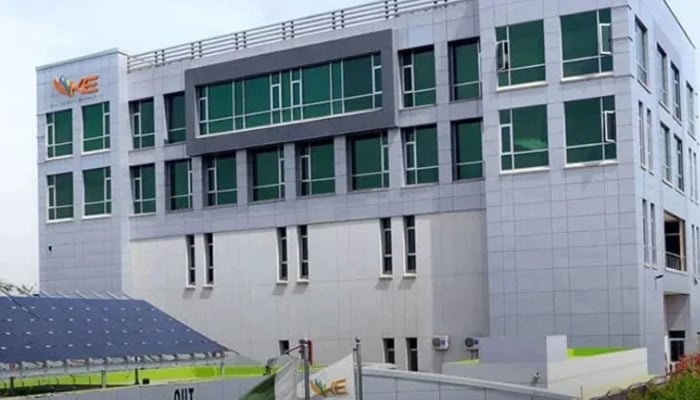
A civil court has admitted a citizen’s suit seeking over Rs20 million damages from K-Electric over the death of his father, who died of cardiac arrest allegedly caused by prolonged and unannounced loadshedding in scorching temperatures.
Adnan filed a Rs20,240,000 damages suit against the city’s sole power distributor under the Fatal Accidents Act, 1855.
The office of the senior civil judge-XV (South) admitted the suit for hearing, and directed the defendant, K-Electic, to file its reply by August 22.
In the suit filed through his lawyer Usman Farooq, the plaintiff stated that on June 29, his 54-year-old father Taj Muhammad Khan suffered a cardiac arrest due to prolonged, unannounced loadshedding by the KE during peak summer. The temperature felt like 54 degrees Celsius during those days, exacerbating the health risks for residents, he said, adding that despite being rushed to the hospital, his father could not survive.
He contended that his family had filed complaints with the National Electric Power Regulatory Authority, requesting a thorough investigation into the KE’s conduct and failure to prevent prolonged loadshedding.
The incident was also discussed in the provincial assembly, where a resolution was passed demanding strict action against the power company for its failure to provide an uninterrupted power supply, he added.
“The sudden and tragic loss of the deceased has caused immense emotional distress to his family. The plaintiff, being his son, has not only lost a parent but also a mentor and a guide,” reads the suit. It said the defendant breached its duty of care by failing to provide an uninterrupted power supply during the extreme heat conditions, as unannounced loadshedding, which lasted for several hours, directly contributed to creating hazardous living conditions.
The plaintiff also said the defendant failed to provide adequate warnings or notifications about the impending power outages. He said that as per the pecuniary calculation of future damages, the power company is liable for the wrongful death it caused and has a legal obligation to ensure a continuous and reliable supply of electricity to its consumers, especially during extreme weather conditions.
“This duty of care is critical, as electricity is a basic necessity, and its absence can lead to severe health risks and life-threatening situations. The duty of care also extends to the implementation of effective contingency plans during peak demand periods.”
The plaintiff said that the economic loss suffered by him and his family due to the death is significant. “The economic loss doctrine allows for the recovery of these financial damages caused by the defendant’s negligence,” he said, pleading with the court to order the KE to pay Rs20,240,000 damages/compensation to him.







-
 Daryl Hannah Speaks Out On 'false' Portrayal Of Her In JFK Jr.'s 'Love Story'
 -
 US Dollar Still Remain 'safe Haven' For Investors, Says Australian Central Bank
 -
 Pentagon Appoints Former DOGE Official To Lead Its AI Efforts
 -
 Andy Cohen Reacts To 'suffocating' Bethenny Frankel's Pleas About 'Bravo' Return
 -
 Britney Spears Living 'very Lonely Life' Amid Struggle To Keep Friends: Source
 -
 F1 Champion Lewis Hamilton Wish To Race In African Grand Prix Before Retiring
 -
 Nepal: Meet Gen-Z Favorite Rapper-turned Politician 'Balendra Shah', Candidate For Next PM
 -
 Britney Spears To Face Major Implications Of Bad Choices After DUI Arrest: Report
 -
 Jessie Buckley Sets The Record Straight About Her 'cat Hating' Comments
 -
 Russia Warns Finland Over Nuclear Weapons
 -
 Oprah Winfrey Becomes Target Of Ozempic Conspiracy Theories
 -
 Harry Styles Weighs In On The Daunting Aspect Of Song Creation Amid New Album
 -
 Princess Anne Visits UCL
 -
 Andrew All Set To Land In Another Humiliating Trouble
 -
 Britney Spears Speaks Out After Shocking DUI Arrest
 -
 How King Charles Feels About His Abdication Amid Major Rift With Prince William?