According to UNICEF, child marriage is one of the main forms of exploitation of girls.
According to UNICEF, child marriage is one of the main forms of exploitation of girls. This week You! looks into the problem of underage marriages of girls in our part of the world...
Mvillions of young girls all over the world are not allowed the luxury of a childhood - a large number of these girls are forced into marriage at a very young age. According to UNICEF, child marriage is one of the main forms of child sexual abuse and exploitation of girls. Each year, about 15 million girls are married before the age of 18 all around the globe.
Sadly, it is a widespread phenomenon in Pakistan as well. In 2012-13, the Institute for Social Justice’s (ISJ) reported that Pakistan’s estimated population is 184.35 million and out of it 48 per cent are children. A large portion of these children, especially girls, are married at the tender age of even seven years. Various agencies reported around 75 cases of child marriage in 2012, out of which 43 per cent children were 11 to 13 years old and 32 per cent belonged to the age group of 6 to 10 years of age. According to Save the Children figures, over 40 per cent of Pakistani brides are under 18 while eight per cent of adolescent married women are already mothers between the ages of 15 and 19.
In some cultures underage marriages are a norm and as the people are so entrenched in the custom no one thinks there is anything wrong in this. One such case is of 31-year-old Zahida who has seven children. She works as a maid at several houses to support her family after her husband Saleem passed away. According to Zahida, her husband was 20 years senior to her and already had a wife at the time of their marriage. She doesn’t remember why she was married to Saleem when she was hardly 10. “I don’t really remember my marriage. I have vague memories of my own wedding. I was my husband’s second wife; most of the children from his first marriage are older than I am,” she says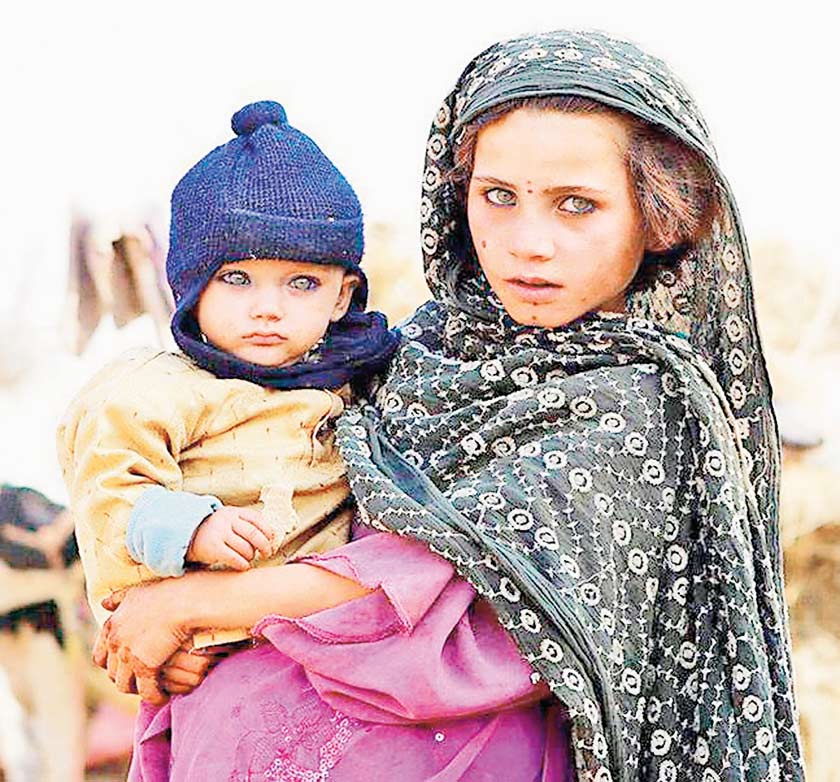
Zahida vaguely but fondly remembers playing with some of her step children. Then life took over and she had her own children. She does not know that there is a law against underage marriages. And anyway, what good laws would have been when customs are stronger than laws for her family.
After more than 15 years of marriage, Zahida doesn’t see anything wrong with underage marriages as hers turned out to be quite good. She didn’t have to work until her husband was alive. It was only after his death that she had to leave her threshold to support her family that comprises her children and her husband’s first wife.
“She (first wife) and I have always been very close. In the early days of my marriage she was my support. I was too young to run my house and I would try to stick around her most of the time - I guess I was looking for my mother,” shares Zahida. “I have also married off my daughters when they were young. What would they do otherwise, it’s not like they would get educated and get a job.”
Zahida may be one of the few women who seem to have adapted to the concept of underage marriages but this does not mean that this custom should be allowed to carry on. Unfortunately we have seen that sometimes education does not help and there have been cases where the so-called ‘educated’ people have married off their daughters still in their early teens (sometimes even less) because they don’t see what their daughters have to do in life. And if they are married off to someone from whom the father and brothers can profit all the better.
In our male dominated society, many parents (especially those belonging from the lower strata of the society) only focus on the male child and the major portion of the privileges including good education are used by their sons. The girls are married off at a tender age so as to get them out of the way of boys.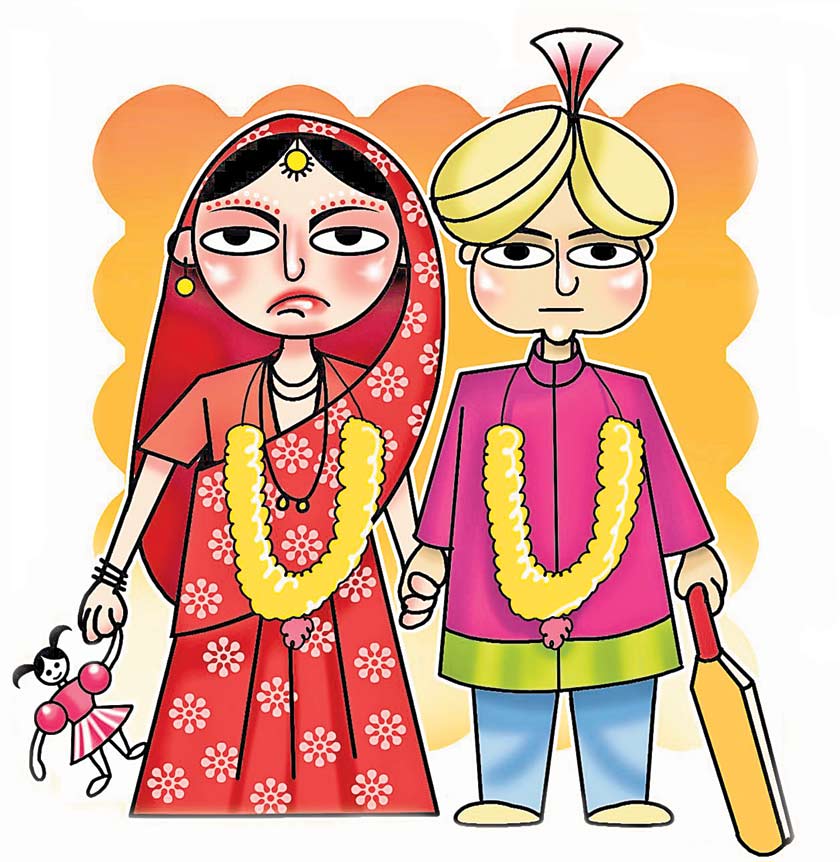
Sometimes underage marriages are carried out in the name of customs like swara and vanni, which are important pegs of a certain section of our society. Due to this there are times when even local law enforcers also turn a blind eye to this crime. However, they cannot be blamed mainly as most of them see nothing wrong with this. The reason is because they have grown up seeing underage marriages all around them and would never interfere in a social ‘custom’. Anyone brave or foolish enough to do so faces many problems and even being outcast by the family, tribe or village.
Faisal is one courageous father who refused to marry his 7-year-old daughter to his cousin who was even older than him. “I knew that this stand of mine would cost me to be banished from my home and I will have to cut off from my family, but that didn’t seem to matter against the safety of my child. She is my first born I couldn’t sacrifice her to a custom I have never been able to understand. My family may think I have no honour in doing this, but I am happy that I did this,” reminisces Faisal.
After this Faisal took his whole family and left his ancestral village never to return, and any way he didn’t want his children to live that kind of life. “Breaking away from the family wasn’t an easy move and initially I struggled a lot. But even that didn’t shake my resolve. And today I am a happy man. All my children are getting education and they will marry when they reach the age not a day before,” stresses Faisal.
There are laws but unless these are seriously enforced they are useless for children thrust into wedlock. In the year 2013, the Sindh Assembly passed a Child Marriage Restraint Act, making it the first provincial assembly to do so. However, the sad part is that child marriages occur more in Sindh as compared to other provinces. Many of the child marriage cases go unreported as either the families are too scared to stand up against this menace or they think there is nothing wrong with this age-old custom.
In March 2015, a bill proposing an amendment to the Child Marriage Restraint Act 1929 was approved by the Punjab Assembly. Under the new law, parents and clerics who allow the marriage of underage children will face greater penalties than they had under previous versions of the law. Among the revisions to the law are the imposition of a six-month prison term and a fine of Rs50,000. In addition, there will be a prison sentence and fine imposed on the cleric overlooking the marriage ceremony. Previously, parents faced a month-long prison sentence and a fine of Rs1,000, while clerics were not penalised in any way.
The need of the hour is to educate people about the existing laws and their rights, especially in remote areas. If they don’t know they have legal protection, they will never try to seek help. Many NGOs are working on this issue but the work is not as widespread as it should be. The government should enforce stricter rules for the implementation of laws against underage marriages. The media should spread awareness against childhood marriages highlighting the adverse affects they have on children.
Women should be educated to train their sons from an early age against child marriages, so that the change comes from the actual people who enforce these customs and force people to adhere. When men speak out as Faisal did to save his daughter from a mismatched bond the change will be quicker.
Law enforcers should also be reminded that the law is the same for anyone and needs to be enforced for the betterment of society. They need to be trained to empower themselves to stand up to the blackmail of customs and traditions, and do their duty properly. Also the government should team up with other sections of society to stop underage marriages.
Unless a conscious effort is not made, young children will keep losing their childhood and their laughter will be lost behind the thick wall of acts in the name of customs that harm them.