No US printers would publish the book because of the differently shaped pages with the holes, but eventually a printing company in Japan was found....
NEWSFLASH
Eric Carle’s picture books were often about insects. Spiders, lady bugs, crickets and of course, that famous caterpillar, all as colorful and friendly as Carle himself. The Very Hungry Caterpillar — probably Carle’s best-known work — came out in 1969 and became one of the bestselling children’s books of all time.

Over the course of his career, Carle illustrated more than 70 books for kids. He didn’t get started on that path until he was nearly 40, but he found great inspiration in his own childhood.
The Very Hungry Caterpillar‘s writing helps little kids grasp concepts such as numbers and the days of the week. (“On Monday he ate through one apple. But he was still hungry. On Tuesday he ate through two pears, but he was still hungry.”)
Carle, who first illustrated the 1967 children’s book Brown Bear, Brown Bear, What Do You See? by his friend Bill Martin Jr., wanted The Very Hungry Caterpillar to serve as a literary cocoon for children getting ready for kindergarten. As little kids prepare to leave the warmth and safety of home for school, they’re meant to identify with beautiful, soaring butterflies.
“I think it is a book of hope,” Carle said in a commemorative video released by Penguin Random House in 2019. “Children need hope. You, little insignificant caterpillar, can grow up into a beautiful butterfly and fly into the world with your talent. Will I ever be able to do that? Yes, you will. I think that is the appeal of that book. Well, I should know. I did the book, after all!”
No US printers would publish the book because of the differently shaped pages with the holes, but eventually a printing company in Japan was found. The simple but everlasting tale - just 224 words long - has been translated into 62 language and has sold more than 50 million copies.
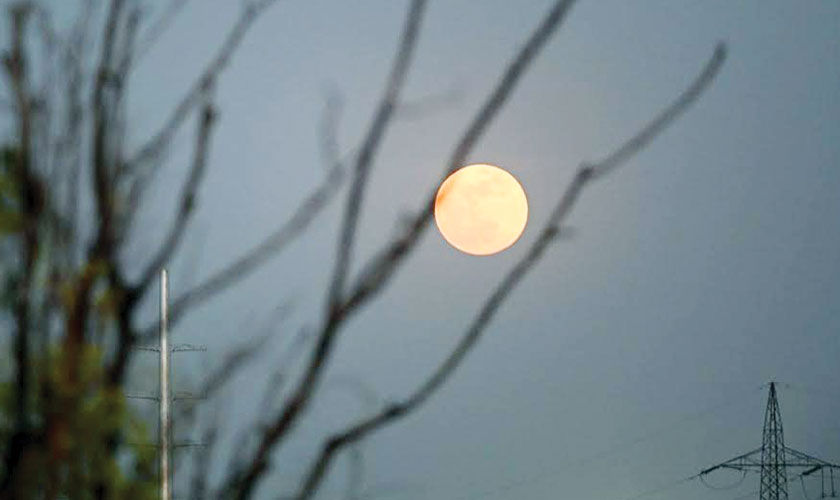
The first lunar eclipse of 2021 happened during the early hours of May 26. But this was an especially super lunar event, as it was a supermoon, a lunar eclipse and a red blood moon all at once. So what does this all mean?
A supermoon occurs when a full or new moon coincides with the Moon’s closest approach to the Earth. A lunar eclipse happens when the Earth’s shadow covers all or part of the Moon. This can only happen during a full moon. When the Moon is completely covered by Earth’s shadow it will darken, but doesn’t go completely black. Instead, it takes on a red color, which is why total lunar eclipses are sometimes called red or blood moons.
Some referred to the event as a “super flower blood moon,” making reference to its apparent size in the sky, the abundance of blooms at this time of year and the moon’s color during the eclipse.
Neither a supermoon nor a blood moon is that rare, but seeing both together is unusual, scientists say. It usually happens once every several years, depending on where in the world you live.
A supermoon occurs in about 25 percent of lunar cycles, while a total lunar eclipse occurs in about five percent of them.