FOCUS
With politics to be played out on the streets of Islamabad over the next few days, weeks or even months, there are growing fears that the country could be engulfed by a new cycle of political uncertainty that may ruin economic gains made so far.
 Imran Khan had threatened to lock down Islamabad on November 2 to force Prime Minister Nawaz Sharif either to step down or order an impartial investigation into the money trail of the offshore companies owned by his family members as revealed by the Panama papers.
But the government launched crackdown on the Pakistan Tehreek-e-Insaf (PTI) workers several days before the planned lockdown.
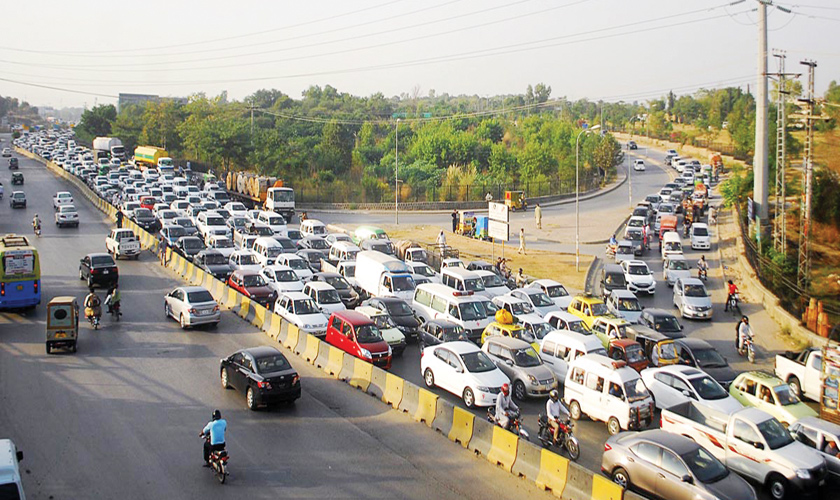
Scores of PTI workers were rounded up when Islamabad police stormed PTI youth convention. All main roads in Rawalpindi have been blocked with shipping containers to prevent protesting political activists from violating section 144.
Though Islamabad High Court has restrained PTI from paralysing the capital to press its demand, Imran has vowed that he would go ahead with his plans to hold a “peaceful” protest on November 2, come what may.
The government seems equally determined to stop its opponents from holding protests.
If the law and order situation deteriorated or if the protests dragged on, as happened in 2014 when sit-ins by the PTI and Tahir-ul-Qadri’s Pakistan Awami Tehreek, lasted for 120 days, then observers fear a new wave of political turmoil, which would not augur well for the economy of the country that has yet to fully take off.
“These protests are a big disaster for the country,” Minister of State for Privatisation Mohammad Zubair said while talking to the Money Matters.
He said such protests cause despondency and disappointment among foreign investors as they fear that they would lose their money if they invest in a politically unstable country.
Zubair said a planned visit of a delegation of an international financial institution to Islamabad was put off because of the PTI protest, recalling that a similar situation happened when Chinese president postponed his visit to Islamabad in 2014 because of the PTI sit-in.
According to the minister, the country suffered losses worth three billion rupees over the past one week due to the crash in the Pakistan Stock Market. “Imran Khan’s protests are a grave cause of concern for the Chinese government as well as Chinese investors.”
Zubair said it was unfortunate that the China-Pakistan Economic Corridor (CPEC) was being made controversial by the PTI leaders. He was referring to the press statements of KP Chief Minister Pervez Khattack who threatened blocking work on the corridor if the eastern route passing through the province was not completed on priority basis.
Zubair said it was the “irresponsible” statements from the PTI leaders that forced the Chinese Ambassador Sun Weidong to personally meet Imran Khan to elicit his support for the CPEC.
The junior minister for privatisation also took strong exception to the statement of the PTI chief, accusing Javed Sadiq of being a “front man of Shahbaz Sharif”.
“Javed Sadiq is the representative of the Chinese construction company, which is one of the biggest such companies of the world. Such an irresponsible statement will serve nothing but scare away investors and foreign companies from Pakistan.”
PTI leader Arif Alvi, however, rejected government’s contention that his party’s protest campaign was causing anxiety and worries among the investors.
“Our call for the lockdown is against corruption. Investors are fed up with corruption,” he said.
According to some estimates, Rs13 billion are gobbled up every day in Pakistan by corrupt elements, Alvi said. “Unless we crackdown on corruption, we should not expect any economic development in the country.”
He rejected as government propaganda that the protests were aimed at blocking the CPEC project or scaring away the foreign investors. “Every Pakistani is affected by corruption. Pakistan will achieve economic progress only if corruption is controlled,” Alvi added.
Analysts say there may not be a huge direct financial implication of the PTI protest on economy but it may stir political instability in the country that is ultimately harmful for the economy.
Government officials claim that the PTI sit-in in 2014 incurred losses between 500 billion to one trillion rupees to the economy. They say the protests resulted in the devaluation of the rupee, costing 250 billion rupees to the economy.
Additionally, they say devaluation resulted in the increase in domestic petroleum prices which cost a further 100 billion rupees loss to the economy.
The fall in the stock exchange caused loss of 350 billion rupees while inflationary price of exports caused losses worth 225 billion rupees.
Independent analysts say though the government figures seemed exaggerated, unending protest campaigns do not augur well for the economy of the country.
They say that a peace protest is the constitutional right of every citizen and government should not create hurdles in the execution of such rights, but it should not allow any attempt to disrupt public life or paralyse economic and business activity anywhere in the country.
The representatives of the business community of the country echoed the same sentiments when asked for comments on the political situation in the country.
“We neither support nor oppose any party or group. All we want them to do is not settle their political scores through confrontation,” Khalid Malik, Vice President of the Islamabad Chamber of Commerce and Industries said.
He said Imran Khan has the constitutional right to protest, but it should not lead to the closure of the businesses and schools.
“Daily wagers and small traders are worst hit by shutter downs and business closures. These should be avoided,” Malik said. “We appeal to the government and PTI to find a solution to their disputes, not through confrontation, but through negotiations.”
He said major businesses in Islamabad have reported a drop in their earnings over the past several days due to increasing political uncertainty in the country.
If the government and PTI attitude over the past few days is any guide, then there are remote chances of reconciling amicably.
The writer is a senior journalist based in Islamabad