Pakistan’s economy is running on half its potential engine. While the country faces recurring fiscal and external crises, it continues to ignore one of its most underutilised resources: women.
GENDER GAP
Pakistan’s economy is running on half its potential engine. While the country faces recurring fiscal and external crises, it continues to ignore one of its most underutilised resources: women.
Despite making up nearly half the population, women account for only 21 per cent of Pakistan’s labour force, one of the lowest participation rates in the world. In comparison, Bangladesh stands at 38 per cent, India at 29 per cent, and even conservative Gulf economies like Saudi Arabia have reached 37 per cent after recent reforms.
This massive gender gap is an economic one. The World Bank estimates that closing the gender gap in labor participation could boost Pakistan’s GDP by up to 30 per cent. In other words, Pakistan’s economy could be $75 billion to $85 billion larger if women participated in the workforce at the same rate as men.
This exclusion of women from formal employment is dragging down productivity, shrinking the middle class and preventing long-term growth. Targeted reforms, from childcare support to flexible work policies, could reverse the trend.
Pakistan’s low female participation stems from a combination of cultural norms, inadequate childcare support, poor public transport, and informal labor dynamics. The Pakistan Bureau of Statistics (LFS 2023) reveals that over 70 per cent of employed women work in agriculture or informal home-based sectors, often unpaid or underpaid. This invisibility in official data distorts the true contribution of women to the economy, but it also means they are excluded from social security, pensions, and skills development programmes. According to the UNDP, women in Pakistan perform 4.5 hours of unpaid care work daily, compared to one hour for men.
The issue is not just participation, but productivity. Educated women are either not working or working far below their qualifications. The Pakistan Institute of Development Economics (PIDE) found that nearly 50 per cent of women with tertiary education are not part of the labour force -- a striking example of economic inefficiency in a country already struggling with a ‘brain drain’.
Pakistan’s middle class is under pressure from inflation, stagnant wages and limited job creation. The gender gap compounds this problem by reducing dual-income households. In urban areas, middle-class families with two earners have a far higher capacity to save, invest and educate their children -- creating the foundation for long-term economic stability. By excluding women, Pakistan is denying itself millions of middle-class households that could drive consumption, tax revenues, and entrepreneurship. Studies by the Asian Development Bank (ADB) show that countries with higher female labour participation tend to have more resilient consumer economies.
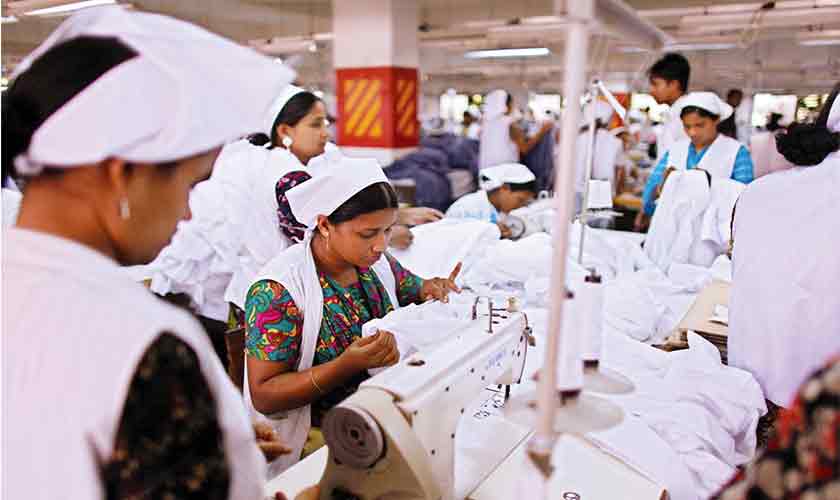
In Bangladesh, for instance, the rise of female employment in the garment sector lifted millions of families out of poverty and fueled sustained GDP growth above six per cent for over a decade. Pakistan, meanwhile, continues to rely heavily on remittances and public borrowing, with little domestic growth momentum.
If Pakistan is serious about growth, female economic inclusion must be treated as a macroeconomic priority, not a social afterthought. That means introducing childcare tax credits and employer incentives to encourage workplace inclusion
The IMF’s 2023 Gender Equality Report estimates that gender inequality in labor participation costs South Asia over $1 trillion in lost productivity annually. For Pakistan specifically, the loss translates to 2–3 percentage points of GDP growth every year. Beyond lost income, there are secondary effects -- lower female participation reduces national savings, depresses entrepreneurship,and undermines human capital accumulation.
A World Bank simulation suggests that even a 10 per cent increase in female participation could raise Pakistan’s GDP growth rate by 1.5 percentage points per year. In simple terms: if Pakistan had invested in integrating women into the workforce over the last two decades, it might have avoided its recurring cycles of debt and stagnation.
Pakistan doesn’t have to reinvent the wheel. Other South Asian and Muslim-majority economies have shown how to bridge the gender gap through practical reforms. Bangladesh’s factory-based childcare programs, subsidised by employers and NGOs, have allowed over one million women to enter or remain in the workforce.
Malaysia introduced tax incentives for companies providing workplace childcare, an idea Pakistan can easily replicate in its industrial zones and service hubs. India’s ‘Pink Bus’ and women-only metro coaches reduced harassment and improved commuting safety, directly increasing women’s labor participation in cities like Delhi and Mumbai. Pakistan’s urban centres -- Lahore, Karachi, Islamabad -- could adopt similar dedicated transport schemes under public-private partnerships.
Saudi Arabia’s recent surge in female participation (from 20 per cent in 2019 to 37 per cent in 2023) was driven by remote work reforms, gig economy integration and enforcement of equal pay laws. If a traditionally conservative economy like Saudi Arabia can achieve this transformation in under five years, Pakistan can too.
If Pakistan is serious about growth, female economic inclusion must be treated as a macroeconomic priority, not a social afterthought. That means introducing childcare tax credits and employer incentives to encourage workplace inclusion, enacting flexible work legislation to enable remote and part-time employment and creating women’s entrepreneurship funds to channel concessional financing and microloans to female-led SMEs through existing SBP refinance schemes.
It also requires investment in transport and safety infrastructure for working women in major cities and a gender-disaggregated data mandate requiring firms and government departments to report gender participation and pay gaps annually to create accountability.
Empowering women is about unlocking Pakistan’s next growth engine. With population growth slowing and emigration rising, the only sustainable way to expand the productive base is through greater female inclusion. Pakistan cannot afford to keep half its population economically inactive while lamenting a lack of growth, foreign investment or innovation.
The path to a stronger, more stable economy doesn’t just run through IMF programmes -- it runs through Pakistan’s homes, offices and classrooms, where millions of capable women are waiting for opportunity, not charity.
The writer is an investment banker based in Saudi Arabia, with eight years of experience across consulting, corporate finance, strategy and investments. He can be reached on LinkedIn at: linkedin.com/in/mustafafahim