Pakistan and Russia signed a protocol on July 11 in Moscow to restore and modernise the Pakistan Steel Mills (PSM) in Karachi, according to press reports. The development follows recent talks between the two sides during the Russian Annual Trade Fair and Industrial Forum held in Yekaterinburg -- a city known for bringing together global government delegations, business leaders and technology firms to explore partnerships with Russia in manufacturing, engineering and high-tech industries.
FOREIGN INVESTMENT
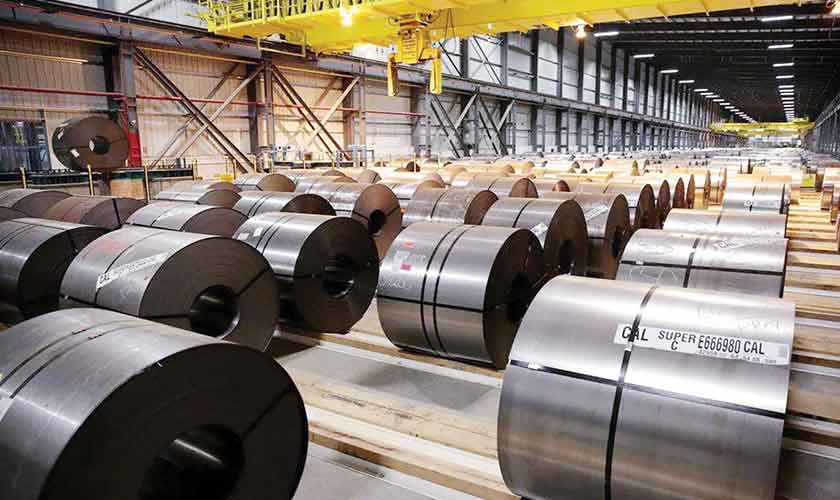
Pakistan and Russia signed a protocol on July 11 in Moscow to restore and modernise the Pakistan Steel Mills (PSM) in Karachi, according to press reports. The development follows recent talks between the two sides during the Russian Annual Trade Fair and Industrial Forum held in Yekaterinburg -- a city known for bringing together global government delegations, business leaders and technology firms to explore partnerships with Russia in manufacturing, engineering and high-tech industries.
Two days earlier, on July 9, a Pakistani delegation led by the special assistants to the prime minister on Foreign Affairs and on Industries and Production met with Russian Deputy Prime Minister Alexei Overchuk in Moscow. Mr Overchuk had previously visited Islamabad in September last year. The two sides discussed various aspects of future bilateral cooperation and Russia’s partnership in multiple projects across Pakistan.
Russia is also expected to finalise a separate agreement with Pakistan shortly for the construction of a new steel mill in Karachi. Technical experts from Russia have already inspected the proposed site. Both countries had earlier agreed to establish a modern steel facility by utilising the existing infrastructure of the defunct PSM, with Russian technical and economic assistance. To finalise modalities, another Pakistani delegation is scheduled to visit Russia this month.
This delegation, expected to be led by SAPM Haroon Akhtar Khan, will also meet prominent investors and state-owned enterprises to secure Russian support for reviving Pakistan’s industrial base and infrastructure development. The visit is anticipated to pave the way for long-term strategic cooperation. Discussions will also focus on strengthening bilateral ties in the areas of industry, trade, and investment.
Recent studies confirm significant potential for expanding trade in non-traditional goods and establishing joint ventures, particularly in Pakistan’s steel and engineering sectors. Russia reaffirmed its earlier commitment, made in September 2024, to assist Pakistan in revitalising its steel industry. Currently, Pakistan faces a widening annual supply gap of over three million tons of steel, driven by surging construction and industrial demand.
Other priority sectors for bilateral cooperation include energy, infrastructure, rail transport, and agriculture. In the wake of evolving global political and economic dynamics, both countries are eager to reinvigorate trade ties that had long remained dormant. In October 2024, Pakistan and Russia signed their first-ever barter trade agreement. That same month, a Pakistan Trade and Investment Forum in Moscow showcased a wide array of Pakistani goods and services. Consequently, bilateral trade reached a historic high of $1.81 billion in 2023–24.
After a long break, the Pakistan-Russia Intergovernmental Commission on Trade, Economic, Scientific, and Technical Cooperation held its ninth session in Moscow in December 2024. Several landmark decisions were taken, including the signing of an agreement to develop a roadmap for the proposed Karachi steel mill. Eight Memoranda of Understanding (MoUs) were also signed to enhance cooperation in energy, education, healthcare and trade. The two countries also agreed on academic exchange programs under Pak-Russia educational collaboration and the launch of direct flights between Moscow and Islamabad to encourage people-to-people contact. The 10th session of the Inter-Governmental Commission is scheduled to take place in Islamabad before the end of this year.
Given regional security dynamics and shifting global alliances, Pakistan should actively pursue stronger economic and trade ties with Russia. Collaboration in technology transfer and capital investment offers Pakistan a valuable opportunity to modernise its ageing infrastructure
In 2022–23, Pakistan-Russia trade totalled $1.13 billion -- an increase of 50 per cent over the previous year. However, the trade balance remains heavily tilted in Russia’s favour. Pakistan’s exports to Russia stood at $287 million, while imports reached $846 million. A recent study estimates Pakistan’s untapped export potential to Russia at over $2.8 billion, particularly with a more diversified product base. Textiles alone could achieve an export value of $1.6 billion. Pakistan has set a target of $4 billion in exports to Russia within five years. Achieving this goal will require targeted promotion, improved trade facilitation, and aggressive market-entry strategies.
Currently, Pakistan’s exports to Russia include textiles, cotton, leather goods, surgical instruments, sports goods, agricultural produce (such as rice and fruits), chemicals, pharmaceuticals, footwear and plastic products. Imports from Russia comprise wheat, lentils, petroleum, machinery, fertilisers and various chemical products. In 2023–24, Pakistan imported substantial volumes of Russian crude oil and liquefied petroleum gas (LPG) for the first time. These imports have helped diversify Pakistan’s energy sources and may become a regular feature of bilateral trade.
Historically, the USSR/Russia has provided generous economic and technical support to Pakistan. Notable projects backed by Russia include the Pakistan Steel Mills in the 1970s, the 640MW Guddu thermal power station (commissioned in 1974), and the 630MW Muzaffargarh thermal power station (commissioned during 1993–95). These projects significantly contributed to Pakistan’s industrial and socioeconomic development. Although Russia offered to upgrade and refurbish these facilities in later years, Pakistan did not respond favourably, largely due to shifting domestic priorities and political uncertainty.
At present, several sectors have been identified for enhanced bilateral cooperation -- including energy, infrastructure, fertilisers, livestock and solar energy. Russia has also proposed significant investment in the Pakistan Stream Gas Pipeline, a planned 1,100-km natural gas pipeline from Karachi to Kasur, which is critical to Pakistan’s future energy security.
Russia’s industrial strengths include oil and gas, metallurgy, engineering, mining, manufacturing (automobiles and electronics), aerospace and defence. It is also a key player in agriculture, pharmaceuticals and information technology. While traditional blast furnace–basic oxygen furnace (BF-BOF) steelmaking remains prevalent in Russia, the country is actively investing in cleaner technologies, such as electric arc furnace (EAF) steelmaking and hydrogen-based direct reduction methods. These are more environmentally sustainable and align with global green transition goals.
Given regional security dynamics and shifting global alliances, Pakistan should actively pursue stronger economic and trade ties with Russia. Collaboration in technology transfer and capital investment offers Pakistan a valuable opportunity to modernise its ageing infrastructure, reduce import dependence and diversify its trade portfolio in an increasingly uncertain global economic landscape.
The writer is a retired chairman of the State Engineering Corporation.