Two Omicron sub-variants driving S Africa COVID spike: WHO
S African scientists who first identified Omicron are pointing to two other Omicron sub-variants, BA 4 and BA 5, "as reason for spike in cases"
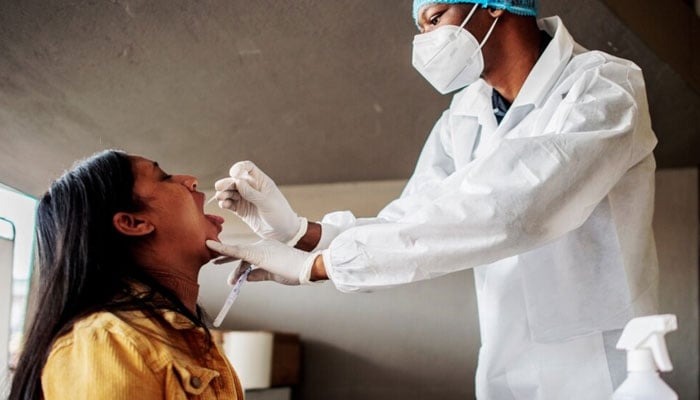
GENEVA: Two new Omicron sub-variants are driving an increase in reported COVID cases in South Africa, the World Health Organization said Wednesday, stressing the importance of testing to monitor virus mutations and spread.
The heavily mutated and highly transmissible Omicron variant of COVID-19, which was first detected in southern Africa in November last year and rapidly spread globally, is now the dominant variant, accounting for almost all new cases.
Omicron has long been known to have several sub-variants, with BA 2 by far the most dominant.
But now the South African scientists who first identified Omicron are pointing to two other Omicron sub-variants, BA 4 and BA 5, "as the reason for a spike in cases" in the country, WHO chief Tedros Adhanom Ghebreyesus told a press conference.
In its latest epidemiological report, the UN health agency said the sub-lineages "have acquired a few additional mutations that may impact their characteristics."
Tedros said Wednesday that it was "too soon to know whether these new sub-variants can cause more severe disease than other Omicron sub-variants."
However, he said, "early data suggest vaccination remains protective against severe disease and death."
With a total number of laboratory-confirmed cases of nearly 3.8 million and more than 100,000 deaths, COVID-19 has hit South Africa harder than any other country on the continent.
The nation, where fewer than 45% of adults have received two COVID vaccine jabs, saw a steep decline in the virus, allowing it in March to go two full days without reporting any COVID deaths - for the first time in nearly two years.
In early April, the country lifted all COVID restrictions, but since then, cases have surged back up, jumping by close to 50% in the past week, according to WHO data.
'Essentially blind'
"The best way to protect people remains vaccination, alongside tried and tested public health and social measures," Tedros insisted Wednesday.
The WHO has officially recorded more than 6.2 million COVID deaths worldwide since the start of the pandemic, but the true toll is believed to be far higher.
The numbers of newly reported cases and deaths are now declining globally, and have now dropped to their lowest level since March 2020.
But Tedros warned that "these trends, while welcome, don't tell the full story," pointing out that reported cases were rising in the Americas and Africa, "driven by Omicron sub-variants."
The WHO has also cautioned the dwindling global numbers could be a result of significant cuts in testing for the virus.
Tedros stressed that the South African findings showed that "testing and sequencing remain absolutely critical."
"The BA 4 and BA 5 sub-variants were identified because South Africa is still doing the vital genetic sequencing that many other countries have stopped doing," Tedros said.
"In many countries, we're essentially blind to how the virus is mutating," he warned.
"We don't know what's coming next."


-
 West Nile virus: Europe reports 141 deaths as human cases rise in 2026
 -
 Health Canada reviewing new mRNA flu vaccine that could prevent more hospitalisations
 -
 Scientists discover hidden drainage route at the back of the eye
 -
 WHO confirms death at Russian research lab, says no plague case registered
 -
 Getting a $90 check from Social Security? Here’s why
 -
 Measles cases in US top 4,000 nationwide, CDC reports
 -
 Sexually transmitted diarrhea spread in US, UK: Why antibiotics are failing against Shigella
 -
 Who is Song Li? China puts her forward for WHO leadership role
-
 CDC monitors travelers from Siberia after plague worker’s death, director says
 -
Russia pushes back on plague death reports, defends WHO notification
-
WHO deems Russia plague risk 'low' following lab technician’s fatal illness
-
New York declares Measles state of emergency amid nationwide disease resurgence