Dutch govt to close primary schools early for Christmas as Omicron fear grows
The Dutch government is planning to close primary schools early for the Christmas holidays as infections are the highest among children
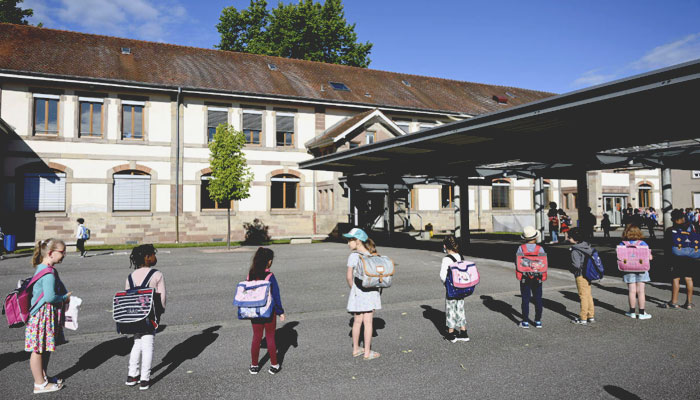
THE HAGUE: The Netherlands said Tuesday it will close primary schools early for the Christmas holidays and extend a night-time lockdown as fears grow over the Omicron coronavirus variant.
Schools will shut on Monday December 20, a week earlier than planned, over concerns that children could infect vulnerable older relatives with Covid-19.
"This is obviously not the joyful message we had hoped for as Christmas approaches. But it's not a surprise," Rutte told a press conference.
"We cannot ignore the warning signs about the Omicron variant."
Rutte also said the government was extending until January 14 restrictions that mean shops, bars and restaurants must close between 5 pm and 5 am daily.
The measures, under which people can also only receive four guests at home, came into force on November 28 for an initial period of three weeks.
The curbs have brought infections down from their recent record levels, falling 21 percent over the last week to 116,477, the RIVM public health institute said Tuesday.
But cases remain stubbornly high, particularly among children of primary school age who have the highest infection rates per 100,000 people.
The government said it decided to close schools on the advice of its pandemic experts "now that there are major concerns about the emergence of the Omicron variant, which is spreading quickly".
"Because the Christmas holidays start directly with Christmas (Day) this year, children could unknowingly infect their older relatives, resulting in too much pressure on care," the government said in a statement.
There will meanwhile be a "maximum acceleration" of the vaccine booster campaign to cover all adults who want one by the second half of January, Health Minister Hugo de Jonge said.
De Jonge said this would "slow down and lower the expected Omicron wave".
Nearly 86 percent of Dutch adults have been vaccinated but cases remain stubbornly high, in part because of the waning effectiveness of vaccines after six months.
The Dutch government's coronavirus restrictions have become increasingly unpopular, with riots erupting in cities including Rotterdam and The Hague over several nights in November.
Five people were wounded when police opened fire during the riots in Rotterdam.


-
 Trump defends himself and Elon Musk after Zelenskiy's criticism over Starlink
 -
 Sanae Takaichi under fire for saying women work longer hours because of makeup and chores
 -
 Trump urges Zacharia to reconsider White House spokeswoman role
 -
 Amber Guyger, Dallas officer who shot Botham Jean in his own apartment, released on parole
 -
 Canada changes Express Entry rules for high-paying jobs and removes LMIA requirement
 -
 Istanbul hit by worst floods since 1942, as record rainfall kills four
 -
 Elon Musk's $158 million GOP donations revealed in new federal election filings
 -
 Pope Leo and Putin hold phone call over Ukraine war as Vatican seeks humanitarian ceasefire
-
 Alex Murdaugh lawyers question police handling of murder weapons ahead of retrial
 -
Cyprus court allows British dad to return home after son's fatal fall at holiday resort
-
IMF chief warns AI risks could outweigh benefits without proper safeguards
-
China ready to cooperate with EU on global economic imbalances