Printed masks can be used to fool facial recognition systems, say researchers
Researchers fool facial recognition systems with printed masks
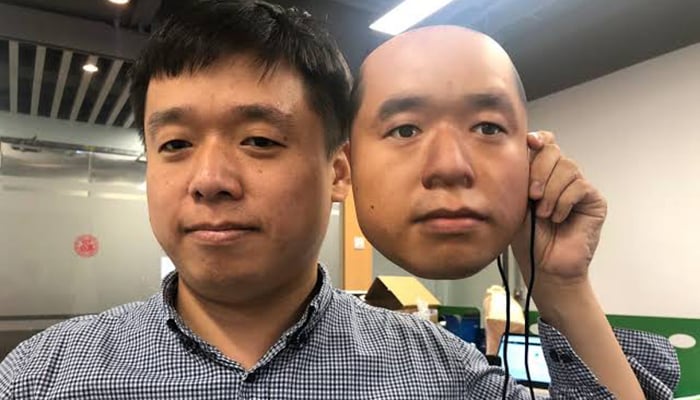
Law enforcement agencies and corporations across the globe are increasingly making use of facial recognition systems to keep tabs on who's accessing airports, smartphones as well as other sensitive devices and locations. However, researchers have claimed that printed masks can be used to fool some facial recognition systems.
Artificial Intelligence (AI) firm Kneron's researchers said on Thursday that they fooled payment tablets run by Chinese companies Alipay and WeChat through printed masks. They also used a printed mask at a passport-control gate at Schiphol Airport in Amsterdam. They also made use of printed masks to cross a security checkpoint in China. These tests were conducted across three continents.
Researchers said that it was possible for a person to shop or fly on behalf of someone else by bypassing security checkpoints if he/she could print a lifelike mask of the other person. Kneron CEO Albert Liu said in a statement that technology providers should be held accountable "if they do not safeguard users to the highest standards".
"There are so many companies involved that it highlights an industry-wide issue with substandard facial recognition tech," he said.
However, not all facial recognition systems fell prey to the deception of the printed masks. Some, like Apple's Face ID and Huawei's system, made use of the structured light imaging to detect the mask. Kneron said that its own system passed the test and did not fall prey to the printed mask.
Researchers claimed that tests were conducted at the security checkpoints with permission of the security guards. They said that so long as human supervision remains present when the digital masks are used, facial recognition checkpoints aren't fully unsecured.


-
 Mysterious ‘phoenix planet’ found around the remains of a dying star
 -
 First possible evidence of Planet Nine found in infrared data
 -
 Elon Musk announces SpaceXAI rebrand to SpaceXSI following presidential order on 'Super Intelligence'
 -
 ISS Command changes hands in emotional ceremony
 -
 Moon water acts nothing like it does on Earth, study finds
 -
 Hawaii’s Hōlei sea arch collapses after centuries on Big Island: What happened
 -
 Solar system may have a much shorter lifespan than we thought
 -
 Singapore builds world’s ultra-precise clock outperforming US, China