China unveils new ´Heavenly Palace´ space station as ISS days numbered
ZHUHAI, CHINA: China unveiled on Tuesday a replica of its first permanently crewed space station, which would replace the international community´s orbiting laboratory and symbolises the country´s major ambitions beyond Earth.
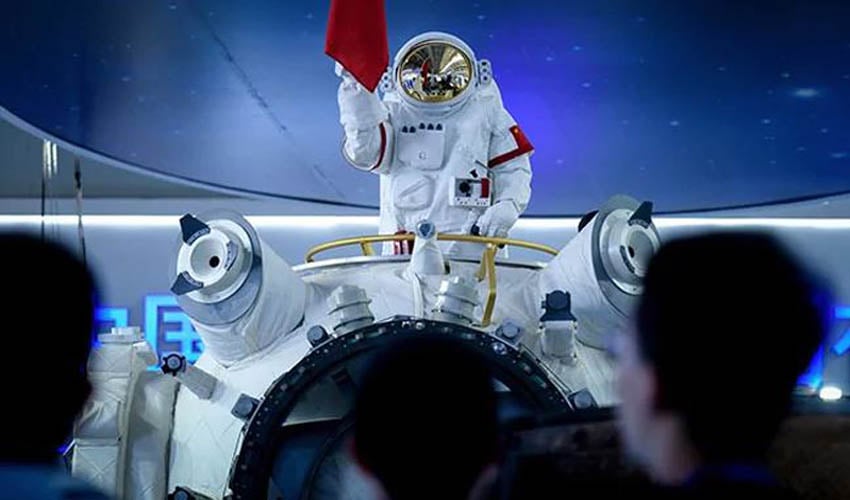
ZHUHAI, CHINA: China unveiled on Tuesday a replica of its first permanently crewed space station, which would replace the international community´s orbiting laboratory and symbolises the country´s major ambitions beyond Earth.
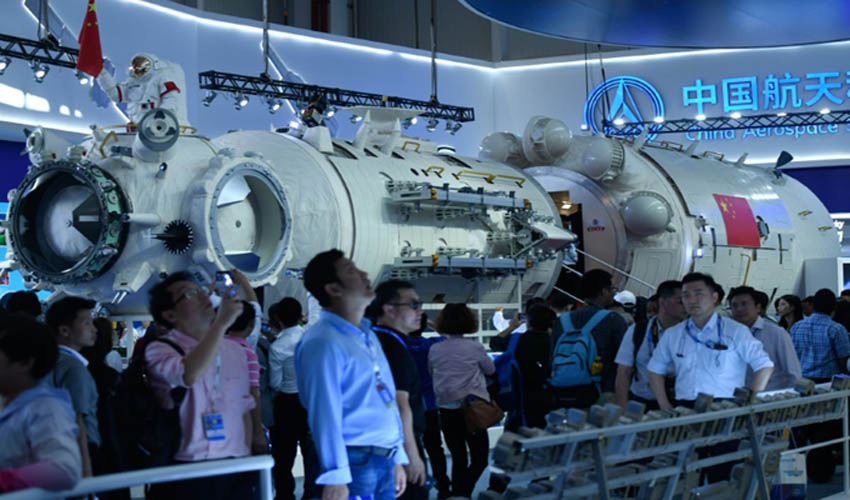
The 17-metre (55-foot) core module was a star attraction at the biennial Airshow China in the southern coastal city of Zhuhai, the country´s main aerospace industry exhibition.
The model represented the living and working space of the Tiangong — or "Heavenly Palace" — which will also have two other modules for scientific experiments and will be equipped with solar panels.
Three astronauts will be permanently stationed in the 60-tonne orbiting lab, which will enable the crew to conduct biological and microgravity research.
Assembly is expected to be completed around 2022 and the station would have a lifespan of around 10 years.
The International Space Station — a collaboration between the United States, Russia, Canada, Europe and Japan — has been in operation since 1998 but is due to be retired in 2024.
China will then have the only space station in orbit, though it will be much smaller than the ISS which weighs 400 tonnes and is as large as a football pitch.
The country announced in May that the lab would be open to "all countries" to conduct science experiments.
Research institutes, universities, and public and private companies have been invited to propose projects. It has received 40 plans from 27 countries and regions, according to state media.
The European Space Agency has sent astronauts to China to receive training in order to be ready to work inside the Chinese space station once it is launched.
China is pouring billions into its military-run space programme, with plans to send humans to the Moon in the near future.
But it has encountered some glitches.
A space lab dubbed Tiangong-1 disintegrated as it plunged back to Earth in early April, two years after it ceased functioning.
Chinese authorities denied that the lab — which was placed in orbit in September 2011 as a testing ground for the permanent station — was out of control.
A second lab, the Tiangong-2, was launched into orbit in 2016.


-
 Winter storm warning issued as Sierra Nevada braces for heavy snow and travel disruptions
 -
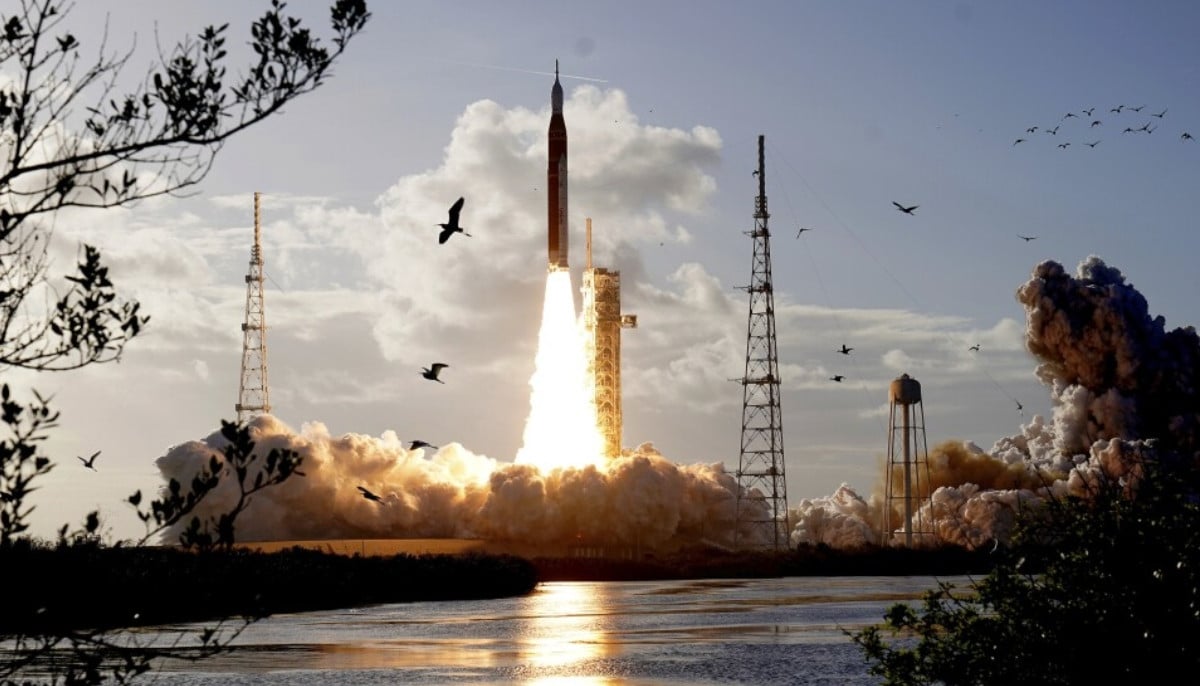 Artemis II launch photo shows birds startled by rocket as remote camera captures historic liftoff
 -
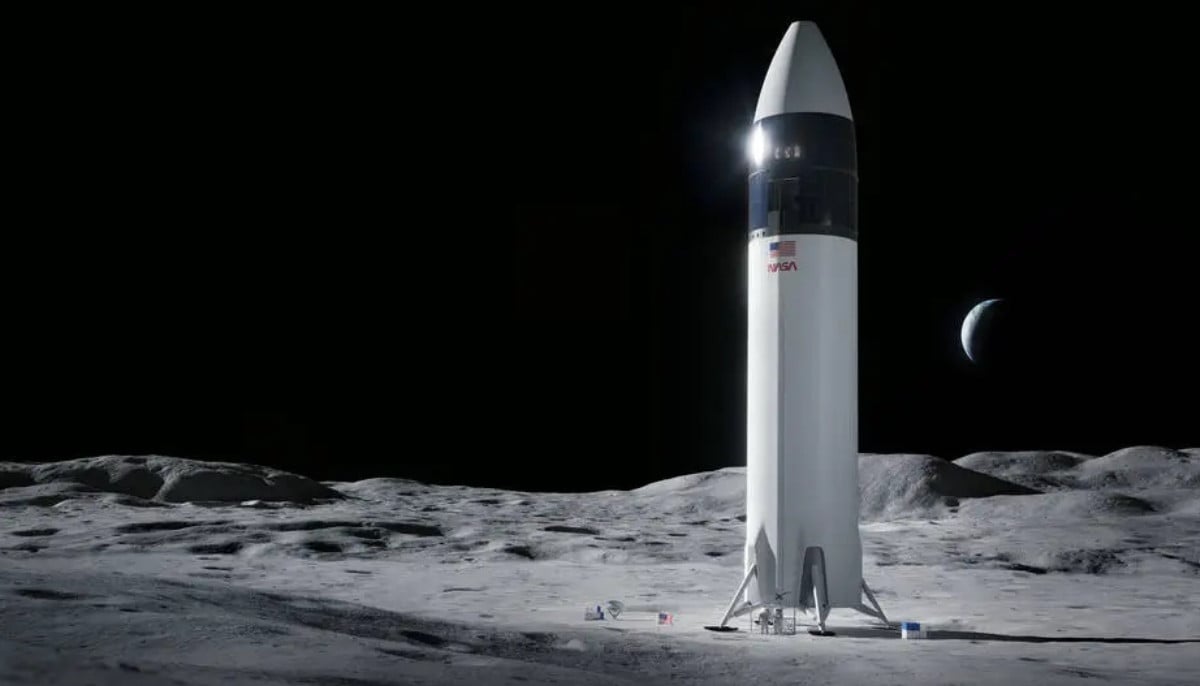 What’s next for NASA? Artemis III set for 2027 as NASA prepares for human landing
 -
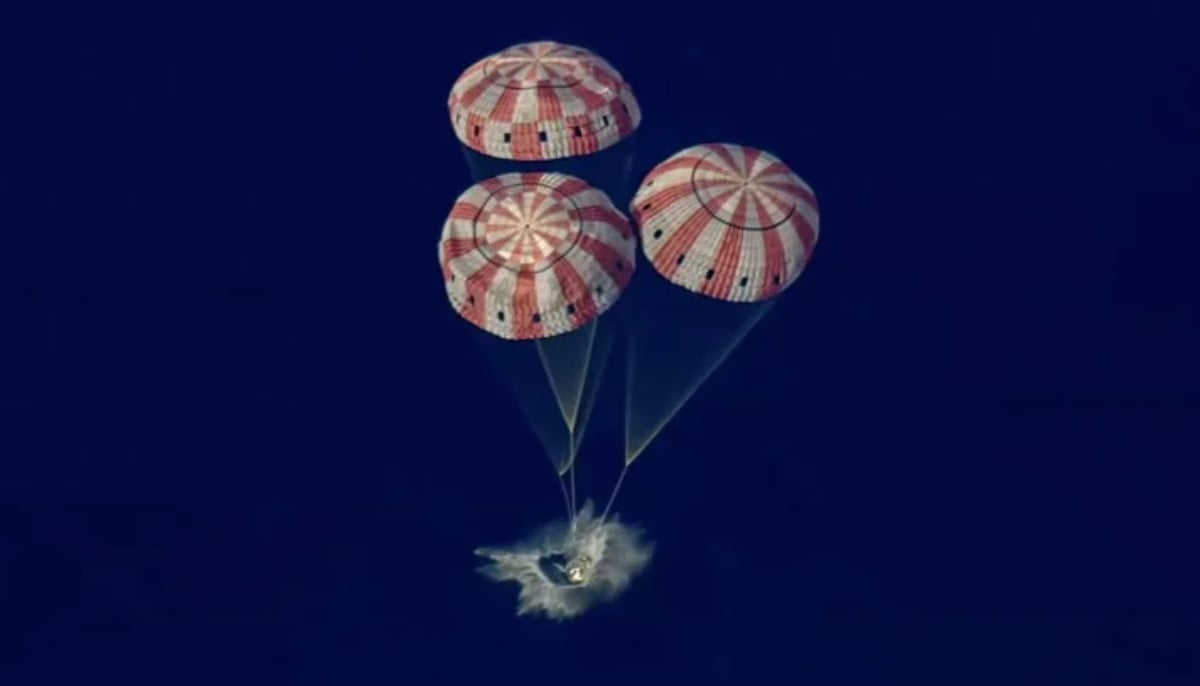 Artemis II mission ends as astronauts safely return to earth after record-breaking lunar journey
 -
 Melania Trump's statement sparks reaction by White House official: Source
 -
 ‘Sure, there’s a reason’: Epstein survivor reacts to Melania Trump’s surprise White House address
 -
 US trade court reviews legality of Trump’s 10% global tariff
 -
 NASA Artemis II splashdown: What could go wrong on mission’s final stage