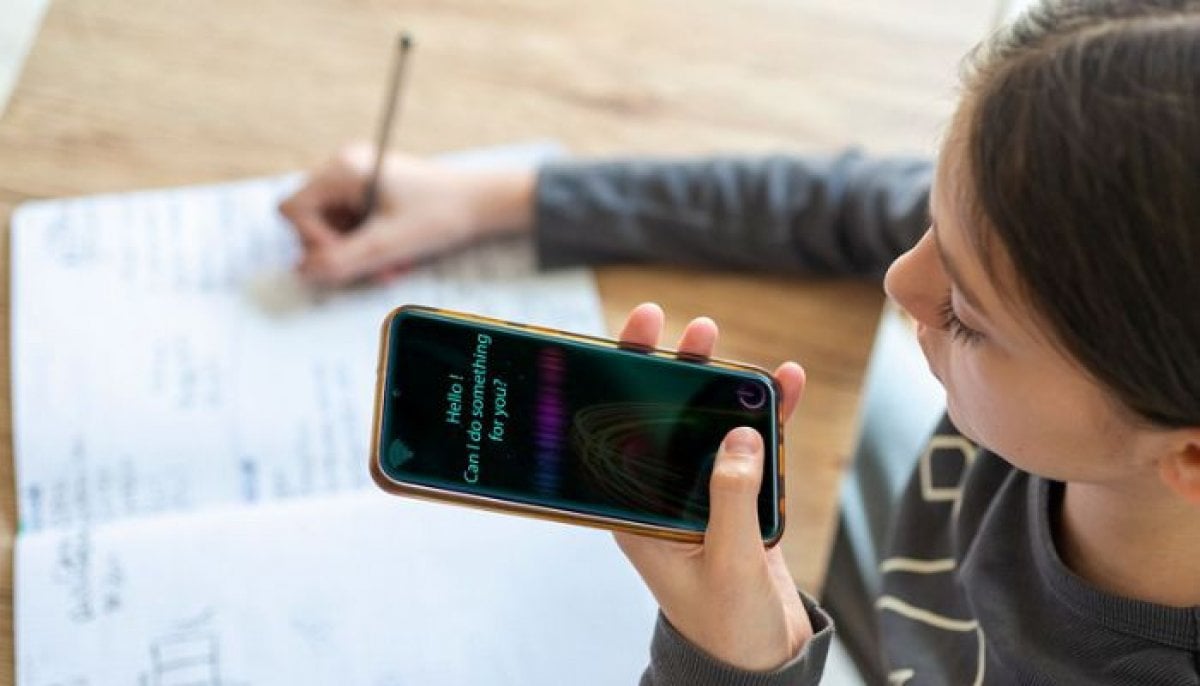
Grandparents are turning kids' photos into AI art
Generational gaps over privacy are fueling real conflict as AI photo tools spread through families

A framed AI-generated caricature hanging on a grandparent's kitchen wall doesn't sound alarming until you consider whose face is in it.
For Ben Metcalfe, who works in AI governance, finding one of his family made without his input crystallised a fight playing out in households everywhere: grandparents delighted by AI photo tools, and parents increasingly uneasy about where those images end up.
One mother, whose name has been changed to avoid family conflict, describes receiving AI-generated images of her toddlers riding the Polar Express, their faces subtly altered, sent cheerfully by relatives using xAI's Grok chatbot.
She's read the news: xAI faces a lawsuit from a woman alleging Grok generated sexually exploitative deepfake images of her, part of a wider pattern of scrutiny the company has faced over nonconsensual imagery.
Her worry isn't hypothetical enjoyment gone slightly overboard; it's not knowing how her children's faces might be used by AI systems in the future.
Media professor Paromita Pain at the University of Nevada, Reno, argues that the divide exists because of a different relationship to privacy rather than differences in technology.
Baby Boomers were raised in an era where privacy was considered the norm, while the Millennials and Gen Z grew up watching the internet change from private chats to a platform based on cancel culture.
These two different experiences now meet within the same family group chat, where one finds the harmless fun and the other, the exposure that can never be erased.
One new mother, who wishes to remain unnamed to de-escalate the situation with her own mother, attempted to find some middle ground by posting pictures of the family where the baby is not the primary subject.
Her mother has broken that agreement twice already, viewing the images as private sharing among friends rather than a meaningful risk.
At the same time, there is an example of a 22-year-old person whose name is only known as Brandon who felt uncomfortable due to an AI-generated picture of him created by his mother for fun purposes, explicitly stating that he had not agreed to this.
xAI filed a lawsuit against a user for alleged generation of child sexual abuse material through Grok, and Meta discontinued its tool called Muse Image a week after launching amid controversy surrounding the remixed publicly posted pictures it generated.
According to data from Deloitte, adoption rates between Boomers and Gen Z explain why tensions arise: while only one-fifth of Boomers used an AI app independently, 76% of Generation Z did.


-
 Block’s Dessa AI voice model learned to talk without text: Here’s how
 -
 Sam Altman says AI is finding ‘Insane’ hardware-level bugs we never expected
 -
 iPhone Duo screen cracks after just six hours, users report
 -
 AI decodes Napoleon's cipher after 217 years in 6 hours
 -
 3 settings to stop Google personalised ads from Gmail data
 -
 Jack Dorsey’s Block launches Dessa AI voice model, but users aren’t happy
 -
 Moonshot AI restricts open-weight hacking ability in new Kimi model as fears grow over AI-powered cyberattacks
 -
 WhatsApp tests new filter to find mentions, replies faster