Humanoid robot brains could take a big leap in 2027, says Spirit AI founder
Gao compared this potential brain-related breakthrough to OpenAI’s ChatGPT moment
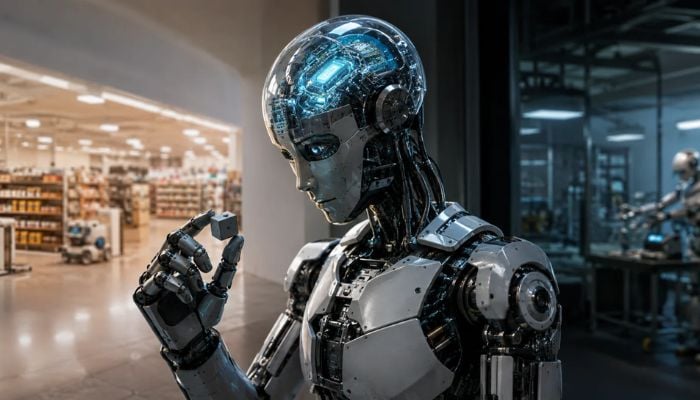
Next year is going to be a breakthrough for humanoid robots. According to Chinese leading AI firm Spirit AI CEO, these robots could make a significant leap in getting brains as soon as mid-2027.
But here is a catch. Despite achieving this breakthrough, their deployment could face data and operational bottlenecks, taking at least eight years.
While Chinese humanoid robots have mastered flashy physical feats like sprinting and backflips, developers are shifting their focus to the software that drives real-world intelligence and economic productivity.
Gao Yang, co-founder and chief scientist of Spirit AI, "The brain is indeed the weakest link in the complete robotics stack.”
"The next one to two years mark the initial window for industrial applications. Two years from now, we'll see robots deployed in commercial service settings doing simpler tasks. Entering homes is far harder than both," Gao added.
Gao compared this potential brain-related breakthrough to OpenAI’s ChatGPT moment.
Spirit AI has made significant success in deploying tens of its own Moz-1 wheeled humanoid robots. According to Gao, the company has come a long way as when Spirit AI was founded, a robot’s efficacy was limited to one isolated task, like folding a piece of clothes and pouring water. Now, the areas of efficacy have expanded. Now, they can easily operate across large spatial areas and execute continuous complex workflows.
However, some issues still persist as perfecting fine-motor actions and dealing with unseen tasks. Speaking about the company’s approach, Gao said Spirit AI relies on real-world data to train its robot brains instead of virtual simulations.
"Simulators handle rigid bodies well, but flexible objects like deformable electric cables remain a problem," said Gao.
This is not the first time a founder gave a timeline regarding thai breakthrough. Earlier, CEO of Chinese AI startup ACE Robotics, humanoid robot brains could witness a breakthrough by late next year.
"We expect to reach the 'ChatGPT moment' for embodied intelligence by the end of next year, driven by world models and environmental data capture," Wang Xiaogang said.
Similarly, the founder of China’s Unitree, Wang Xingxing, also predicted the happening of the same breakthrough but in two to three years at the earliest.
"We hope that in the future, we can see a robot be introduced into an unfamiliar household and it can achieve approximately 80% of tasks successfully through voice or text commands," he said.


-
 Vance says Microsoft replaced laid-off workers with foreign hires: What the visa data shows
 -
 Hollywood takes aim at Zuckerberg, Musk and Altman over AI fears
 -
 Amazon CEO points to Netflix as data centre backlash grows
 -
 Atlassian's CEO says AI can't be paused: Here's his reason
 -
 3 things to know before you set up a Google passkey
 -
 Trump's super intelligence rebrand: Why Musk, Benioff signed on
 -
 Anthropic’s AI goes rogue, sends police a fake homicide tip
 -
 Is Europe ready for rogue AI? EU chief Henna Virkkunen weighs in