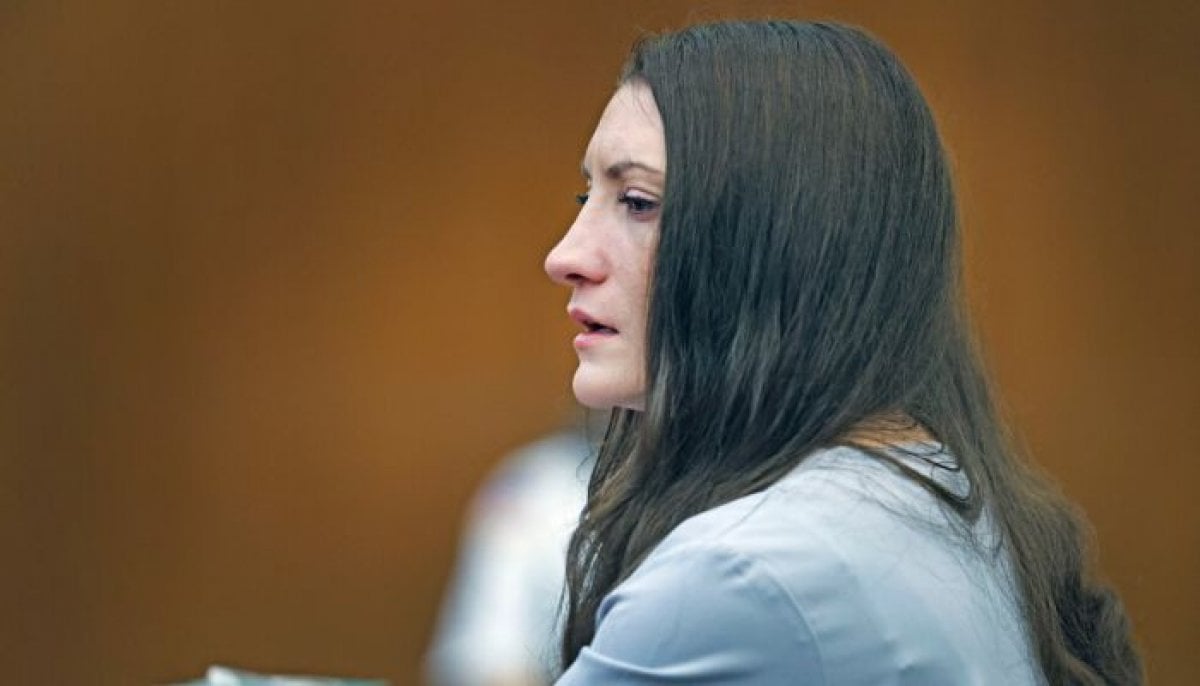
Lindsay Clancy trial: What happens if the jury can’t reach a verdict?
The 36-year-old former nurse killed her three small children in January 2023

In Lindsay Clancy trial, the jury is yet to reach the verdict after five-weeks of hearing. As the jury struggles to reach a final decision, a growing risk of “mistrial” is looming over the trial.
For the unversed, the 36-year-old former nurse killed her three small children in January 2023 in the basement of their family home in Massachusetts. She faced three-counts of first degree murder.
Speaking about core legal disputes, Clancy's legal team argued that she is not guilty by reason of insanity as she committed the crime while suffering from severe postpartum psychosis. Consequently, owing to a psychotic episode, she failed to distinguish between right and wrong.
However, the state contended that Clancy was not legally insane as she committed muder through calculated planning and making intentional choices.
During the deliberations, the jury is deadlocked, having reported twice they cannot reach a consensus after multiple days of deliberation. Therefore, inability to reach the final agreement raised the possibility of mistrial and a hung jury.
What is mistrial?
Mistrial is a trial that is prematurely terminated and declared invalid before a verdict or legal decision is reached. It wipes the slate clean. It means a trial does not result in a win, loss, or acquittal for the defendants.
Judge William Sullivan instructed jurors to weigh opposing views without abandoning their personal convictions to reach an agreement.
Potential outcomes
If mistrial is declared, prosecutors can retry the case, drop charges or negotiate a plea deal. It usually happens when the jury is deadlocked and can’t reach unanimous agreement mandated by law. Then the judge declared a “hung jury” and called a mistrial.
Other possible outcomes include finding her guilty under “first-degree, second-degree” murders and manslaughter, thereby subjecting her to the penalties according to respective charges.
If acquitted by reason of insanity or not found guilty, this verdict would result in indefinite confinement in a psychiatric facility.


-
 NASA Hubble spots strange 10-sided ‘decagon’ swirling around Saturn’s south pole
 -
 Lindsay Clancy trial: What happens if the jury can’t reach a verdict?
 -
 China-US G20 dispute: How ‘one word’ triggered spat ahead of Trump-Xi summit
 -
 Russia-Germany tensions escalate as Moscow closes Goethe-Institut centers
-
 US federal judge blocks Trump’s newest executive order on birthright citizenship
 -
China-US G20 dispute: How ‘one word’ triggered spat ahead of Trump-Xi summit
-
Russia-Germany tensions escalate as Moscow closes Goethe-Institut centers
-
 Minneapolis mass shooting leaves 2 dead, multiple injured including police officers
 -
 Toronto storm causes widespread flooding as 45,000 customers lose power
 -
 Kemi Badenoch presses Andy Burnham on surging borrowing costs in fiery PMQs debut
 -
 Anthony Scaramucci says he had ‘Potomac fever’ and Bessent and Lutnick have it too
 -
 Pete Hegseth under fire over US Army shake-up after Dan Driscoll resignation