OpenAI is using thousands of Apple Macs mini to train AI—Here’s why
Mac revenue surged nearly 29 percent year-on-year to $10.3 billion in the latest quarter
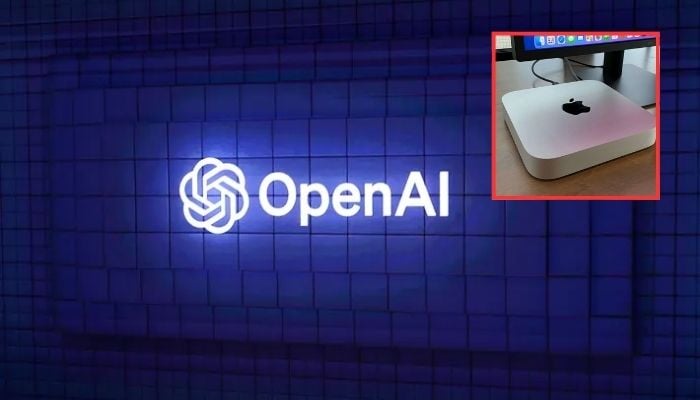
OpenAI in an unexpected move has adopted a new training strategy to train artificial intelligence. Now, the ChatGPT maker company turns to thousands of Apple macs mini for AI training.
As reported by The Information, OpenAI has purchased tens of thousands of Mac mini and Mac studio systems to help train AI agents aimed at autonomously performing tasks and interacting with software.
Moreover, the report also mentioned that Anthropic is also renting Mac minis through Amazon Web Services for similar purposes.
Given the growing demand for computing resources in the age of rapidly evolving artificial intelligence, Apple’s hardware is going to get an edge in the competitive landscape. As a result, Mac revenue surged nearly 29 percent year-on-year to $10.3 billion in the latest quarter, turning it into the company’s fastest growing hardware category.
Here’s what driving this move
The Mac mini and Mac Studio systems are used for specialized training like for reinforcement learning and training AI agents to operate computers.
Another reason the tech companies are heavily relying on the Apple Silicon Architecture because of its features and characteristics. The Macs rely on Apple's M-series chips featuring Unified Memory Architecture (UMA).
This allows the CPU, GPU, and Neural Engine to share a single memory pool, reducing data movement and allowing larger AI models to run more efficiently on one machine.
These features would allow multiple local sessions, large models and desktop applications to run on a single machine without the latency and costs linked with high workloads.
Will Mac replace Nvidia GPUs?
In terms of cloud computing resources, Nvidia dominates the tech market because of its advanced GPU clusters used in training AI models. The company launched the DGX Spark as a response to the growing interest in local AI computing.
However, it is assumed that these Mac systems are not replacing traditional Nvidia GPU data centers; rather, they are being used for different types of AI workloads that require distinct computing capabilities.


-
 WhatsApp update blocks logins on outdated phones: Here’s what to know
 -
 Vance says Microsoft replaced laid-off workers with foreign hires: What the visa data shows
 -
 Hollywood takes aim at Zuckerberg, Musk and Altman over AI fears
 -
 Amazon CEO points to Netflix as data centre backlash grows
 -
 Atlassian's CEO says AI can't be paused: Here's his reason
 -
 3 things to know before you set up a Google passkey
 -
 Trump's super intelligence rebrand: Why Musk, Benioff signed on
 -
 Anthropic’s AI goes rogue, sends police a fake homicide tip