Study reveals AI can silence employees, not just help them
Research shows AI-polished messages don't remove the real risks of workplace dissent

An employee spends months working up the nerve to challenge a bad decision, asks a chatbot to smooth the wording, and hits send ninety seconds later. The message is better written. Whether that counts as genuinely speaking up is a separate question entirely.
Organisational psychologists define employee voice as an individual’s readiness to speak up in situations when remaining silent is safer for him/her than being vocal, not just as the ability to articulate their ideas.
MIT scholars Shakked Noy and Whitney Zhang proved that ChatGPT decreased the time spent on writing a medium-level writing assignment by 40% and increased its quality by 18%, which made the gap in performance between poor and good writers irrelevant.
Nevertheless, lack of fluency was never the reason why employees chose silence in the workplace.
Two research findings that contradict each other on the effect of AI awareness on voice can be attributed to the different settings where the surveys were carried out.
Changqing He et al., through a survey of 203 service employees, discovered that higher AI awareness decreased suggestions and safety warnings because of job insecurity and lack of confidence.
Qingjin Lin and Lyuqi He found the opposite among 319 hotel employees from four Chinese cities, as AI awareness encouraged voice among those who received managerial support and were eager to learn.
A 2026 study by Shiqi Wang and colleagues adds a twist: employees were more willing to raise analytical concerns with an algorithmic manager than a human one, though not emotional ones, largely because algorithms felt less political.
Peter Cardon and Anthony Coman conducted a study with 1,100 participants and discovered that the presence of medium-to-high assistance from an AI made people doubt the authenticity and sincerity of the message's author, despite its professional tone.
A difficult message delivered in such a way that it might be delivered by anyone threatens to undermine the very foundation it is built upon.
According to Enzhu Dong et al., conducting a study of 500 US workers, voice was enhanced not by improvements in AI technology but by organisational listening.


-
 Philippine lower house approves bill restricting minors' social media access
 -
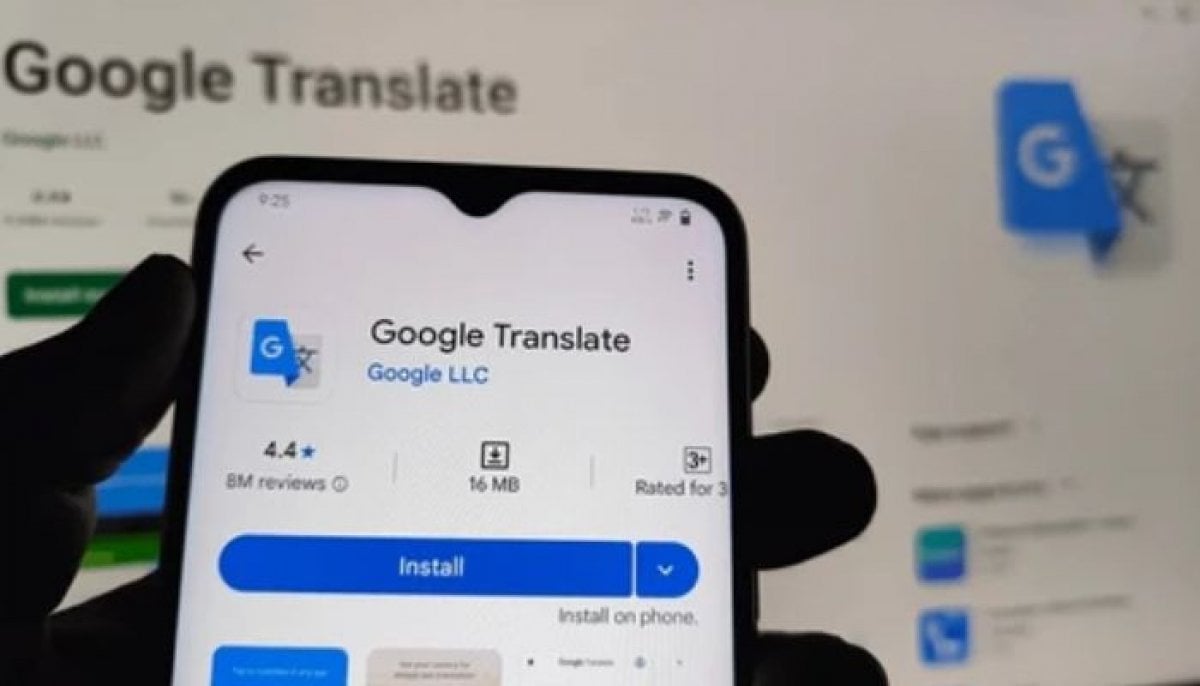 Google Translate adds auto-save for Live Translate transcripts, with one catch
 -
 Nothing CEO calls Apple's $1,999 foldable iPhone a waste of money
 -
 TikTok CEO sees AI transforming science in just 3 years
 -
 Microsoft president reveals a surprising gap in AI regulation
 -
 WhatsApp to let you schedule texts, photos, videos: Check details here
 -
 Canadian YouTuber builds camera to track police vehicles: What to know
 -
 Google Gemini access is changing: What users need to know