Physicists reveal the hidden force' driving the Universe's hottest fluid
The discovery could introduce a new “acceleration axis” in the phase diagram of Quantum Chromodynamics
_updates.png)
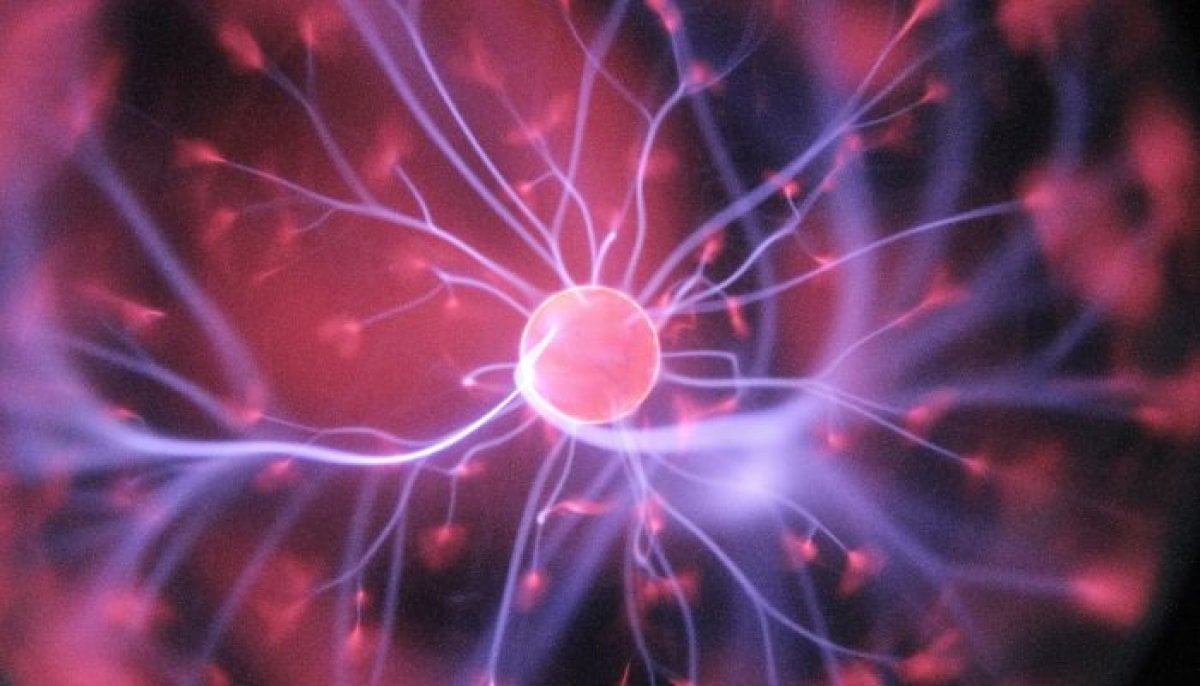
Recent physics simulations have uncovered a previously overlooked “hidden force” driving quark-gluon plasma-the hottest fluid in the universe, which recreates conditions that existed microseconds after the Big Bang.
When atomic nuclei collide at nearly the speed of light, they create quark-gluon plasma, an extremely hot state of matter that allows scientists to study the fundamental building blocks of the universe under extreme conditions.
Scientists have extensively studied the plasma’s intense swirling motion (vorticity) and powerful electromagnetic fields, its fluid acceleration — the mechanical force responsible for its explosive expansion, has received far less attention.
A team of physicists from Fudan University, including Yu-Gang Ma and Xu-Guang Huang, used advanced transport models such as AMPT and UrQMD to map the behaviour of the plasma.
The researchers found that extreme transverse acceleration consistently points outward and reaches its highest levels near the fireball’s boundaries.
At these edges, a sharp pressure drop combined with low enthalpy density creates a “double amplification” effect governed by the relativistic Euler equation, pushing the plasma outward at near-light speeds.
The researchers suggest this acceleration is not merely a byproduct of the plasma’s motion. It may influence temperature-like behaviour, affect particle spins, and reshape scientists’ understanding of how matter transitions between different fundamental states.
Through quantum phenomena such as the Unruh effect where an accelerated observer perceives empty space as a thermal environment acceleration at extreme scales may act as a thermodynamic control parameter.
The discovery could introduce a new “acceleration axis” in the phase diagram of Quantum Chromodynamics (QCD), offering a new way to understand the behaviour of matter under extreme conditions.


-
 Snap targets enterprise market for specs AR glasses with Salesforce, Nvidia and AWS AI tools
 -
 Two British nationals among three dead in Swiss Alps plane crash in Switzerland
 -
 US Judge rejects Google Ad tech breakup, orders open auctions and compliance monitor
 -
 US, Chinese security experts propose nuclear-style safeguards for military AI
-
 Why US is preparing its troops for possible combat around moon
 -
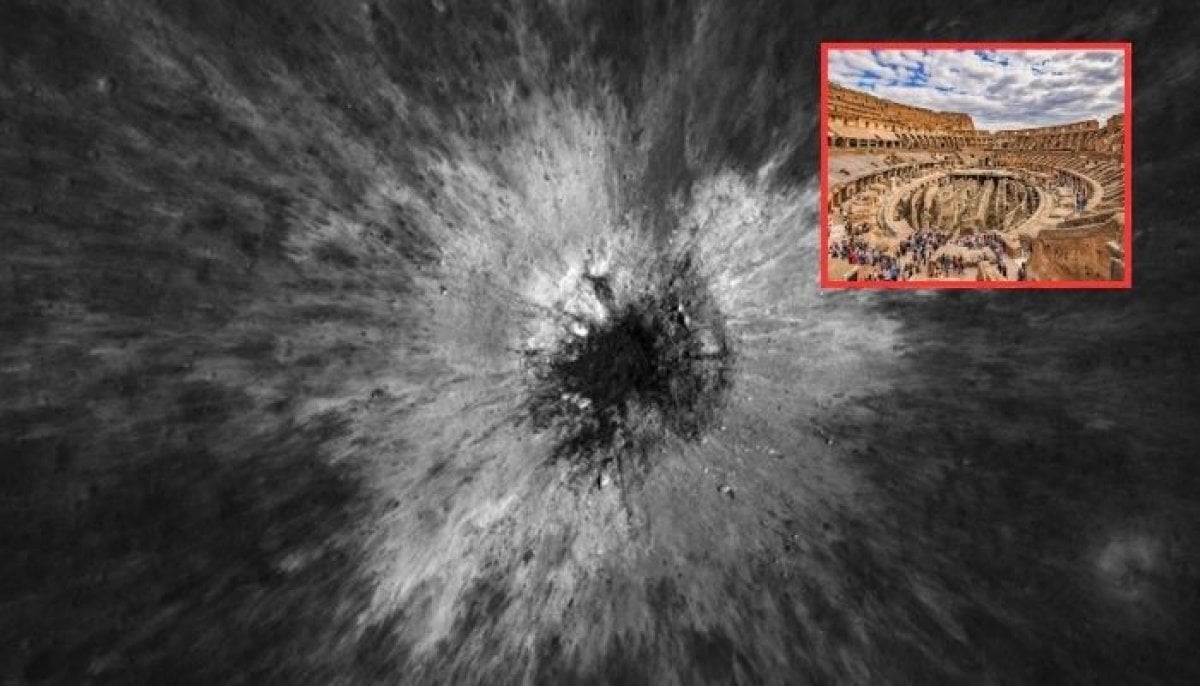 NASA finds ‘once-in-a-century’ moon crater bigger than Roman Colosseum
 -
 Greenland and Antarctica face major ice loss: Key details explained
 -
 Scientists transplant lab-grown human brain tissue into mice: What they found
 -
 New discovery forces scientists to rethink how Earth formed
 -
 US finally confirms weapons in orbit: What it means for space warfare
 -
 How China's FAST telescope is mapping the cosmic gas behind star birth
 -
 Did Sun eat super-Earth? New study says maybe