Google Earth AI tool sparks misinformation fears over fake satellite imagery
Experts warn the new AI feature could make realistic fake images of real locations easier to create and spread online
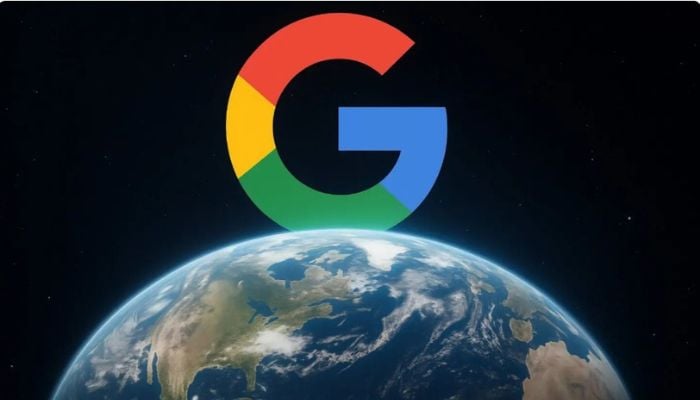
Google is having backlash over newly launched generative AI feature integrated into Google Earth, warning that it could become a powerful tool for creating and spreading convincing geopolitical disinformation.
The tech giant has integrated its AI image-generation model, Nano Banana 2, into Google Earth, allowing users to create synthetic scenarios through text prompts layered over real satellite, aerial, or 3D imagery.
The feature can generate photorealistic changes to real-world locations that can be downloaded and shared across other platforms.
As reported by AFP, the tool is designed to help urban planners, researchers, and real estate developers visualize landscape changes or reconstruct historical sites using real-world terrain data.
However, experts warn that the same capability could be misused to create misleading images of real locations.
Open-source intelligence (OSINT) analysts, journalists, and disinformation researchers say creating realistic fake satellite imagery previously required advanced editing skills, while AI tools could make such fabrications accessible to a much wider audience.
Online research expert Henk van Ess tested the feature after its launch and raised concerns about the lack of protective safeguards. He said Google was allowing "invented" imagery to be "welded to genuine coordinates, drawn on genuine imagery."
Tests using external AI detection tools also showed that some generated images were not easily identified as AI-created.
AI-detection researcher Henry Ajder told BBC Verify that fake imagery in conflict zones could be particularly "destabilising" when events are unfolding quickly and reliable information is limited.
Google said AI-generated content from its tools includes invisible watermarks to indicate that images have been created or altered.
The company further added that users unsure about an image can verify it through the Gemini chatbot app or Google's Lens feature.


-
 US EPA unveils sweeping power plant carbon limit rollbacks at G20 meeting to prioritize grid reliability
 -
 Study reveals why some babies are born with heart defects
 -
 Italian Senate clears PM Giorgia Meloni electoral reform bill to overhaul voting system and establish majority bonus thresholds
 -
 US Senate advances landmark crypto bill to set new digital asset boundaries
-
 OpenAI, Anthropic and Google join forces on AI safety efforts
 -
 Meta to deploy custom Arke and Astrid AI chips in 2027: Everything to know
 -
 Dreamforce 2026: Salesforce unveils Koa AI model and Google Cloud partnership
 -
 EU Kids Act: New social media rules for under-15s
 -
 China’s spy chief reveals growing fears over AI’s impact on communist party rule
 -
 Anthropic's new Claude tool targets financial advisors to streamline compliance and client research
 -
 Elon Musk’s bold AI safety idea: 'Let rivals test each other’s models'
 -
 Former Google DeepMind researcher warns autonomous AI could wipe out humanity amid industry-wide safety alarm