Is space becoming the new frontline in conflict?
Russian satellites have likely intercepted a dozen European craft since 2022, as counterspace weapons turn orbit into newest theatre
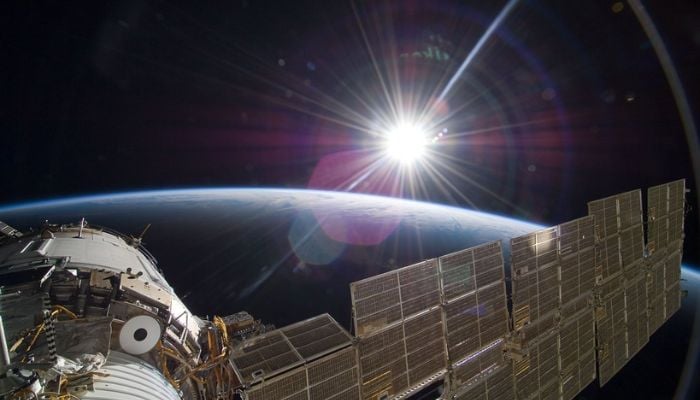
Hours before Russian tanks crossed into Ukraine on 24 February 2022, thousands of satellite modems across the country and Central Europe went dark.
It was, according to Aerospace Security Project at the Centre for Strategic and International Studies Director Kari Bingen, the true opening shot of the war, a cyberattack on a commercial satellite system aimed at crippling Ukraine's ability to communicate.
Luch-1 and Luch-2, two Russian satellites, have been able to intercept the communication signals of at least 12 geostationary satellites from Europe since the war started, according to individuals tracking their activity.
Aldoria orbital analyst Norbert Pouzin, a French tracking company, notes that this interception is taking place like a slow-motion showdown, in which both satellites watch how the other satellite reacts to its manoeuvres.
While jamming and spoofing have become standard practice in the Ukraine war zone, according to Bingen, China uses jamming tools in its military, and Iran also has them, along with kinetic weapons.
The use of kinetic weapons is still the most destructive method, as seen in China's testing of a missile on a dead weather satellite in 2007, which caused space debris that will stay in orbit for seventy years.
This incident led to the US performing its own satellite destruction mission, Operation Burnt Frost.
The most alarming possibility is Cosmos 2553, a Russian satellite launched weeks before the 2022 invasion that US officials believe could be part of a nuclear weapons programme designed to disable entire satellite networks.
Royal United Services Institute Juliana Suess is sceptical Russia would actually use such a weapon, given China's own growing reliance on space infrastructure, but calls it a plausible "last straw" option.
Western governments are responding by funding small "guardian" satellites to protect vulnerable assets, with Japan, France, India and Germany all developing similar capabilities.






-
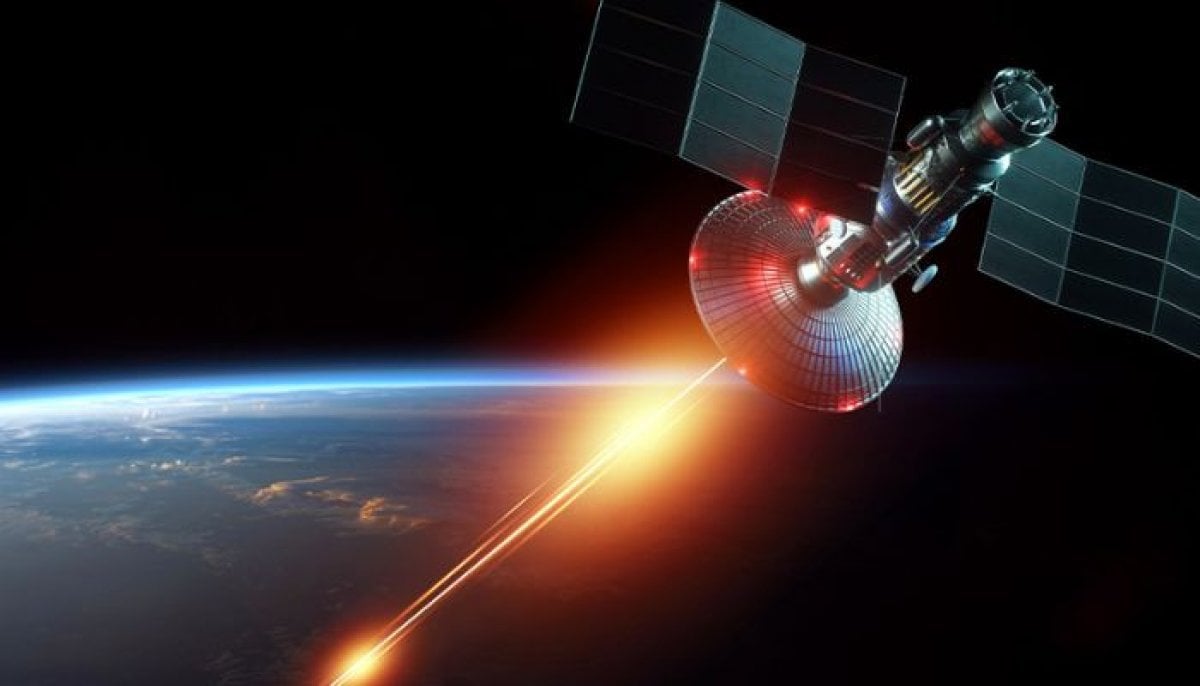 US finally confirms weapons in orbit: What it means for space warfare
 -
 How China's FAST telescope is mapping the cosmic gas behind star birth
 -
 Did Sun eat super-Earth? New study says maybe
 -
 Did Sun swallow a super-Earth? Scientists search for its ‘fingerprints’
 -
 Blue Origin sets sights on Mars with new NASA network
 -
 NASA, IBM launch open-source lunar foundation AI model to help map ice, craters on moon
 -
 Bacteria can remember without brain, new study finds
 -
 Fast radio bursts may unlock secrets of dark matter, energy and neutrinos