China's Kimi K3 fixes 15 security bugs, challenging US AI guardrails: Report
Moonshot's Kimi K3 fuels $30B valuation race due to global tech and crypto selloff
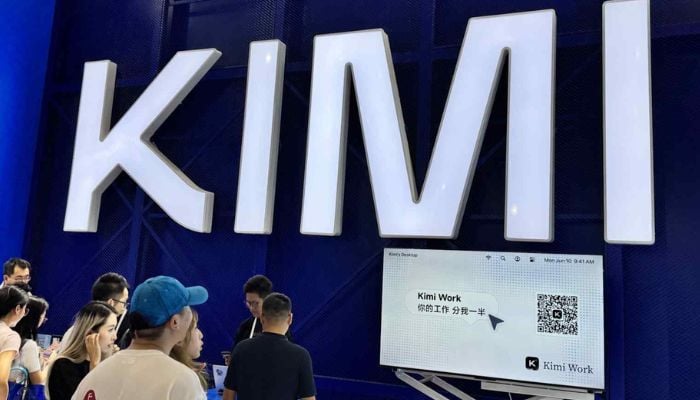
China’s Moonshot company is set to challenge the supremacy of the West tech giants’ supremacy in the competitive landscape of artificial intelligence.
Recently, Moonshot unveiled an AI open-source model Kimi K3 that reportedly rivals the capabilities of top-tier US systems from OpenAI and Anthropic.
What makes it more desirable is its cost advantage. Kimi K3 is more cost-effective to operate, with independent analysis, Artificial Analysis, valuing a benchmark task at $0.95 compared to $1.04 for leading US models.
Its open-source strategy has the potential to challenge US dominance. For instance, by making the model open-source, Moonshot allows users to download and modify the code without any restrictions.
Moreover, the Kimi K3 also possesses the ability to fix critical security bugs that other AI models, such as Codex and Fable refused to rectify due to guardrails.
David Sacks, Chair of the President's Council of Advisors on Science and Technology, posted on X, stating how the US is making itself “less competitive” in the field of innovation and artificial intelligence.
“Kimi K3 just fixed 15 critical security bugs that Codex and Fable refused because of ‘cyber guardrails.’ There’s no reason to limit American models on tasks that Chinese models handle without issue. We’re only making ourselves less competitive,” he wrote.
Additionally, the availability of powerful and cost-effective model also put revenue-driven models of US AI labs at risk as these models rely on high subscription fees to compensate for infrastructure investments.
Prof Alan Woodward, a cyber security expert at the University of Surrey, said, "The Chinese seem to be letting their models out to the public.
"The US is trying to control their dissemination. It looks like a strategic decision that could see the Chinese dominate in the long term, at which point they could well start to be more controlling."\
But some experts raised the concerns over the open-source nature of the model as they warn that its potential cyber-attack capabilities cannot be restricted by authorities in the same way proprietary US models can be if safety concerns arise.


-
 Philippine lower house approves bill restricting minors' social media access
 -
 Google Translate adds auto-save for Live Translate transcripts, with one catch
 -
 Nothing CEO calls Apple's $1,999 foldable iPhone a waste of money
 -
 TikTok CEO sees AI transforming science in just 3 years
 -
 Microsoft president reveals a surprising gap in AI regulation
 -
 WhatsApp to let you schedule texts, photos, videos: Check details here
 -
 Canadian YouTuber builds camera to track police vehicles: What to know
 -
 Google Gemini access is changing: What users need to know