
UK government nationalizes British Steel, bringing company under public ownership
The move secures the future of the strategic steelmaker, protecting jobs and ensuring a stable supply of vital steel for the UK economy
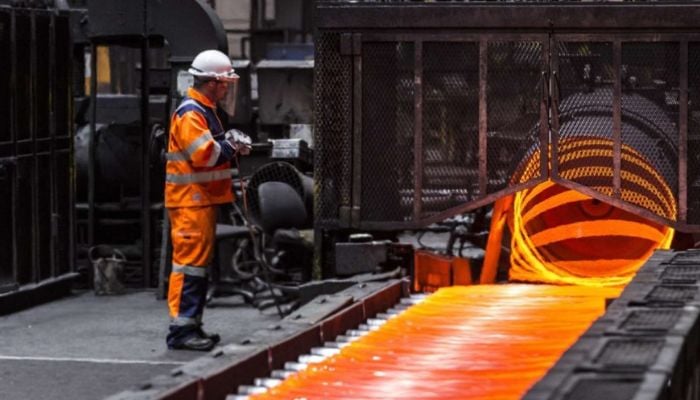
British Steel was officially taken into public ownership on July 16, 2026.
Following the formal adoption of the Steel Industry (Nationalization) Act 2026, which received Royal Assent earlier this week, the UK government assumed full control of the company from its previous owner, the Chinese firm Jingye.
The future of the steelworks, which employs roughly 2,700 people in Scunthorpe and supports many other industries in north Lincolnshire, has been dogged by uncertainty over recent years.
The UK government had taken control of British Steel's operations in Scunthorpe last year, though it was still owned by China's Jingye Group, limiting the government's ability to decide on its future strategy.
Nationalization buys the government time and gives it the power and freedom to decide on the future of the plant, while keeping the blast furnaces going.
Ultimately it is unlikely the government will want to remain in charge of a business that is costing it more than a million pounds a day.
In March, the National Audit Office released a report noting that the Scunthorpe steelworks was costing the government about £1.3m a day.
The nationalization came after Parliament on Wednesday passed legislation allowing the government to bring the steel industry into public ownership under circumstances where it met a public interest test.
The government stated the move was necessary to safeguard the future of domestic steelmaking, protect skilled jobs and maintain a "vital national capability".
Officials emphasized that retaining the ability to produce "virgin" steel is a matter of long-term economic and national security.
The government had already seized operational control of the Scunthorpe plant in April 2025 to prevent its closure after Jingye deemed it no longer financially viable.
A new leadership team consisting of non-executive directors has been appointed to manage the transition.
Their initial priorities include stabilising site operations, managing health and safety, and developing a long-term plan to transform the firm into a "commercially sustainable, low-carbon enterprise"
The action is part of the government's broader "Steel Strategy," which also includes new trade measures implemented on July 1, 2026, such as reduced quotas for tariff-free steel imports and a 50% tariff on excess imports to shield the domestic industry from global overcapacity.



-
 US and Canada making progress on new trade deal, Carney Says
-
 Trump invested up to $5mn in Nvidia before changing US chip export rules, report finds
-
 Mississippi River boat crash: Tanker strikes cruise ship carrying 197 passengers
-
 FAA ends nationwide ground stop as Trump officials blame old infrastructure on outage
-
 US flights grounded nationwide after air traffic control outage: What to know
-
 Andy Burnham hits back at David Cameron over warnings against reopening EU debate
-
 France’s Le Pen seeks to square Populist Pension promises with strained budget realities
-
 Trump applauds Democrat Scott Colom for campaigning among MAGA supporters


